
Trails
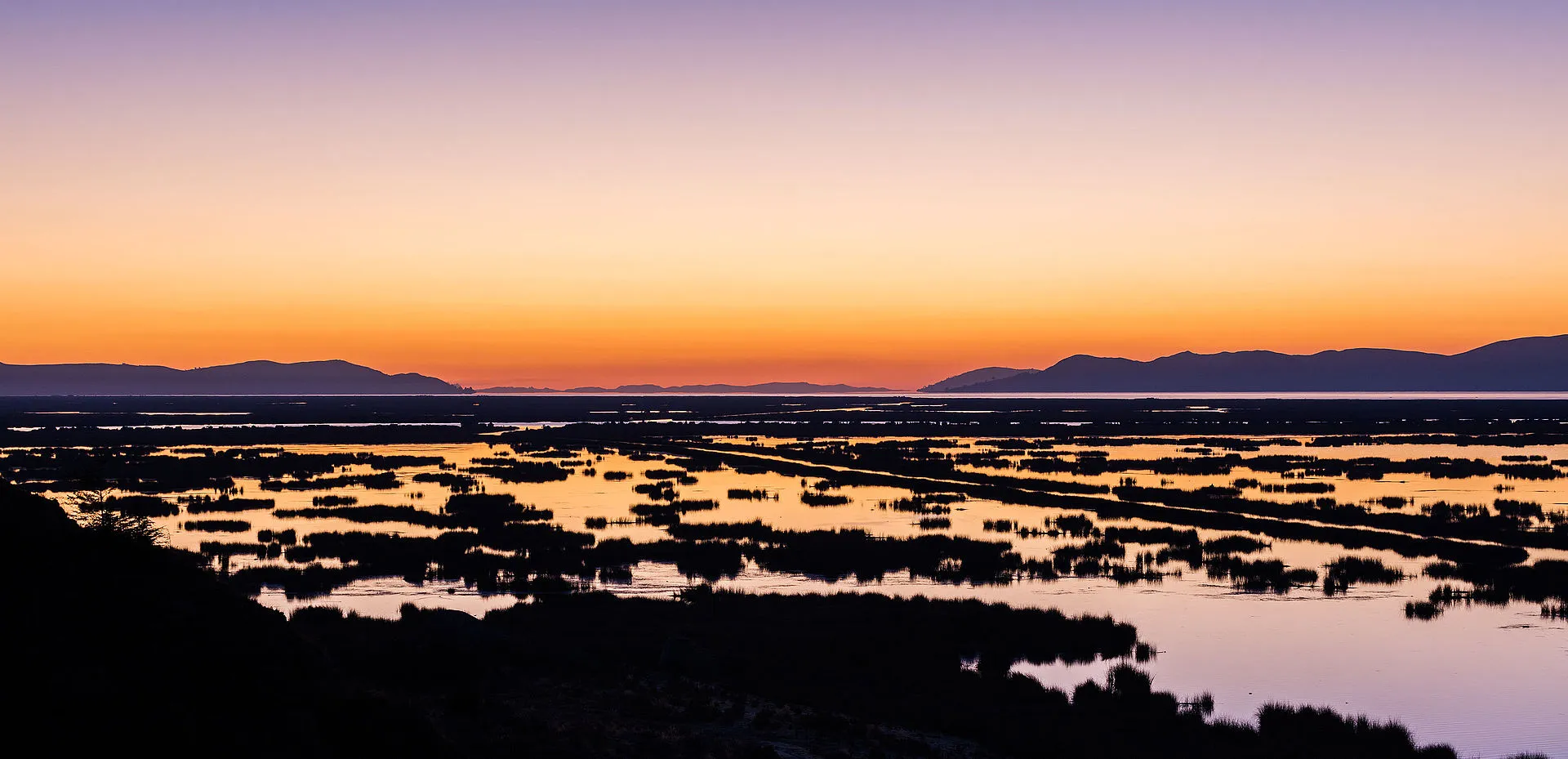
Altitude light: At nearly 4,000 meters, the air is thin enough that the light takes on a crystalline intensity — sunsets and sunrises on the lake are extraordinarily vivid. Uros floating islands: Reed platforms that compress and decompose beneath your feet, rebuilt constantly by their Uros inhabitants. Taquile Island: UNESCO-listed textile traditions on a hilltop island with 360-degree lake views and no motorized vehicles. Night sky: Zero light pollution on the islands means the Milky Way arcs overhead with staggering clarity — overnight stays are worth it for the sky alone. Endemic wildlife: The Titicaca water frog, giant ibis, and Andean flamingos inhabit the lake's ecosystem. Creation mythology: Inca and Aymara creation stories centre on this lake — a guide brings the mythology alive against the landscape where it originated.
Wildlife
Lake Titicaca's high-altitude freshwater ecosystem supports species found nowhere else on Earth. The Titicaca water frog (Telmatobius culeus) — critically endangered and sometimes called the "scrotum frog" for its deeply folded skin — is the lake's most remarkable endemic species, breathing entirely through its skin in the cold, oxygen-poor water. Andean flamingos (Phoenicoparrus andinus) wade in the shallows near Puno and along the lake's marshy edges, their pink plumage startling against the deep blue water and brown altiplano. Titicaca grebes, another endemic species, dive for fish in the open water — their populations have declined but they remain visible on boat crossings. The totora reed beds that fringe the lake provide habitat for coots, moorhens, and Andean lapwings, while Andean gulls follow the tour boats across the open water. On Taquile Island, the terraced hillsides support populations of Andean sparrows and rufous-collared sparrows, and the occasional Andean condor soars overhead. The drive from Puno to Sillustani passes through altiplano grasslands where herds of alpacas graze alongside wild vicuñas.
When to Visit
Boat departures from Puno: Typically 7-8 AM, returning 4-5 PM. Dry season (May-October): Clearest skies and calmest waters — ideal for photography and island visits. Rainy season (November-March): Afternoon storms possible but the lake is greener and more dramatic. Full-day Uros + Taquile: 7 AM departure, 5 PM return — a long but rewarding day.
Admission and Costs
Group Uros half-day tour: S/30-60 ($8-16) per person including boat. Group Uros + Taquile full day: S/60-120 ($16-32) per person. Private boat hire: S/300-500 ($80-135) for a full day with flexibility. Homestay overnight on Taquile or Amantaní: S/30-60 ($8-16) per person including dinner and breakfast. Uros island contribution: S/10 (~$2.70) per visitor, paid directly to the community.
Tips for Visitors
Acclimatize before visiting: At 3,812m, the altitude is severe — spend at least a full day in Puno before a long boat trip. Dress in layers: Sun on the water can feel warm, but shade and wind are bitterly cold — bring a windproof layer, hat, and sunscreen. Overnight recommended: A homestay on Taquile or Amantaní transforms the visit from sightseeing into cultural exchange — and the night sky is unforgettable. Seasickness: The lake can be choppy, especially in the afternoon — motion-sensitive travelers should sit near the centre of the boat. Respectful photography: Always ask before photographing Uros or Taquile residents — most are happy to pose but appreciate being asked. Bring snacks and water: Full-day boat trips may have limited food options — pack enough for the journey.
Frequently Asked Questions
When do boats depart from Puno for Lake Titicaca island tours?
Boat departures from Puno: Typically 7-8 AM, returning 4-5 PM. Dry season (May-October): Clearest skies and calmest waters — ideal for photography and island visits.
How much does it cost to access Lake Titicaca?
Group Uros half-day tour: S/30-60 ($8-16) per person including boat. Group Uros + Taquile full day: S/60-120 ($16-32) per person. Private boat hire: S/300-500 (~$80-135) for a full day with flexibility.
What should visitors bring when visiting Lake Titicaca?
Acclimatize before visiting: At 3,812m, the altitude is severe — spend at least a full day in Puno before a long boat trip.