
Excavation History
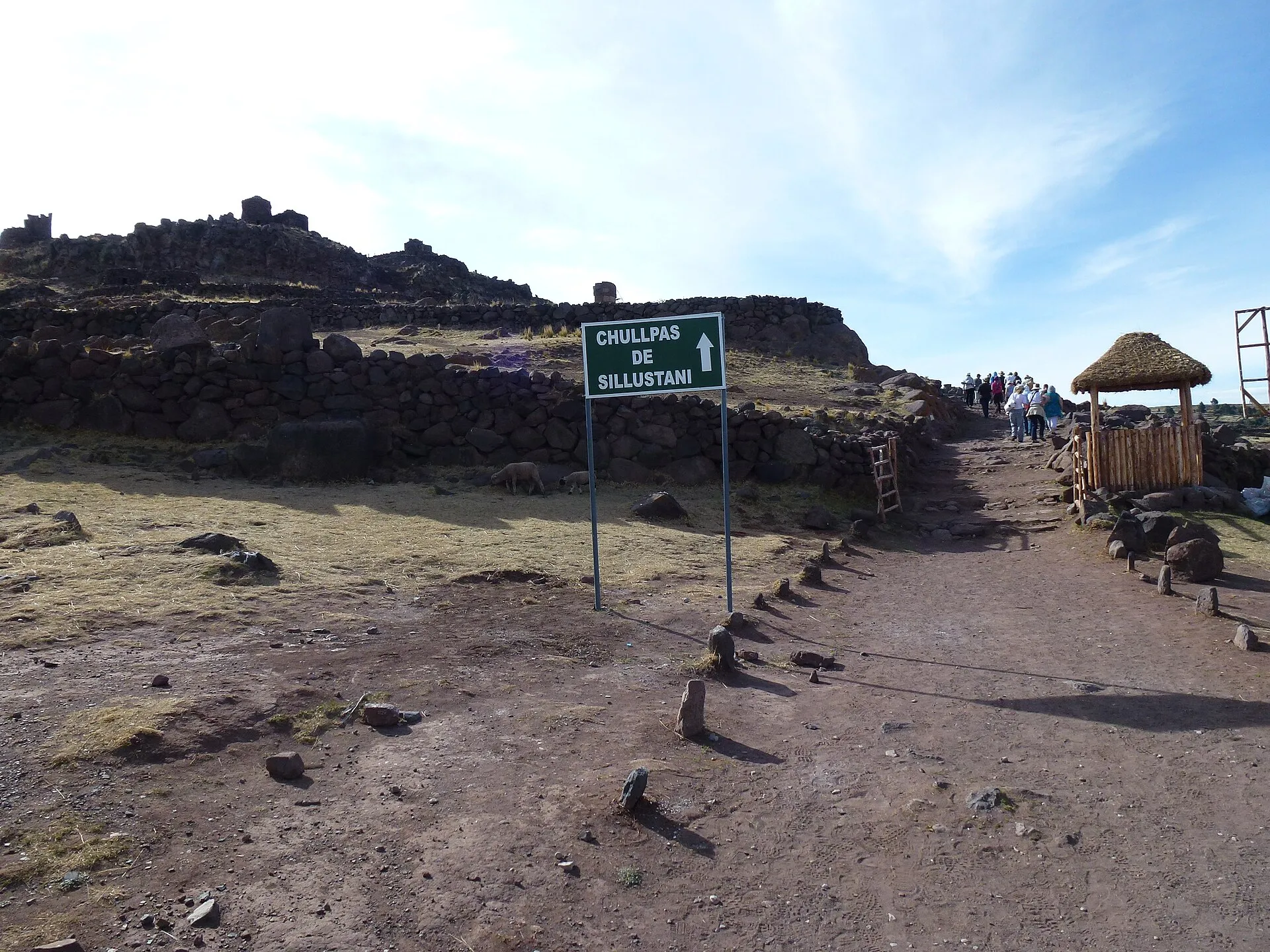
Chullpa towers: Cylindrical burial towers up to 12 meters tall, built without mortar — some Colla, some Inca, each with distinct masonry styles that a guide explains. Golden hour photography: The towers against the altiplano sunset, reflected in Lake Umayo, produce some of the most dramatic images in the Puno region. Altiplano panorama: The peninsula offers 360-degree views across Lake Umayo and the surrounding grasslands, often with alpacas grazing among the ruins. Burial chambers: Collapsed towers reveal the interior chambers where Colla nobles were interred in fetal position with their possessions. Colla vs. Inca stonework: The contrast between rough-hewn Colla construction and precisely fitted Inca additions tells the story of conquest on a single site. Alpacas and wildlife: Herds of alpacas often graze around the ruins, and Andean lapwings and other highland birds circle the peninsula.
Key Artifacts
A handful of individual structures reward close attention on the circuit, and a guide can point out details easy to walk past. The Chullpa del Lagarto — the "Lizard Tower" and the largest, best-preserved chullpa on the site — takes its name from a small lizard carved in relief on one of its precisely dressed Inca-era blocks, a motif documented in surveys of Sillustani and easy to miss without guidance. Nearby stands an unfinished tower whose exposed side reveals the construction method: the Colla and Inca hauled multi-tonne blocks up an earthen ramp banked against the rising wall, then dismantled the ramp once the tower was capped — the clearest surviving evidence of how these monuments were built without wheels or draft animals. Two low ceremonial stone rings — sometimes called the sun circles — sit apart from the burial towers and are associated with Colla solar ritual, a reminder that the peninsula was a sacred precinct and not merely a cemetery. Finally, the collapsed chullpas are as instructive as the intact ones: their broken shells lay bare the corbelled interior chambers where nobles were interred in fetal position, sealed behind a single small opening that faced the sunrise.
When to Visit
Daily: 8 AM - 5 PM. Best: Late afternoon (3-5 PM) for golden light on the towers and dramatic shadows — this is a photographer's site. Duration: 1-1.5 hours for the main circuit, plus 30 minutes each way from Puno. Combine with Puno arrival: Many visitors stop at Sillustani on the afternoon they arrive in Puno from Cusco.
Admission and Costs
Site entry: S/15 ($4). Group afternoon tour from Puno: S/30-60 ($8-16) per person including transport. Private tour + guide: S/100-200 (~$27-54) with flexible timing.
The Case for a Guide
Sillustani rewards context more than almost any site in the Puno region: without it, the towers read as a handsome but silent row of stone cylinders, and most visitors finish the loop in twenty minutes. A guide turns that same walk into the story of the Colla, Aymara-speaking herders who buried their elite dead here for the afterlife, and the Inca who conquered them in the fifteenth century and left their own finer masonry bolted onto the older work.
- Reading the two masonry styles: A guide shows you how to tell rough Colla fieldstone from the tight, mortarless Inca courses added after the conquest — the single most legible record of Andean political history written into the stonework itself
- The inverted-taper engineering: Guides explain why the finest chullpas widen toward the top rather than the base, an unusual and structurally demanding profile that distinguishes Sillustani from other Andean funerary towers
- Burial practice and cosmology: The east-facing openings, the fetal burial position, and the food and textiles interred with the dead only make sense once a guide connects them to Colla ancestor worship and beliefs about the rising sun
- Timing the light and the wind: Local guides know when the tour buses arrive and can pace your visit for the late-afternoon golden hour while keeping you on the sheltered side of the exposed peninsula
- Linking Sillustani to the wider region: A good guide frames the site against the living cultures of Lake Titicaca — the Uros and Taquile communities — so the pre-Inca past and the Andean present read as one continuous story
Tips for Visitors
Afternoon visit: The late-afternoon light is far superior to morning — plan Sillustani for 3-5 PM. Windy and cold: The exposed peninsula catches full altiplano winds — bring a warm windproof jacket regardless of the forecast. Less visited: Sillustani sees a fraction of the visitors that Uros and Taquile receive — you may have the site to yourself, especially late in the day. Arrival day activity: If arriving in Puno from Cusco by bus, Sillustani makes a perfect afternoon stop en route — many tour operators offer this combination. A guide matters: Without context, the towers are mysterious but opaque — a guide explains the Colla civilization, burial practices, and the Inca conquest that changed everything. Sun protection: Despite the cold wind, UV exposure at this altitude is intense — wear sunscreen and a hat.
Frequently Asked Questions
What season should visitors choose for Sillustani?
May through August is the dry season on the altiplano, offering the clearest skies and most dramatic golden-hour light on the ancient burial towers above Lake Umayo. July and August are the coldest months but deliver the crispest views and virtually no rain. The wet season from December through February brings heavy afternoon storms to the exposed peninsula, making the site muddy and the wind-chill factor brutal at nearly 4,000 meters altitude.
What time of day is best for touring Sillustani?
Daily: 8 AM - 5 PM. Best: Late afternoon (3-5 PM) for golden light on the towers and dramatic shadows — this is a photographer's site. Duration: 1-1.5 hours for the main circuit, plus 30 minutes each way from Puno.
What is the entrance fee for Sillustani?
Site entry: S/15 ($4). Group afternoon tour from Puno: S/30-60 ($8-16) per person including transport. Private tour + guide: S/100-200 (~$27-54) with flexible timing
What practical tips should visitors know before going to Sillustani?
Afternoon visit: The late-afternoon light is far superior to morning — plan Sillustani for 3-5 PM. Windy and cold: The exposed peninsula catches full altiplano winds — bring a warm windproof jacket regardless of the forecast.
How do you get to Sillustani from Puno, and can you visit independently?
Sillustani sits about 30 km northwest of Puno, roughly a 45-minute drive. Most visitors join a group afternoon tour (S/30-60 / $8-16) that includes round-trip transport and a guide. Independent travelers can take a colectivo toward Juliaca and get off at the Atuncolla turnoff, then continue by mototaxi to the site, or hire a private taxi from Puno for roughly S/80-120 ($22-32) round trip with waiting time. There is no public bus to the gate itself, so a taxi or tour is the practical choice. The final approach climbs a stepped path to the towers, which some visitors find demanding at nearly 3,900 meters — take it slowly.