
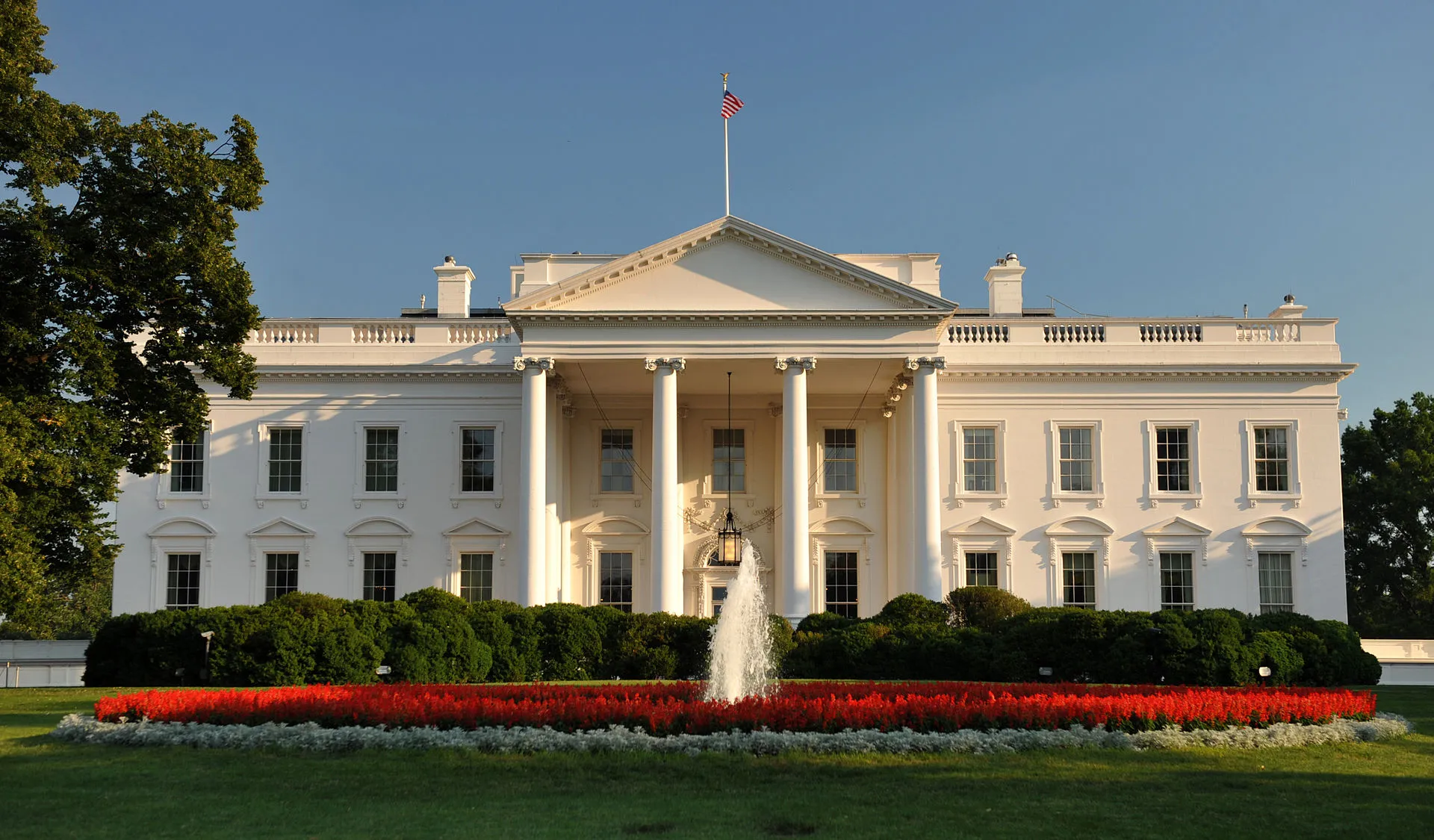
Architecture
East Room: The largest room in the White House, where Abigail Adams hung her laundry, Lincoln's body lay in state, and seven presidential daughters have been married. State Dining Room: Seating 140 guests beneath George P.A. Healy's portrait of Abraham Lincoln, this is where state dinners for foreign leaders take place. Red Room: A small parlor furnished in American Empire style where First Ladies have traditionally hosted afternoon teas and intimate gatherings. Blue Room: The oval reception room directly beneath the residence's second floor, where the official White House Christmas tree is displayed each December. Green Room: Thomas Jefferson's dining room, now furnished as a Federal-period parlor with silk-covered walls and Duncan Phyfe furniture. South Portico and gardens: Visible from the Ellipse, the South Lawn includes the Rose Garden (west) where presidents hold press conferences and the Jacqueline Kennedy Garden (east)
Historical Significance
Walking through the White House's state rooms, you see rope lines, careful lighting, and occasional plaques that identify each space but rarely explain its significance. What happened in the East Room beyond state dinners and press conferences? The room where you stand hosted Abigail Adams' drying laundry, Abraham Lincoln's funeral, and seven presidential daughter weddings. The Red Room served as Mrs. Lincoln's sitting room during the Civil War years, and the Blue Room has displayed the official White House Christmas tree since 1961. Guides who specialize in the exterior tour and the Visitor Center can prepare you to recognize these layers when you walk inside, transforming a self-guided shuffle through elegant rooms into a journey through American history. Lafayette Square, the park facing the North Portico, has served as America's front yard for over two centuries, witnessing protests, celebrations, encampments, and the gradual expansion of security perimeters that now keep the public at a distance previous generations would find shocking. Andrew Jackson installed a massive wheel of cheese on the White House lawn and invited the public to help themselves. Theodore Roosevelt's children roller-skated through the halls. Today, barriers and checkpoints reflect a different era of presidential security. Guides trace this evolution, explaining how the relationship between the president and the people has changed from Jackson's open-door chaos to the fortified compound of the 21st century. The building's Neoclassical design carried deliberate political meaning in 1792 when James Hoban won the competition to design a residence for the new nation's leader. European monarchs lived in palaces; the American president would live in a house, albeit a grand one, inspired by democratic ideals borrowed from ancient Greece and Rome. Understanding that architectural symbolism deepens your appreciation for what the building represents. After your White House visit, guides can extend the experience down Pennsylvania Avenue to the US Capitol, or west to the nearby National Mall and the Lincoln Memorial, connecting the executive mansion to the monuments and memorials that embody the American experiment the president is elected to lead.
When to Visit
Public tours: Tuesday through Saturday, 7:30 AM to 11:30 AM; tours are self-guided and typically last 30-45 minutes. Requests: Tours must be requested through a member of Congress 21 to 90 days in advance; international visitors can submit requests through their country's embassy in Washington. White House Visitor Center: Open daily 7:30 AM to 4 PM on Pennsylvania Avenue between 14th and 15th Streets; free exhibits and a gift shop, no advance request needed. Best time for exterior viewing: Early morning or late afternoon for photography, when the light hits the North or South Portico; the North Lawn is visible from Pennsylvania Avenue, and the South Lawn from the Ellipse. Holiday decorations: December tours are the most sought-after, as the White House is decorated with elaborate seasonal displays; request these at the earliest possible date (90 days out)
Admission and Costs
White House tour: Completely free; no tickets are sold, but advance requests through Congress are mandatory. Visitor Center: Free admission with interactive exhibits about the building's history, architecture, and residents. Guided walking tour (exterior): $20-40 per person for a 90-minute walk covering the White House exterior, Lafayette Square, the Ellipse, and surrounding federal buildings with a licensed DC guide. Private DC guide (full day): $350-600 for a custom tour combining the White House area with the National Mall, Lincoln Memorial, and other monuments
Tips for Visitors
Request early: Contact your Congressional representative's office exactly 90 days before your preferred date; popular dates (holidays, summer weekends) fill immediately. Bring valid ID: All visitors 18 and older must present a government-issued photo ID (passport for international visitors) to enter. No large items: Backpacks, large purses, cameras with detachable lenses, tripods, and food/drinks are all prohibited; there is no bag check facility, so leave everything at your hotel. Combine with the Mall: The White House is a 10-minute walk from the National Mall; the Lincoln Memorial is a 25-minute walk west, and the Smithsonian Museums line the Mall to the south. Metro access: McPherson Square (Blue/Orange/Silver lines) and Metro Center (Red/Blue/Orange/Silver lines) are both a 5-minute walk. Visitor Center first: If you don't secure an interior tour, the White House Visitor Center on Pennsylvania Avenue offers an excellent free exhibit with artifacts, films, and interactive displays about life in the mansion
Frequently Asked Questions
When is the best season for a White House visit?
April through May aligns with Washington's most beautiful weather and the famous cherry blossoms along the Tidal Basin, making the walk to and from the White House especially scenic. October provides comfortable temperatures and thinner tour request volumes than the heavy summer demand. The annual White House Garden Tour in spring and fall opens the South Lawn and Rose Garden to the public, offering a rare glimpse of the grounds most visitors never see.
When can visitors tour The White House?
Public tours: Tuesday through Saturday, 7:30 AM to 11:30 AM; tours are self-guided and typically last 30-45 minutes. Tours must be requested through a member of Congress 21 to 90 days in advance.
How much is the entrance fee for The White House?
White House tour: Completely free; no tickets are sold, but advance requests through Congress are mandatory. Visitor Center: Free admission with interactive exhibits about the building's history, architecture, and residents.
What should visitors know before visiting The White House?
Request early: Contact your Congressional representative's office exactly 90 days before your preferred date; popular dates (holidays, summer weekends) fill immediately.