
Walking Route
Walking Routes
Georgetown rewards a slow, looping wander rather than a fixed march. These are the landmarks most guided routes string together, roughly in the order a walk down from the university toward the river takes them:
- Georgetown University & Healy Hall — start at the front gates on 37th Street, where the Gothic Revival Healy Hall (1877-1879) anchors the oldest Catholic and Jesuit university in the country, founded in 1789.
- The Exorcist Steps — the vertiginous 75-step staircase beside 36th and Prospect Streets, immortalized in the 1973 film and marked with a city plaque in 2015.
- Old Stone House — the 1765 fieldstone cottage on M Street, the oldest unaltered building in Washington, preserved free of charge by the National Park Service.
- M Street & Wisconsin Avenue — the commercial crossroads where 18th-century storefronts now hold boutiques, bookshops, and the flagship Georgetown Cupcake.
- Martin's Tavern — the 1933 tavern at 1264 Wisconsin Avenue where JFK proposed to Jackie in 1953; the Proposal Booth is still marked.
- C&O Canal towpath — walk the historic canal east, past stone locks and beneath arches that have stood since the 1830s, toward the Lincoln Memorial.
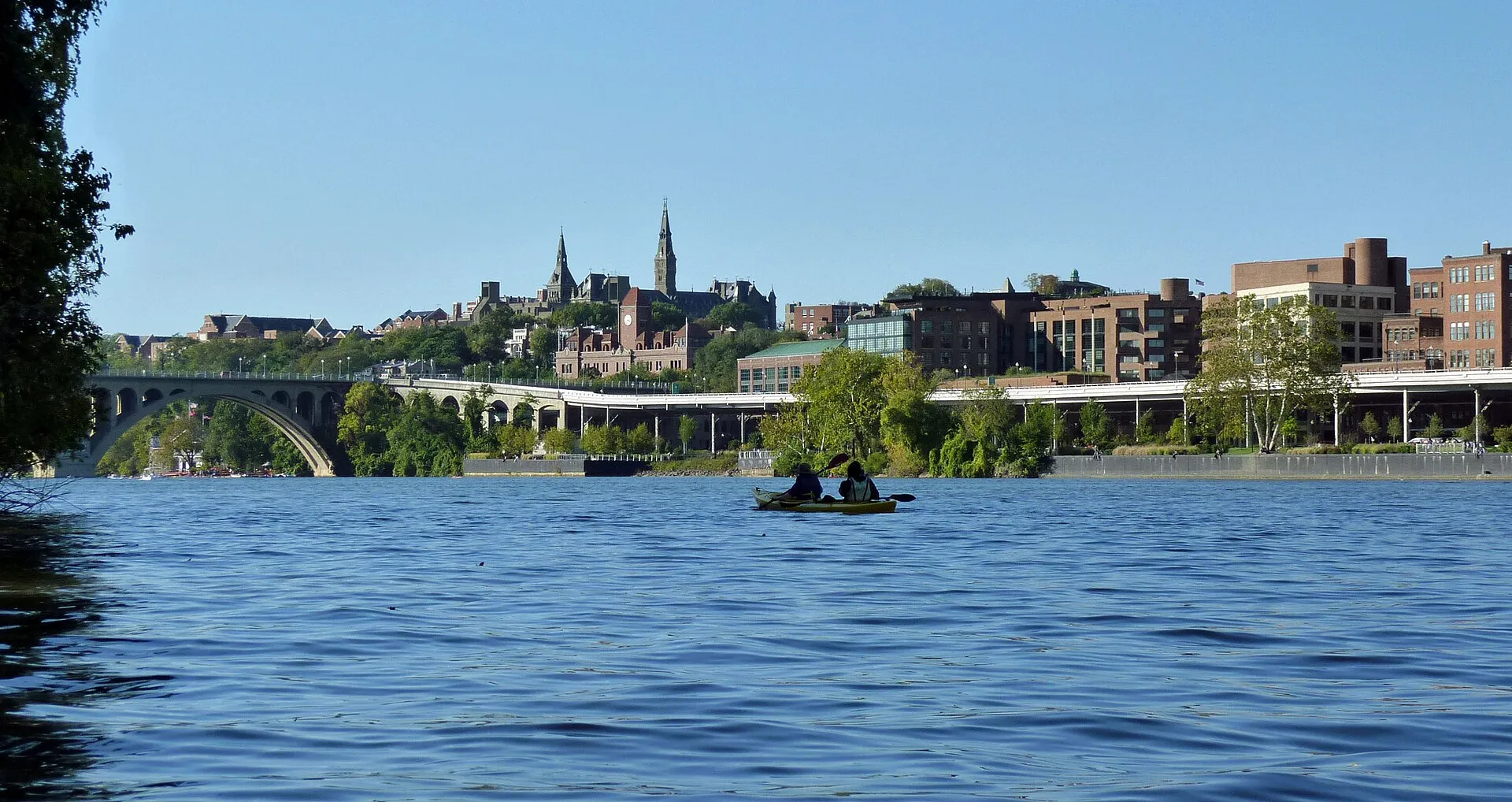
- Georgetown Waterfront Park — the revitalized Potomac riverfront with a boardwalk, fountains, and kayak rentals looking across to Arlington.
- Dumbarton Oaks — cap the walk uphill at the Harvard-run museum and ten acres of terraced gardens, site of the 1944 conference that helped shape the United Nations.
Local Life
Walking Georgetown's cobblestone streets alone, you see handsome Federal row houses, ivy-covered brick, and iron-gated gardens whose contents stay invisible from the sidewalk. What you miss are the stories that turn pretty architecture into living history. Behind an unmarked door on N Street, John F. Kennedy lived before the White House. Down a blind alley, an 18th-century garden still blooms for owners who occasionally open the gate for the annual Georgetown Garden Tour. Guides know which seemingly ordinary houses sheltered Cold War operatives trading secrets over Georgetown cocktail parties, and which booths at Martin's Tavern sat presidents and spies.
The neighborhood's architectural layers document American wealth across three centuries, but reading that story takes a visual literacy most visitors lack. Federal-style houses from the early republic show symmetrical facades and delicate fanlights over their doors. Georgian townhouses announce colonial-era prosperity through elaborate brickwork and classical proportions. Victorian additions burst with ornamental excess, while discreet modern insertions by contemporary architects slip between their historic neighbors. On a single block these styles coexist, and a guide teaches you to date a building by its windows, doorways, and rooflines.
Connecting Georgetown to the wider capital enriches any visit. The C&O Canal towpath winds east toward the National Mall and the Lincoln Memorial, a tree-lined walk that once carried coal barges from the Appalachians. Across the Key Bridge lies Arlington National Cemetery in Virginia, and the Gothic spires of Georgetown University crown the hill above it all, where future diplomats have trained since 1789.
When to Visit
Neighborhood access: Public streets are open 24 hours and free to walk anytime. Shops and restaurants typically operate 10 AM to 9 PM, with dining running later. The C&O Canal towpath is open dawn to dusk year-round for walking, running, and cycling.
- Best light for walking: Weekday afternoons, when the streets are lively but manageable, especially in spring and fall when the tree-lined blocks are at their most photogenic.
- Weekend evenings: M Street and Wisconsin Avenue come alive after dark with restaurant terraces and a bar scene that draws students and Washington professionals alike.
- Dumbarton Oaks gardens: Generally open Tuesday-Sunday afternoons in season (mid-March to late October), with the museum on a separate schedule; always confirm current hours before visiting.
- Garden season: Late April through June, when Georgetown's hidden private gardens are occasionally opened during the annual Georgetown Garden Tour.
Admission and Costs
Walking the neighborhood is completely free — the cobblestone streets, the C&O Canal towpath, and Georgetown Waterfront Park cost nothing. Beyond that, typical costs are:
- Guided historical walking tour: $25-45 per person for a 2-hour walk covering colonial history, architecture, and notable residents.
- Ghost & Exorcist tour: $20-35 per person for an evening walk exploring Georgetown's darker legends and the filming locations of The Exorcist.
- Private guide: $200-350 for a customized 2-3 hour tour for up to 6 people, adaptable to your interests in history, food, or architecture.
- Dumbarton Oaks gardens: roughly $12 per adult in season; the art museum is free.
- Dining on M Street: $20-75 per person depending on the restaurant, from a casual Georgetown Cupcake box to fine dining at Fiola Mare on the waterfront.
The Case for a Guide
A guide is the difference between admiring pretty houses from the sidewalk and reading a neighborhood that keeps its best stories behind private gates. Because you cannot step inside most of Georgetown, the interpretation is the experience.
- Decoding the architecture: A guide reads the facades for you, explaining why one family chose Federal restraint and a neighbor added Victorian flourish, and how brickwork, fanlights, and cornices signaled exactly how much colonial and merchant money stood behind each door.
- The Kennedy-era stories: Guides connect the private N Street house, the White House, and the Proposal Booth at Martin's Tavern into the fuller story of Cold War Georgetown, when the neighborhood's salons were the capital's real seat of power.
- Making the canal and campus legible: A guide explains how the C&O Canal was built to carry Appalachian coal, why its locks failed against the railroads, and how Georgetown University grew from a small 1789 academy into the country's oldest Jesuit university.
- Separating film legend from history: At the Exorcist Steps, a local supplies the pre-Hollywood history of the bluff and the darker neighborhood tales that predate any movie.
- Route and logistics: A guide knows the shadiest cobblestone blocks on a humid afternoon, the cleanest sightlines for photographs, and how to chain Georgetown to the National Mall by walking the towpath in a single day.
Tips for Visitors
- Skip the car: Parking is extremely limited and expensive, and street meters fill fast on weekends. With the DC Circulator retired at the end of 2024, ride the 31 or 33 Metrobus along Wisconsin Avenue and M Street, or walk 15 minutes from the Foggy Bottom-GWU Metro station. Capital Bikeshare and rideshare are the easy alternatives.
- Wear real walking shoes: The cobblestone streets and steep hills punish heels and flimsy sandals.
- Combine with the Mall: Georgetown sits just west of the National Mall. Walk the towpath and riverfront east to reach the Lincoln Memorial in about 25 minutes.
- Day-trip structure: A morning at Arlington National Cemetery across the Key Bridge, an afternoon exploring Georgetown, and dinner on M Street makes a full and varied day.
- Book lovers: Bridge Street Books on Pennsylvania Avenue is one of Washington's last great independent bookstores, with a curated collection of politics, poetry, and philosophy.
- Seasonal charm: Georgetown is especially beautiful in autumn, when the mature trees lining its residential streets turn brilliant orange and gold against the brick and stone facades.
Frequently Asked Questions
What time of year is best for exploring Georgetown?
April through May brings the neighborhood to life with blooming gardens behind the cobblestone facades and perfect weather for walking the C&O Canal towpath. September through October offers a second peak with warm days, fall color along the Potomac, and the return of Georgetown University's student energy. Washington's notoriously humid summers make July walks through the hilly streets tiring, while winter is quiet but cold enough to discourage lingering at the outdoor waterfront restaurants.
How do visitors get to Georgetown without a Metro station?
Georgetown is famously not served by the Metro, and the DC Circulator that once shuttled visitors here was discontinued at the end of 2024. The easiest transit is now Metrobus: the 31 and 33 run the length of Wisconsin Avenue and M Street, and the D-series buses connect from Dupont Circle and downtown. The nearest rail stations are Foggy Bottom-GWU on the Blue, Orange, and Silver lines (a flat 15-minute walk east along Pennsylvania Avenue) and Rosslyn across the Key Bridge in Virginia. Capital Bikeshare docks and rideshare are widely available, but private cars face very limited, expensive parking.
What can visitors actually go inside in Georgetown?
Most of Georgetown's mansions are private homes admired only from the sidewalk, but several historic interiors are open to the public. The Old Stone House on M Street, built in 1765 and the oldest unaltered building in Washington, is free and run by the National Park Service. Dumbarton Oaks offers a Byzantine and Pre-Columbian art museum plus ten acres of formal gardens, while nearby Tudor Place preserves a Federal-era estate with Martha Washington heirlooms. Georgetown University's campus, crowned by Healy Hall, welcomes respectful visitors, and Martin's Tavern and the Georgetown Waterfront restaurants are open to all.
How much should visitors budget for Georgetown?
Walking the neighborhood and its cobblestone streets is completely free, and the C&O Canal towpath and Georgetown Waterfront Park cost nothing to enjoy. A guided historical walking tour runs $25-45 per person for two hours of colonial history, architecture, and notable residents; an evening ghost and Exorcist-themed walk is $20-35. A private guide for up to six people costs $200-350 for a customized two-to-three-hour tour. Dumbarton Oaks garden admission is about $12 in season, and dining on M Street ranges from a Georgetown Cupcake box under $30 to fine dining at Fiola Mare well past $75 per person.
Where did John F. Kennedy propose to Jacqueline, and can visitors see it?
JFK proposed to Jacqueline Bouvier in 1953 in a booth at Martin's Tavern, the family-run restaurant at 1264 Wisconsin Avenue that has served Georgetown since 1933; the spot is marked as the Proposal Booth and you can still sit in it over lunch. Before his presidency, Kennedy lived at 3307 N Street NW, a Federal row house that remains a private residence viewable only from the public sidewalk. Guides string these Kennedy-era sites together with the Georgetown salons where Cold War Washington traded gossip and secrets.
Where are the Exorcist Steps and are they worth the climb?
The steep 75-step staircase made famous by the 1973 film The Exorcist runs beside 36th and Prospect Streets NW, dropping from Georgetown down to M Street and the Whitehurst Freeway. The city dedicated a plaque here in 2015, and the steps double as a punishing fitness challenge for locals. They are worth the short detour for film fans and for the sweeping view down toward the Potomac, but a guide adds the pre-Hollywood history of the bluff and the neighborhood's older legends that predate the movie.