
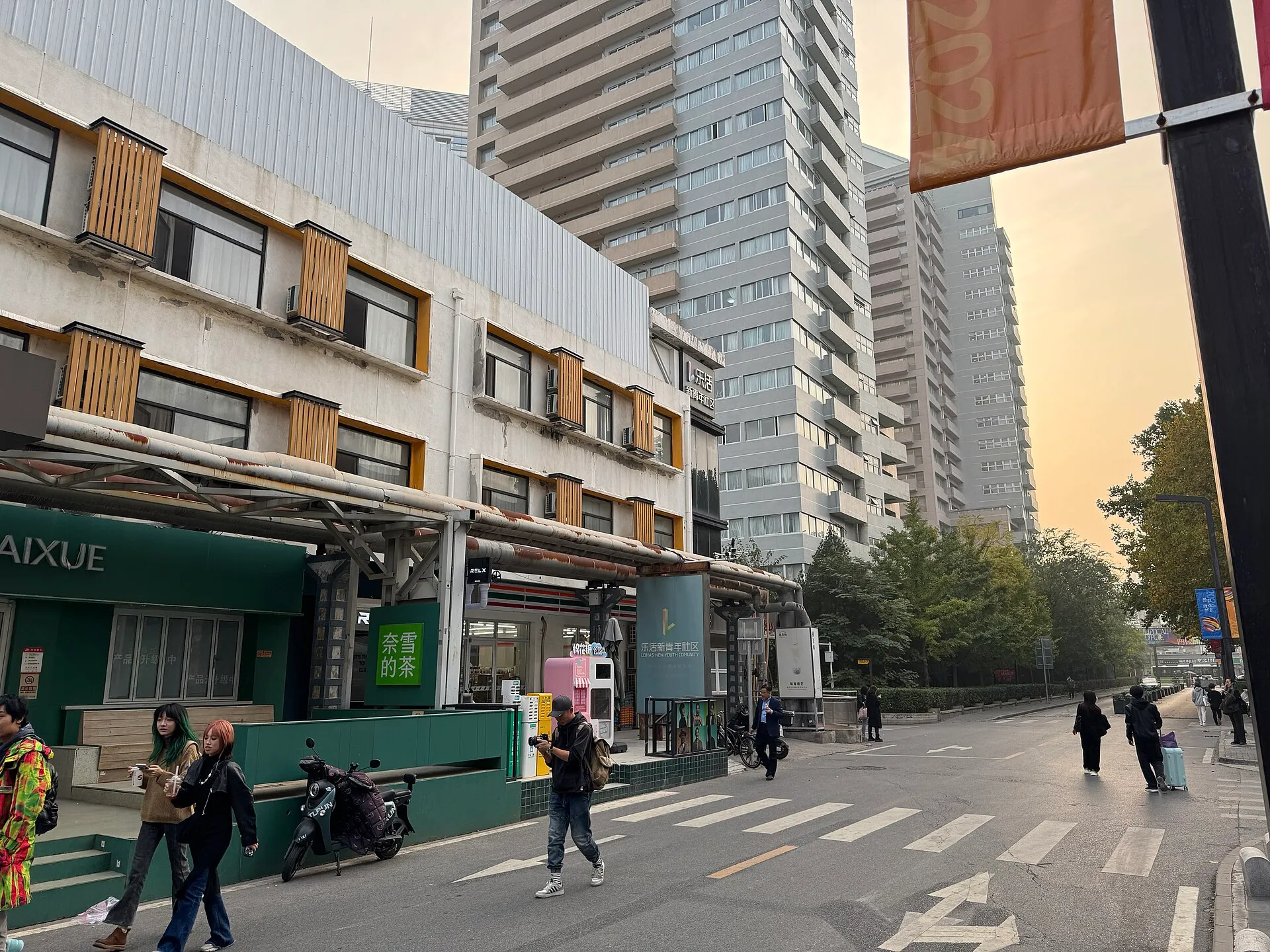
Walking Routes
UCCA Center for Contemporary Art: The district's flagship institution, staging ambitious exhibitions by both Chinese and international artists in a renovated factory hall. Street art and murals: Enormous commissioned murals and guerrilla graffiti transform alleyway walls into an ever-changing open-air gallery. Bauhaus architecture: The original 1950s sawtooth roof factories, designed for even natural light distribution, are architectural landmarks in their own right. Pace Gallery Beijing: The Asian outpost of the renowned New York gallery, showcasing blue-chip contemporary works in a converted warehouse. Cafe culture: Independent roasteries and concept cafes occupy former machine shops, blending industrial grit with specialty coffee and design-forward interiors. Maoist relics: Propaganda slogans and red star motifs from the factory's military production era survive on walls alongside provocative contemporary installations, creating striking visual juxtapositions
Local Life
Resident artists still rent studios in the upper floors of the old factory buildings, and on weekday mornings you can watch painters stretching canvases, sculptors welding steel in open courtyards, and printmakers pulling editions in ink-stained workshops. The district's own community has its rhythms: gallery assistants grab jianbing from the crepe cart on Jiuxianqiao Road at dawn, design students sketch on loading docks over cheap Americanos, and weekend flea markets near the UCCA entrance sell vintage Mao-era posters, handmade zines, and ceramic oddities alongside fried jianbing and candied hawthorn skewers.
When to Visit
District access: Open 24 hours as a public area; galleries typically open 10:00 AM - 6:00 PM. Gallery closures: Most galleries close on Mondays, mirroring international museum custom. Peak activity: Saturday afternoons draw the largest crowds, with many openings and live events. Best: Tuesday through Friday mornings offer unhurried gallery browsing and the best chance to chat with resident artists. Seasonal note: Spring and autumn bring the most exhibition openings; summer heat can make the un-air-conditioned factory spaces stifling
Admission and Costs
District entry: Free - the streets, courtyards, and outdoor sculptures are open to all. Gallery admission: Most galleries are free; a few major exhibition halls charge ¥10-¥60 for special shows. UCCA Center for Contemporary Art: ¥20-¥100 depending on exhibition. Guided art tours: ¥200-¥500 for a 2-3 hour English-speaking docent experience. Cafe and dining: Expect to pay ¥40-¥80 per person at the district's many independent cafes
Tips for Visitors
Check schedules ahead: Gallery hours and exhibition calendars shift frequently, so verify online before visiting to avoid finding shuttered doors. Wear walkable shoes: The district sprawls across dozens of interconnected lanes and uneven factory floors, and you will cover more ground than expected. Bring a camera: Photography is welcome in the outdoor areas and most free galleries, though some ticketed exhibitions restrict it. Eat inside the district: The cafes and restaurants here are part of the experience, often designed by the same creative minds behind the galleries. Combine with nearby sights: The district sits close to the Olympic Park area, making it easy to visit the Bird's Nest and Water Cube structures on the same outing
Frequently Asked Questions
When is the best season to browse the 798 Art District?
April-May and September-October coincide with Beijing's brief but glorious spring and autumn seasons, when clear skies and comfortable temperatures make wandering the outdoor sculpture courts and factory courtyards a pleasure. Summer (July-August) brings oppressive heat and humidity that makes the unair-conditioned industrial buildings stifling, while winter's dry cold and frequent haze reduce the appeal of the district's open-air installations.
What are the opening hours for galleries in the 798 Art District?
District access: Open 24 hours as a public area; galleries typically open 10:00 AM - 6:00 PM. Gallery closures: Most galleries close on Mondays, mirroring international museum custom.
How much should visitors budget for 798 Art District?
District entry: Free - the streets, courtyards, and outdoor sculptures are open to all. Gallery admission: Most galleries are free; a few major exhibition halls charge ¥10-¥60 for special shows.
What should visitors check before visiting 798 Art District?
Check schedules ahead: Gallery hours and exhibition calendars shift frequently, so verify online before visiting to avoid finding shuttered doors.