
Great Wall at Mutianyu timeline
- 6th century
Northern Qi raises the first ramparts
The earliest wall on this ridge was thrown up under the Northern Qi to screen the northern approaches to the future capital from steppe raiders.
-
Qi Jiguang rebuilds in brick and stone
The Ming general reinforced the ramparts and packed the ridgeline with watchtowers spaced within bowshot of one another, giving Mutianyu the fortified form visitors walk today.
- 1980s
Restored section reopens to visitors
After extensive restoration, the Mutianyu section reopened to the public with a cable car, chairlift, and toboggan run serving the ridge.
-
Great Wall inscribed by UNESCO
The Great Wall was added to the World Heritage list (reference 438) as one of the largest military structures ever built.
Fortification History
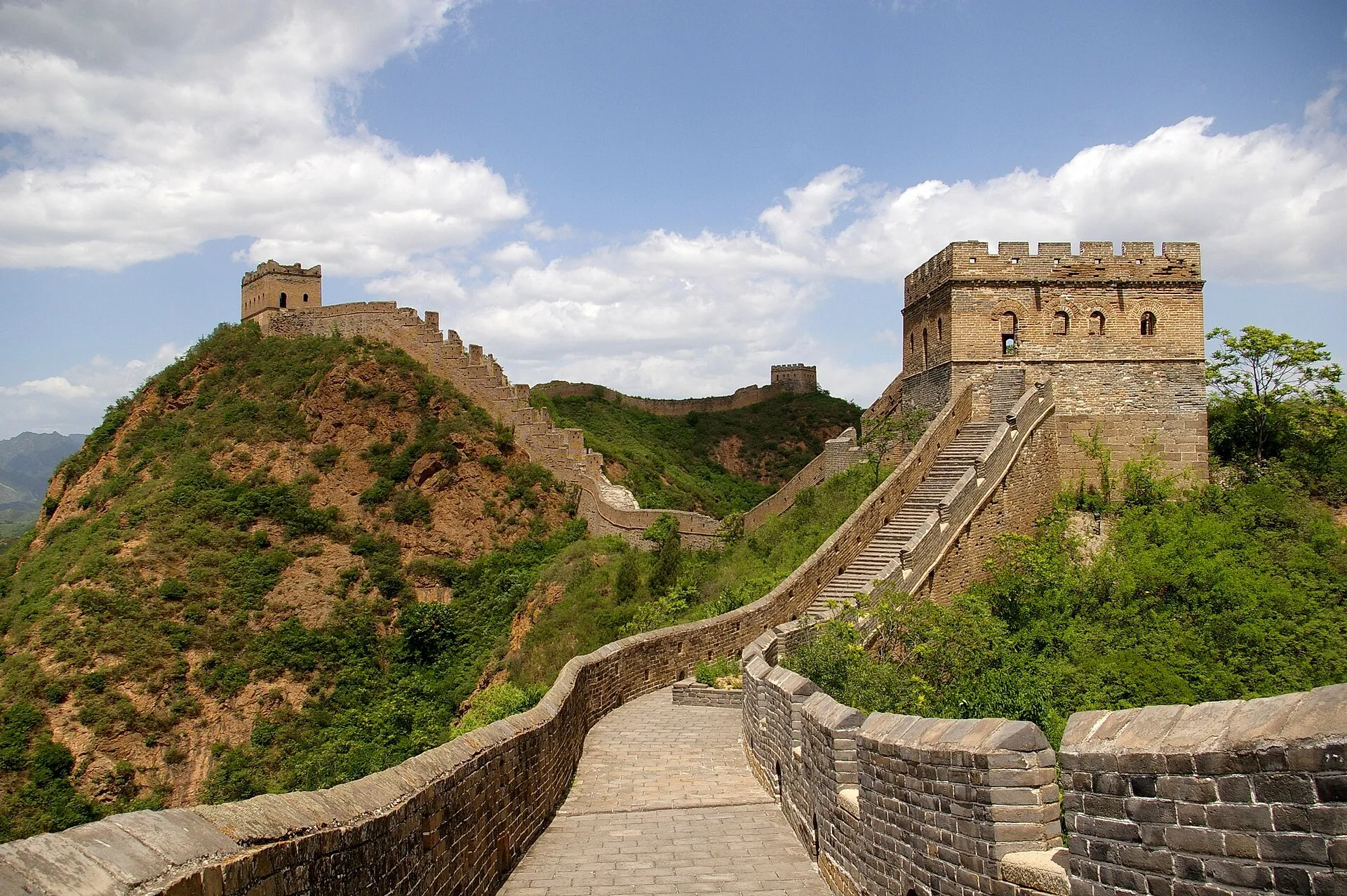
Mutianyu guarded one of the most strategically vital approaches to imperial Beijing, screening the capital and the nearby Ming tombs from Mongol raids sweeping down from the northern steppe. First raised in the mid-sixth century under the Northern Qi, the section was comprehensively rebuilt in 1569 by the celebrated Ming general Qi Jiguang, who thickened the ramparts and packed the ridgeline with 23 watchtowers spaced within bowshot of one another so no stretch of curtain wall went undefended. Unusually, Mutianyu is crenellated on both parapets, allowing archers to fire outward at attackers and inward against any enemy who breached a neighboring pass — a design that made it one of the toughest sections of the Great Wall of China to overrun. Garrison troops relayed threats through a beacon-fire network codified in Ming military regulations: one beacon and cannon shot warned of roughly a hundred raiders, two of five hundred, three of more than a thousand, and so on up the scale, converting a distant dust cloud into a precise troop count that reached the Beijing garrison within hours. Because it never fell to a major assault and lay off the tourist-worn Badaling axis, Mutianyu's Ming-era military stonework survives remarkably intact, letting visitors read the frontier's defensive logic directly in the surviving battlements, arrow loops, and troop-movement stairways.
Notable Rooms
The wall's fighting architecture is best appreciated tower by tower. Watchtower 14, the highest accessible point and the top station of the cable car, was a two-story garrison tower whose upper chamber quartered soldiers while the vaulted lower room stored weapons and grain — its rooftop platform now delivers the section's sweeping ridge panorama. The dramatic three-tower cluster known as the Zhengguantai (the "Ox Horn Edge") packs three connected watchtowers onto a single knife-edge of rock, a rare configuration built to command a sharp bend in the frontier. Throughout, the crenellated ramparts retain their original merlons and arrow loops, the narrow slits through which archers loosed arrows while staying under cover — and because both parapets are battlemented, you can trace the same defensive slots on the inward-facing side. Look for the interior guard chambers with their brick barrel vaults, the stone staircases that let defenders shift quickly between towers, and the drainage spouts that kept the walkway from flooding. Tower 6, near the top of the chairlift, frames the classic S-curve where the wall folds back on itself, while the surviving battlement walkways show the wide, paved surface that once let five soldiers march abreast. Together these ramparts and towers form an open-air fortress you walk through rather than merely view from below.
When to Visit
Open: Daily 7:30 AM - 6:00 PM (roughly mid-March to mid-November) / 8:00 AM - 5:00 PM (winter), with the last tickets sold about an hour before closing. Cable car and chairlift: Run from 8:00 AM until 30 minutes before the gates close, weather permitting — strong wind on the ridge can suspend the lifts, so keep a walking descent in reserve. Shuttle buses ferry visitors the last couple of kilometres from the ticket plaza up to the cable-car and chairlift stations. Best: Arrive by 8:00 AM to hike before the tour buses roll in around 10 AM. Avoid: National holidays (especially the first week of October's Golden Week) and weekend afternoons, when the toboggan queue alone can swallow an hour.
Admission and Costs
Wall admission: ¥40 ($5.50). Cable car round trip: ¥120 ($17); one way ¥100 ($14). Chairlift-plus-toboggan combination — up by open chairlift, down the metal chute: ¥120 ($17) round trip. Toboggan one way: ¥100 ($14). Shuttle bus between the ticket plaza and the wall base: ¥15 ($2) round trip. Private return transfer from central Beijing: ¥400-600 ($55-85) (most guides fold this into their day rate). Bring some cash: WeChat Pay and Alipay work at the main counters, but a few notes move faster at the smaller shuttle and snack kiosks on the ridge.
The Case for a Guide
Mutianyu's 23 watchtowers look alike from the cable car, but each served a distinct military or logistical function that only becomes visible once someone explains the 1,600-year construction timeline and the imperial border-defense system they were built to serve.
- Military towers vs. signal stations: Guides distinguish the battle-ready garrison towers with arrow loops and soldier quarters from the pure signal relay towers built solely to transmit beacon fire messages toward Beijing — a difference invisible without explanation.
- Beacon fire communication system: A chain of fire and smoke signals could carry a military alert from the Mongolian frontier to the Beijing garrison in hours — guides explain exactly how the system worked, how many fires signaled how many enemy soldiers, and why it was more reliable than mounted couriers.
- 1,600-year construction timeline: The wall here began in the Northern Qi dynasty (6th century) and was rebuilt under Ming emperors in the 15th–16th century; guides trace the visible differences in construction technique between these eras in the surviving stonework.
- Best photography towers: Tower 14 for the sweeping ridge panorama, the junction at Tower 6 for the classic S-curve composition — guides position you at each for the shots that travel guides use on their covers, at the precise time of day when the light works.
- Local legends about construction workers: The tradition of workers being buried within the wall itself is a myth, but guides share the documented folk stories and the names of the work gangs recorded in Ming dynasty archives that illuminate who actually built this structure.
Tips for Visitors
Allow a full morning: The drive from central Beijing takes 90 minutes each way - plan at least 5-6 hours total. Bring water and snacks: Vendors on the wall charge steep prices - stock up before ascending. Dress in layers: The summit is significantly windier and cooler than the city, especially in spring and autumn. Go left at the top: Most visitors turn right from the cable car - heading left leads to quieter, less-trafficked sections toward the ruined, unrestored wall. Knee braces help: The descent involves hundreds of steep, uneven steps that are tough on joints — or skip them entirely by riding the toboggan down. Getting there: There is no metro to Mutianyu; a private car or guided day trip is far simpler than the 916 Express bus to Huairou plus a local transfer.
Frequently Asked Questions
When is the best season to hike the Great Wall at Mutianyu?
April-May and September-October offer the most spectacular conditions — spring brings wildflowers and almond blossoms along the mountainside, while autumn paints the surrounding forest in vivid reds and golds that make Mutianyu one of the most photographed Wall sections on Earth. Avoid the sweltering, hazy July-August heat that makes the exposed stone steps exhausting, and the bitter January-February cold when icy conditions on the steep stairways create genuine safety concerns.
When can visitors tour Great Wall at Mutianyu?
Open: Daily 7:30 AM - 6:00 PM (roughly mid-March to mid-November) / 8:00 AM - 5:00 PM (winter), with last tickets sold about an hour before closing. Cable car and chairlift: Run from 8:00 AM until 30 minutes before the gates close, weather permitting — high wind can suspend the lifts, so keep a walking descent in reserve. Best: Arrive by 8:00 AM to hike before tour buses arrive around 10 AM.
How much is the entrance fee for Great Wall at Mutianyu?
Wall admission: ¥40 ($5.50). Cable car round trip: ¥120 ($17). Chairlift-plus-toboggan combination: ¥120 ($17). Toboggan one way: ¥100 ($14). Shuttle bus to the wall base: ¥15 ($2) round trip. Private transfer from Beijing: ¥400-600 ($55-85), which most guides fold into their day rate.
What should visitors know before visiting Great Wall at Mutianyu?
Allow a full morning: The drive from central Beijing takes 90 minutes each way - plan at least 5-6 hours total. Bring water and snacks: Vendors on the wall charge steep prices - stock up before ascending. Cash helps: Mobile payment works at the main counters, but a few notes speed up the smaller shuttle and snack kiosks.
How do you get to the Great Wall at Mutianyu from Beijing?
The section lies about 70 km northeast of the city, a 1.5-2 hour drive depending on traffic. The simplest options are a private car or a guided day trip, both of which drop you at the ticket plaza. Public transport is possible but slow: take the 916 Express bus from Dongzhimen Transport Hub to Huairou, then transfer to a local minibus or taxi for the final stretch. There is no direct metro line, so budget a full morning for the round trip.