
_-_01.JPG)
Overview
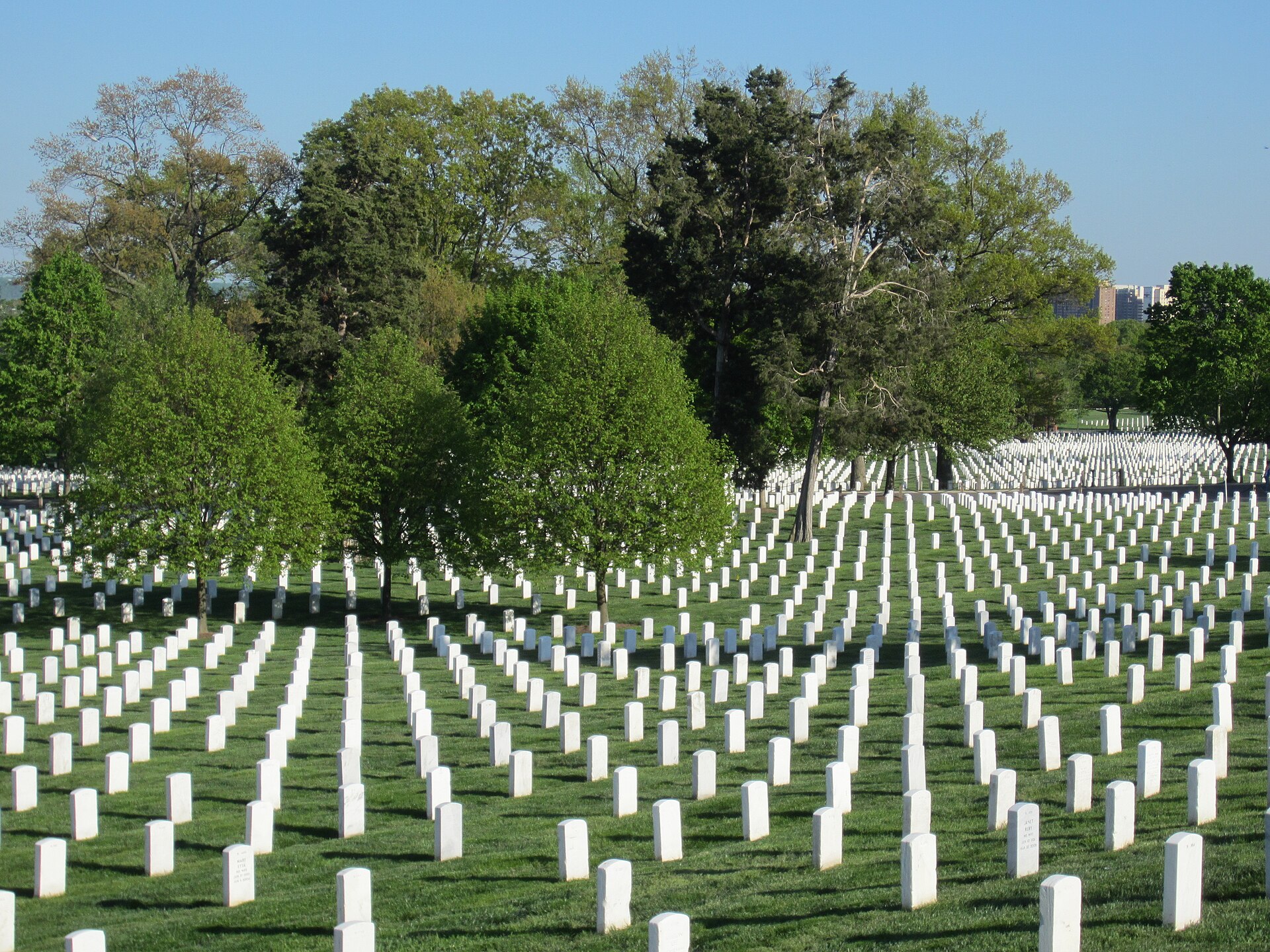
Arlington National Cemetery occupies land that once belonged to Robert E. Lee. That fact alone carries a weight of American irony that no other place in Washington DC can match. When Lee left his hilltop estate in 1861 to command the Confederate Army, Union Quartermaster General Montgomery Meigs deliberately chose the grounds as a burial site for Union soldiers, ensuring that Lee could never comfortably return home. The first military burial took place on May 13, 1864, and in the century and a half since, over 400,000 service members, veterans, and their eligible family members have been laid to rest across 639 rolling acres overlooking the Potomac River and the monuments of the capital they served. Walking through Arlington is a profoundly different experience from visiting any other site in Washington. The rows of white marble headstones, perfectly aligned in every direction, create a visual rhythm that conveys the scale of American military sacrifice more powerfully than any speech or monument. The Tomb of the Unknown Soldier, guarded 24 hours a day since 1937, sits atop a hill where the Changing of the Guard ceremony unfolds with a precision and solemnity that silences even the most restless visitors. President John F. Kennedy's gravesite, marked by an eternal flame that has burned since his burial on November 25, 1963, draws visitors who were not yet born when he died. A guided walk through these grounds transforms a visit from respectful tourism into a deep encounter with the human cost of the nation's history.
Historical Significance
Behind each of the 400,000 white headstones lies a life, and most visitors walk past rows of anonymous marble without knowing that they are passing Medal of Honor recipients, Supreme Court justices, astronauts, and the crews of the Challenger and Columbia space shuttles. Guides transform the sea of identical stones into a landscape of individual stories. They pause at specific graves to share the biography of the person beneath, connecting abstract sacrifice to human particulars: the soldier who threw himself on a grenade to save his squad, the nurse who died caring for wounded troops, the general whose decisions shaped the course of a war.
The Changing of the Guard at the Tomb of the Unknown Soldier unfolds with a precision that appears choreographic but carries specific military meaning in every gesture. Each step is counted. The rifle is held at exact angles. The guard's white gloves are inspected for the slightest smudge. Without explanation, visitors witness a ceremony they cannot fully comprehend. Guides decode the ritual, explaining how the sentinel's devotion to the unknown dead embodies the military's commitment to leaving no soldier behind, how the 21-step walk symbolizes the highest military honor, and why the tomb has been guarded continuously since 1937 regardless of weather, government shutdowns, or national emergencies.
Perhaps the most surprising story at Arlington is its origin as an act of wartime retribution. When Robert E. Lee left his hilltop estate to command the Confederate Army, Union Quartermaster General Montgomery Meigs deliberately began burying Union soldiers on Lee's property, ensuring that the man who led the rebellion could never return home. That context transforms Arlington from a simple cemetery into a landscape of contested memory, a place where the nation honors its war dead on ground seized from the general who led the bloodiest insurrection in American history. From this hill, you can see the Lincoln Memorial across Memorial Bridge, a symbolic reunion of North and South that guides can illuminate as you walk these 639 sacred acres.
Architecture
Tomb of the Unknown Soldier: Watch the Changing of the Guard, a ceremony performed with such precision that the sentinel's steps are counted and timed to perfection. JFK eternal flame: The gravesite of President Kennedy, Jacqueline Kennedy Onassis, and two of their children, marked by the flame that has burned continuously since November 1963. Arlington House: Robert E. Lee's restored mansion at the cemetery's highest point, offering panoramic views of Washington DC and the story of the property's transformation. Space Shuttle Challenger and Columbia memorials: Monuments to the crews of both shuttle disasters, located near the Tomb of the Unknown Soldier. Section 60: Where service members from Iraq and Afghanistan are buried, often the most emotionally powerful section, with fresh flowers and personal mementos left by families. Nurses Memorial: Honoring military nurses who served from the Spanish-American War through modern conflicts. Memorial Bridge view: Walk across Memorial Bridge from the Lincoln Memorial for the approach that symbolically reunites North and South
When to Visit
Cemetery grounds: Open daily 8 AM to 5 PM (October through March) and 8 AM to 7 PM (April through September). Changing of the Guard: Every hour on the hour October through March, every half hour April through September, and every half hour at night year-round. Best time to visit: Weekday mornings are the quietest, allowing for contemplative walking among the headstones without crowds. Spring: Cherry blossoms bloom in sections of the cemetery in late March and early April, adding beauty to an already moving landscape. Memorial Day: Small American flags are placed at every headstone by members of the 3rd U.S. Infantry Regiment, a sight of staggering visual impact
Admission and Costs
Entry: Completely free, no tickets required for walking the grounds. Tram tour: Narrated hop-on, hop-off tram tours available for a fee, covering major sites with historical commentary. Guided walking tours: $30-50 per person for a 2-hour expert-led tour covering the Tomb, JFK grave, and selected historical sections. Private guide: $250-400 for a 3-hour comprehensive walking tour for up to 6 people, tailored to your interests. Audio guide app: Free official Arlington app provides self-guided tour narration and grave locator
Tips for Visitors
Dress respectfully: Arlington is an active cemetery where funerals occur daily. Dress modestly and speak quietly throughout your visit. Wear comfortable walking shoes: The grounds are hilly and extensive. Even a focused visit involves significant walking on paved paths and grass. Metro access: Arlington Cemetery station (Blue Line) deposits you directly at the visitor center entrance, making public transit the easiest approach. Photography: Permitted throughout the cemetery but prohibited during active funeral services. Use good judgment and keep cameras silent during the Changing of the Guard. Combine with the Mall: Walk across Memorial Bridge to reach the Lincoln Memorial and the western end of the National Mall, a natural half-day pairing. Georgetown dinner: After a reflective afternoon at Arlington, cross the river to Georgetown for dinner along M Street, a 15-minute drive or Metro ride. Water and snacks: Food is not sold inside the cemetery. Bring water and eat before or after your visit. The visitor center has restrooms and a small gift shop