

Overview
French, Spanish, American, and Creole histories layer atop one another in these 78 blocks, often within a single building. That particular courtyard features a Spanish fountain inside a structure with a French name on a street that was renamed during American rule, and understanding why requires more than reading a plaque. Guides unstack these layers, revealing how each colonial power left its mark and how the Creole culture that emerged from their collision created something found nowhere else in the Americas. Without this interpretation, you see beautiful buildings; with it, you witness three centuries of cultural negotiation preserved in wrought iron and crumbling stucco. Licensed guides cultivate relationships with property owners throughout the Quarter, and these connections occasionally unlock access to private courtyards, galleries, and interior spaces that remain closed to the general public. The hidden world behind those shuttered facades - the secret gardens, the interior arrangements that reflect colonial living patterns, the architectural details invisible from the street - becomes available to guided groups in ways that independent visitors cannot replicate. Architectural fluency allows guides to distinguish between Creole cottages with their rooms opening directly onto the street, shotgun houses with their distinctive linear floor plans, and Spanish Colonial townhouses built around central courtyards. Each form reflects specific adaptations to climate and culture that make sense only when explained. Literary ghosts haunt these blocks as persistently as the supernatural ones tourists seek on nighttime tours. Tennessee Williams wrote A Streetcar Named Desire in a Quarter apartment on St. Peter Street. William Faulkner penned his first novel while living in Pirate's Alley. Truman Capote claimed to have been born on a specific street here, though the claim was characteristically fictional. Guides separate fact from legend with practiced ease, pointing to actual locations while debunking the myths that accumulate around any neighborhood this storied. Beyond Bourbon Street's neon strip, the quieter blocks along Dauphine and Burgundy streets hold the Quarter's most atmospheric corners - the secret gardens, the unchanged bars, the residential stretches where the neighborhood's daily life continues largely unobserved by the millions of visitors who never venture past the tourist thoroughfares. Guides know these hidden gems and build routes that reveal the Quarter most visitors never discover.
Local Life
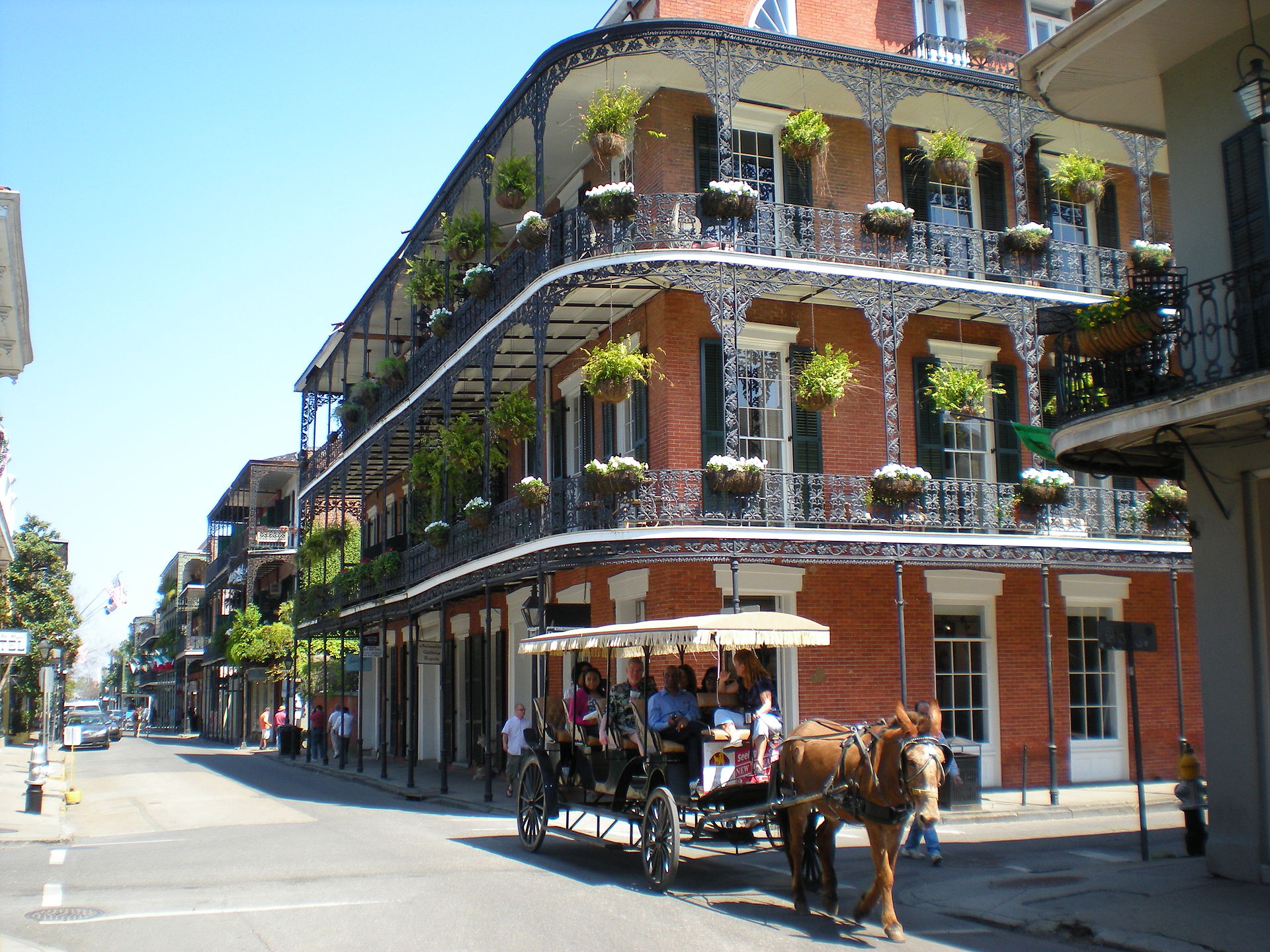
The French Quarter, known locally as the Vieux Carre (Old Square), is both the oldest neighborhood in New Orleans and the spiritual center of a city that has always defined itself through its streets. Laid out in 1721 by French engineer Adrien de Pauger as a perfect grid along the Mississippi River, these 78 blocks have survived fires, floods, yellow fever epidemics, and Hurricane Katrina, absorbing each catastrophe and emerging with yet another layer of character etched into its facades. Despite its name, most of the architecture is actually Spanish Colonial rather than French, the result of two devastating fires in 1788 and 1794 that leveled the original French structures during the period of Spanish governance. At the heart of the Quarter sits Jackson Square, where the triple spires of St. Louis Cathedral rise above fortune tellers, street musicians, and artists displaying their work along the iron fence. The square served as the Place d'Armes during French rule, a military parade ground during Spanish control, and the site where the Louisiana Purchase was formally announced in 1803, transferring the territory to the United States. Today it remains the most visited open space in the city, surrounded by the Pontalba Buildings, the oldest continuously occupied apartment buildings in America, and flanked by the Cabildo and Presbytere museums that chronicle Louisiana's tangled colonial past. Walking just a few blocks in any direction from Jackson Square reveals hidden courtyards with banana trees, wrought-iron galleries dripping with ferns, and the murmur of jazz drifting from clubs that have kept their doors open since before most visitors' grandparents were born.
Walking Routes
Royal Street galleries: Antique dealers, fine art galleries, and jazz musicians line this elegant street that runs parallel to Bourbon Street but feels like a different century. St. Louis Cathedral: The white triple-spired landmark at Jackson Square has anchored the Quarter since 1727 and is the oldest cathedral in continuous use in the country. Cafe Du Monde: Open 24 hours (except Christmas Day), this 1862 coffee stand serves beignets dusted in powdered sugar that have become synonymous with the city itself. The Cabildo: The former seat of Spanish colonial government now houses the Louisiana State Museum, including the room where the Louisiana Purchase was signed. Preservation Hall: This unadorned venue on St. Peter Street has presented traditional New Orleans jazz nightly since 1961, with no drinks, no food, just the music. Old Ursuline Convent: The oldest surviving building in the Mississippi River Valley, dating to 1752, and one of the few remaining examples of French Colonial architecture. Napoleon House: A 200-year-old bar on Chartres Street originally intended as a refuge for the exiled French emperor, now serving Pimm's Cups in crumbling splendor
When to Visit
District access: Public streets open 24 hours a day, 365 days a year, free to walk at any time. Best for architecture tours: Early morning between 8 and 10 AM, when light catches the pastel facades and the streets belong to locals heading to coffee. Jackson Square artists: Set up daily from around 9 AM to dusk, weather permitting, with the most variety on weekends. Night tours: Ghost, vampire, and voodoo tours typically depart between 7 and 9 PM and explore the Quarter under gaslight, revealing a completely different atmosphere. Avoid peak hours: Between 11 AM and 3 PM on weekends, the blocks nearest Bourbon Street can feel congested. Guides know quieter parallel routes through Royal Street and Chartres Street
Admission and Costs
Walking the Quarter: Completely free, no tickets or admission required for the neighborhood itself. Guided history walk: $25-40 per person for 2-hour group tours covering architecture, colonial history, and literary landmarks. Private Quarter tour: $200-350 for up to 6 people, 2-3 hours with personalized route based on your interests. Food tour through the Quarter: $65-95 per person including tastings at 4-5 stops, from beignets to muffulettas. Ghost and vampire tour: $25-35 per person, 90 minutes to 2 hours through allegedly haunted locations. Cabildo and Presbytere museums: $9 each or $15 combo ticket for both Louisiana State Museum buildings flanking the cathedral
Tips for Visitors
Wear comfortable shoes: The Quarter's sidewalks are famously uneven, with buckled flagstones and centuries-old brickwork that punish anything but sturdy, flat footwear. Morning coffee ritual: Start your day at Cafe Du Monde or French Truck Coffee before the tour groups arrive, then walk the quiet blocks between Esplanade and Ursulines avenues. Pickpocket awareness: The Quarter is generally safe, but crowded blocks near Bourbon Street attract opportunistic theft. Keep valuables in front pockets, especially during Mardi Gras. Stay hydrated: The subtropical climate means even pleasant-looking days carry punishing humidity. Every corner store sells cold water, and guides usually build drink stops into their routes. Respect private residences: Many Quarter buildings are occupied homes. Do not climb balconies, peer through windows, or enter courtyards without permission, no matter how photogenic they appear. Connect to the Garden District: The St. Charles streetcar links the Quarter to the mansions and oak-lined streets of Uptown for $1.25, making it easy to experience both sides of New Orleans in a single day