
Photo Spots
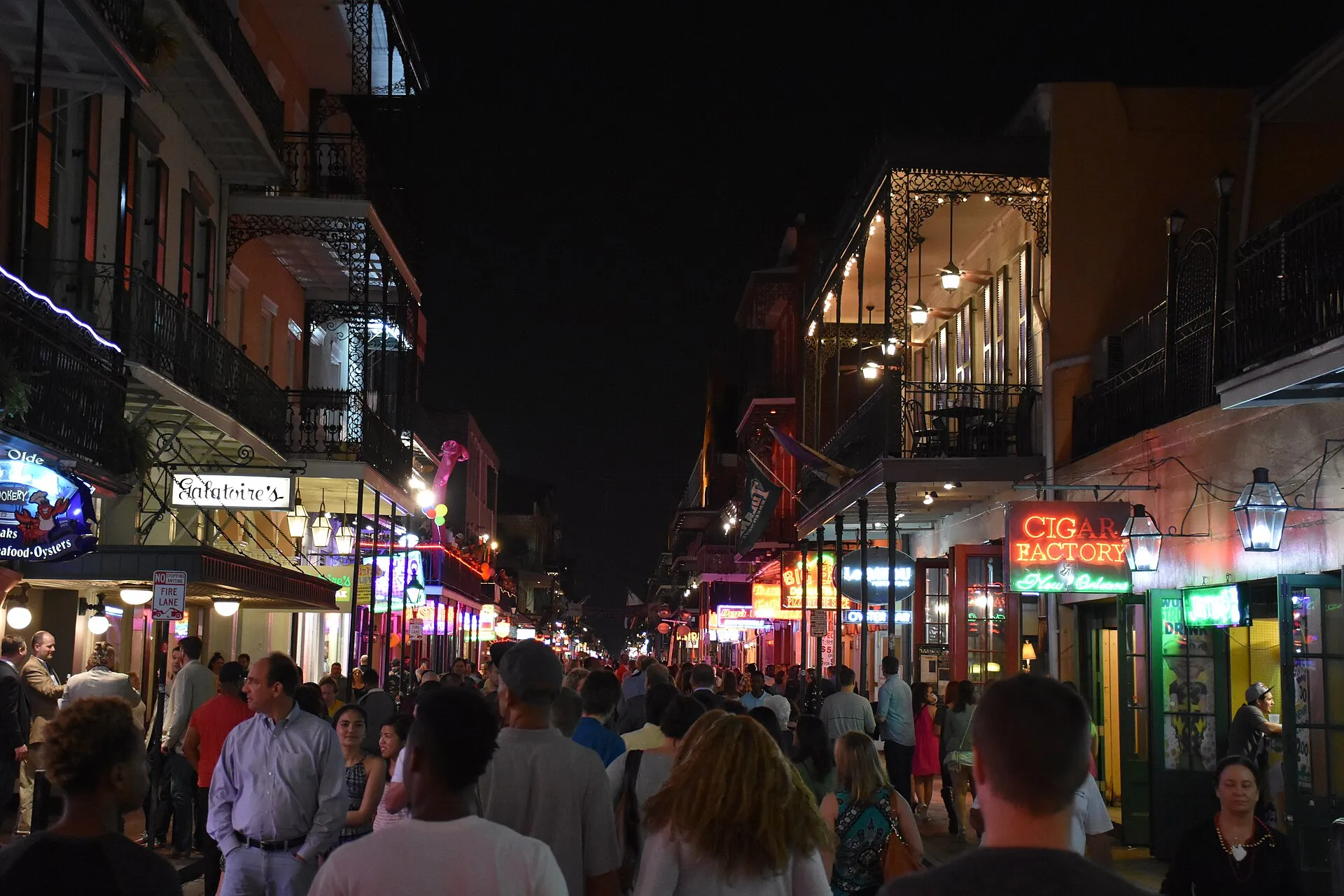
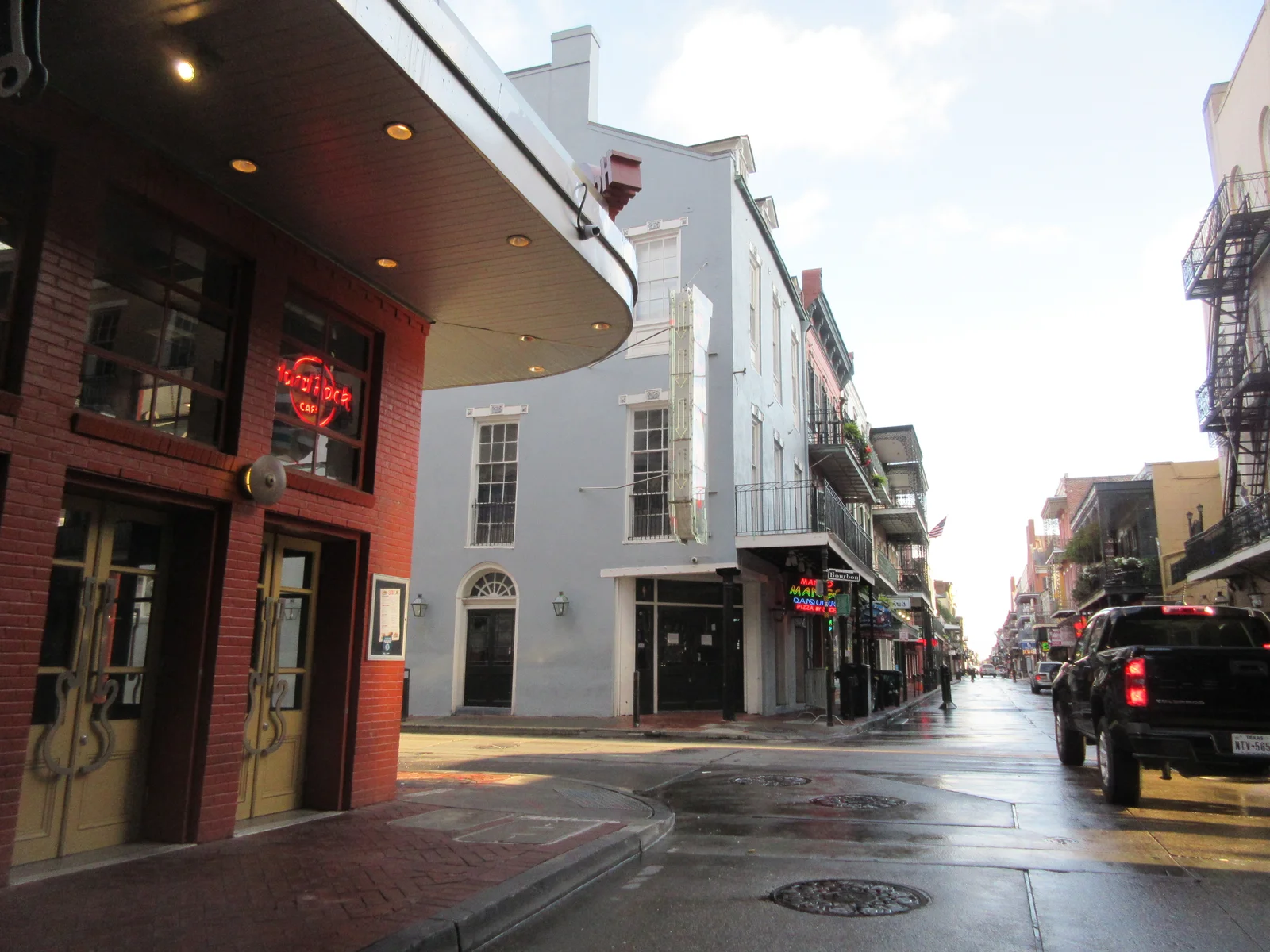
Bourbon Street photographs as two entirely different places depending on the hour, so plan for both. Before roughly 10 AM the pedestrian blocks are nearly empty and the pavement is often still wet from the overnight street-washing, leaving the architecture that neon hides after dark fully visible; after midnight the same blocks become a wall of competing color and motion. The strongest images come from working with the light rather than against it.
- Cast-iron balconies (St. Peter to St. Louis): The ornate wrought- and cast-iron galleries above street level are quintessential French Quarter architecture and read best in soft morning light, before signage overpowers the detail.
- Old Absinthe House (corner of Bourbon and Bienville): The weathered 1807 exterior and the original marble fountain bar inside are among the most photogenic historic bar interiors in the country.
- Lafitte's Blacksmith Shop (941 Bourbon): One of the oldest structures used as a bar in the United States, its candle-lit interior and brick-between-post façade make a dramatic low-light subject at dusk.
- Pat O'Brien's courtyard: The twin flaming fountains are the classic dramatic evening shot.
- Musical Legends Park (311 Bourbon): Bronze statues of Fats Domino, Al Hirt, and Pete Fountain give a clean, uncrowded subject day or night.
- Neon at night: For the iconic layered-color image, shoot down the length of the pedestrian zone from the middle of the street once the signs are lit; a fast lens or a steady hand helps in the low light.
Landmarks Along
Pat O'Brien's: Home of the Hurricane cocktail since the 1940s, with a courtyard featuring twin flaming fountains that have become a New Orleans icon. Preservation Hall (just off Bourbon on St. Peter): The most important traditional jazz venue in the world, where nightly acoustic sets have run uninterrupted since 1961. No drinks, no amplification, just pure New Orleans music in an intimate, bare-bones room. Old Absinthe House: Operating since 1807, this bar served absinthe to Mark Twain, Oscar Wilde, and Franklin Roosevelt. The original marble fountain bar still stands inside. Lafitte's Blacksmith Shop: At 941 Bourbon on the corner of St. Philip, this Creole cottage dates to the 1720s-1730s and is one of the oldest structures used as a bar in the United States. It still operates by candlelight with no stage or amplification, a striking contrast to the neon a few blocks south. Galatoire's Restaurant: The white-tablecloth institution at 209 Bourbon has served French Creole cuisine since 1905. Friday lunch here is a social ritual for New Orleans families, with jackets required and reservations nearly impossible to secure. The balcony experience: Several bars along Bourbon offer upstairs balcony access where you can watch the street theater below. During Mardi Gras, these balconies become the most coveted real estate in the city. Musical Legends Park: A small park at 311 Bourbon with bronze statues of New Orleans music legends including Fats Domino, Al Hirt, and Pete Fountain, free to visit day or night
Bourbon Street in Pictures
When to Visit
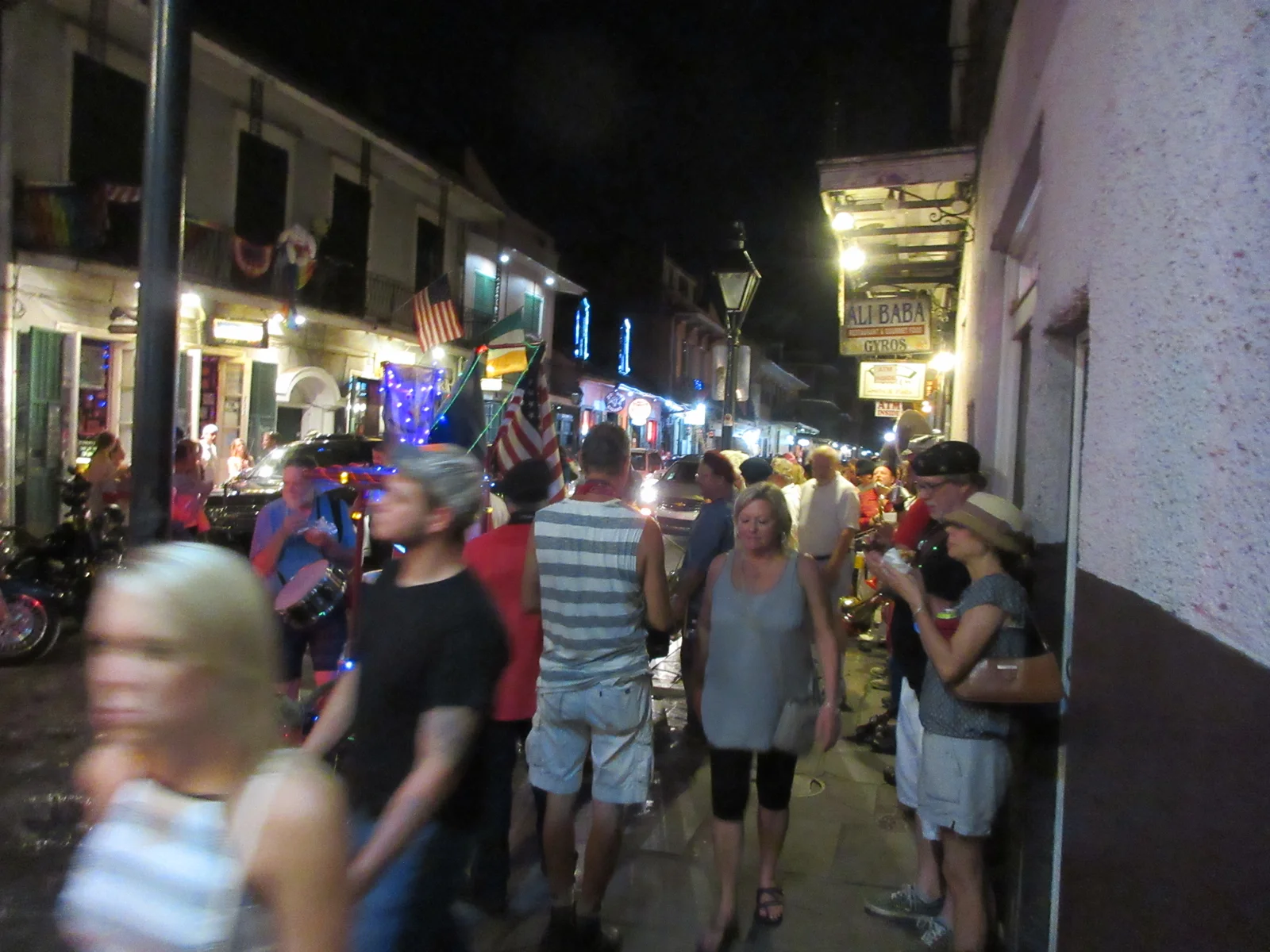
Street access: Open 24 hours, free to walk at any time. The pedestrian block closes to vehicle traffic in the evening. Live music prime time: Most clubs and bars hit their stride between 9 PM and 2 AM, with music spilling from doorways along the entire strip. Daytime exploration: Morning and early afternoon offer a quieter side of Bourbon, ideal for photographing the cast-iron balconies and reading historical plaques without crowds. Cocktail history tours: Best scheduled for late afternoon (4-6 PM), when bars are open but the crowds have not yet peaked. Mardi Gras season: The street reaches maximum intensity during Carnival, typically February or early March. Guides must be booked weeks in advance for this period
Admission and Costs
Walking the street: Completely free, no entry fee to access Bourbon Street itself. Most bar covers: Many bars charge no cover, relying on drink sales. Some live-music venues charge $5-15 on weekend nights. Guided nightlife tour: $30-50 per person for 2-3 hours covering cocktail history, live-music stops, and cultural context. Cocktail history walk: $45-75 per person including tastings at 3-4 historic bars, covering the invention of the Sazerac, Hurricane, and Hand Grenade. Private music-focused tour: $200-350 for up to 6 people with a guide who knows the musicians and can arrange access to sets and rehearsals
The Case for a Guide
Bourbon Street rewards visitors who understand what they are looking at, and that context is exactly what the neon and noise obscure. A knowledgeable New Orleans nightlife or cocktail-history guide turns a disorienting crawl past near-identical frozen-daiquiri counters into a walk with a clear thread: which rooms actually shaped American music, which bars pour a proper Sazerac, and which blocks reward a detour off the main strip. A good guide will typically:
- Separate the historic from the generic — steering you toward the Old Absinthe House and Lafitte's Blacksmith Shop rather than the interchangeable drink counters that dominate the middle blocks.
- Trace the cocktail lineage — from the 1830s Sazerac to Pat O'Brien's Hurricane, often with tastings at three or four historic bars so you learn the drinks by trying them.
- Connect rooms to musicians — explaining where performers such as Louis Prima, Sidney Bechet, and Fats Domino actually played, rather than leaving you to guess behind an anonymous façade.
- Manage crowds and safety — keeping a group together after midnight, knowing which side streets stay well-lit, and reading when to pivot from the packed lower blocks to the quieter stretch above St. Ann.
- Extend the night intelligently — routing you toward Royal Street, Preservation Hall's acoustic jazz, or the live-music clubs of Frenchmen Street once the main strip has given all it has to give.
Tips for Visitors
Go-cups are legal: New Orleans allows open containers on public streets, so bars serve "go-cups" for walking. Glass containers are prohibited on Bourbon Street; plastic only. Pair with the French Quarter: Bourbon Street is just one lane within the larger Quarter. Walk one block to Royal Street for galleries and antiques, or two blocks to Chartres Street for quiet cafes and the St. Louis Cathedral on Jackson Square. Watch your belongings: Bourbon Street's crowds attract pickpockets, particularly during Mardi Gras and large events. Front pockets or crossbody bags are wise choices. The residential upper stretch: Above St. Ann Street, Bourbon transitions from commercial entertainment to a quieter residential neighborhood. This section reveals the street's domestic architecture and is worth exploring during daylight. Hydrate between drinks: The combination of New Orleans humidity and alcohol is a recipe for dehydration. Alternate cocktails with water, especially on summer evenings when temperatures stay above 80 degrees well into the night. Connect to music beyond Bourbon: Frenchmen Street in the Marigny neighborhood, a 10-minute walk from the lower end of Bourbon, is where locals go for live music. Guides who know both streets can design an evening that covers the full spectrum of New Orleans sound
Frequently Asked Questions
When is Bourbon Street open and when does it close to vehicle traffic?
Street access: Open 24 hours, free to walk at any time. The pedestrian block closes to vehicle traffic in the evening.
Is Bourbon Street free to visit?
Walking the street: Completely free, no entry fee to access Bourbon Street itself. Most bar covers: Many bars charge no cover, relying on drink sales. Some live-music venues charge $5-15 on weekend nights.
Are open containers allowed on Bourbon Street?
Go-cups are legal: New Orleans allows open containers on public streets, so bars serve "go-cups" for walking. Glass containers are prohibited on Bourbon Street; plastic only.