
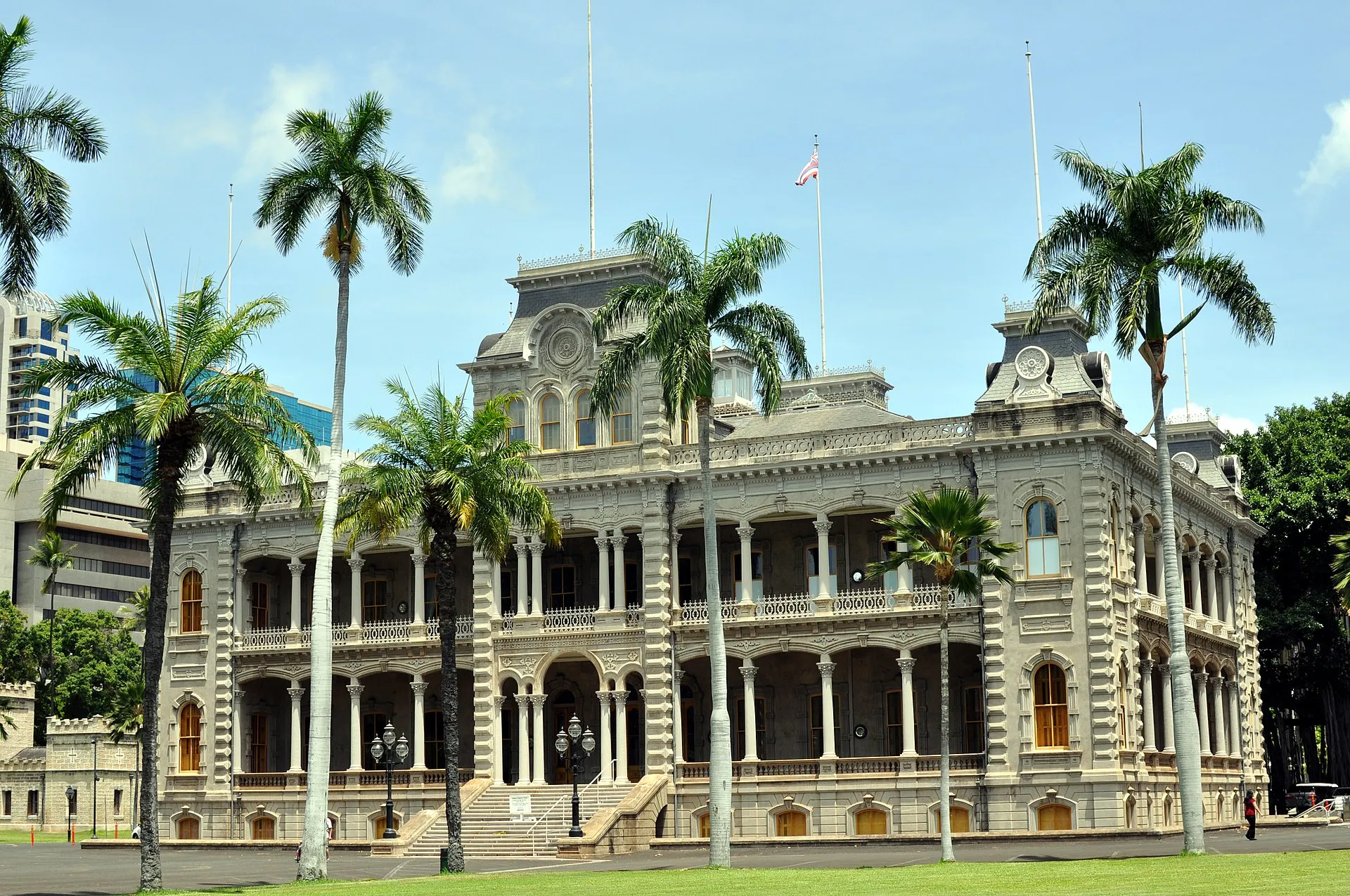
Historical Significance
King Kalakaua and Queen Liliuokalani emerge as vivid personalities through skilled narration. Kalakaua, the Merrie Monarch, revived hula when missionaries had nearly suppressed it into extinction, composed music, and travelled the world as the first reigning monarch to circumnavigate the globe. Liliuokalani, his sister and successor, was a composer herself, writing Aloha Oe during her imprisonment in the very rooms visitors now tour.
Technological details throughout the palace demonstrate Hawaiian sophistication that challenges common assumptions. Electric lights illuminated these rooms in 1886, four years before the White House received electricity. The telephone, indoor plumbing, and central heating were all installed at a time when most American homes lacked such conveniences. Guides point out which furnishings are original pieces painstakingly tracked down from private collections and auctions worldwide, which are period reproductions, and which spaces still await the return of objects whose locations remain unknown.
Architecture
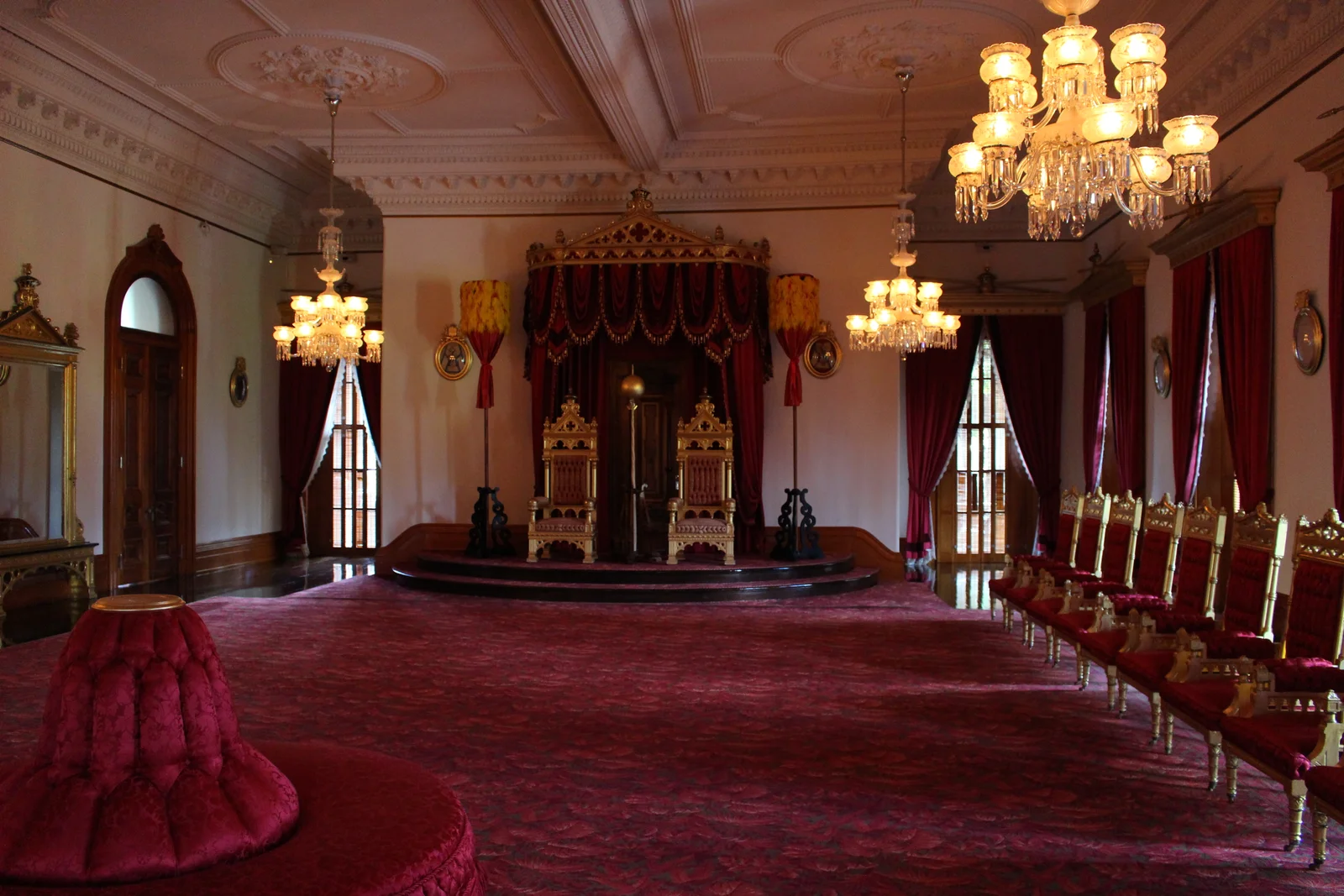
Throne room: The restored grand hall with its crimson and gold thrones, crystal chandeliers, and portraits of royalty from around the world recreates the formal splendour of state receptions under King Kalakaua. Electric light fixtures: The original glass globe fixtures that made Iolani Palace one of the first electrically lit residences in the world; guides point out the mix of gas and electric fittings that reflect the transitional era.
Queen's imprisonment room: The upstairs bedroom where Liliuokalani was confined for eight months in 1895; the simplicity of the space contrasts sharply with the grandeur of the floors below and stands as a powerful reminder of the overthrow's human cost. Crown jewels: The basement gallery displays the royal crown, sceptre, and state jewellery, including pieces commissioned in London for Kalakaua's coronation in 1883. Palace grounds and banyan tree: The ancient banyan on the palace lawn, planted by Queen Kapiolani, spreads its aerial roots across a vast area and provides a shaded retreat after the indoor tour. Coronation Pavilion: The octagonal iron pavilion where Kalakaua crowned himself king in 1883 now hosts the Royal Hawaiian Band's free Friday concerts.
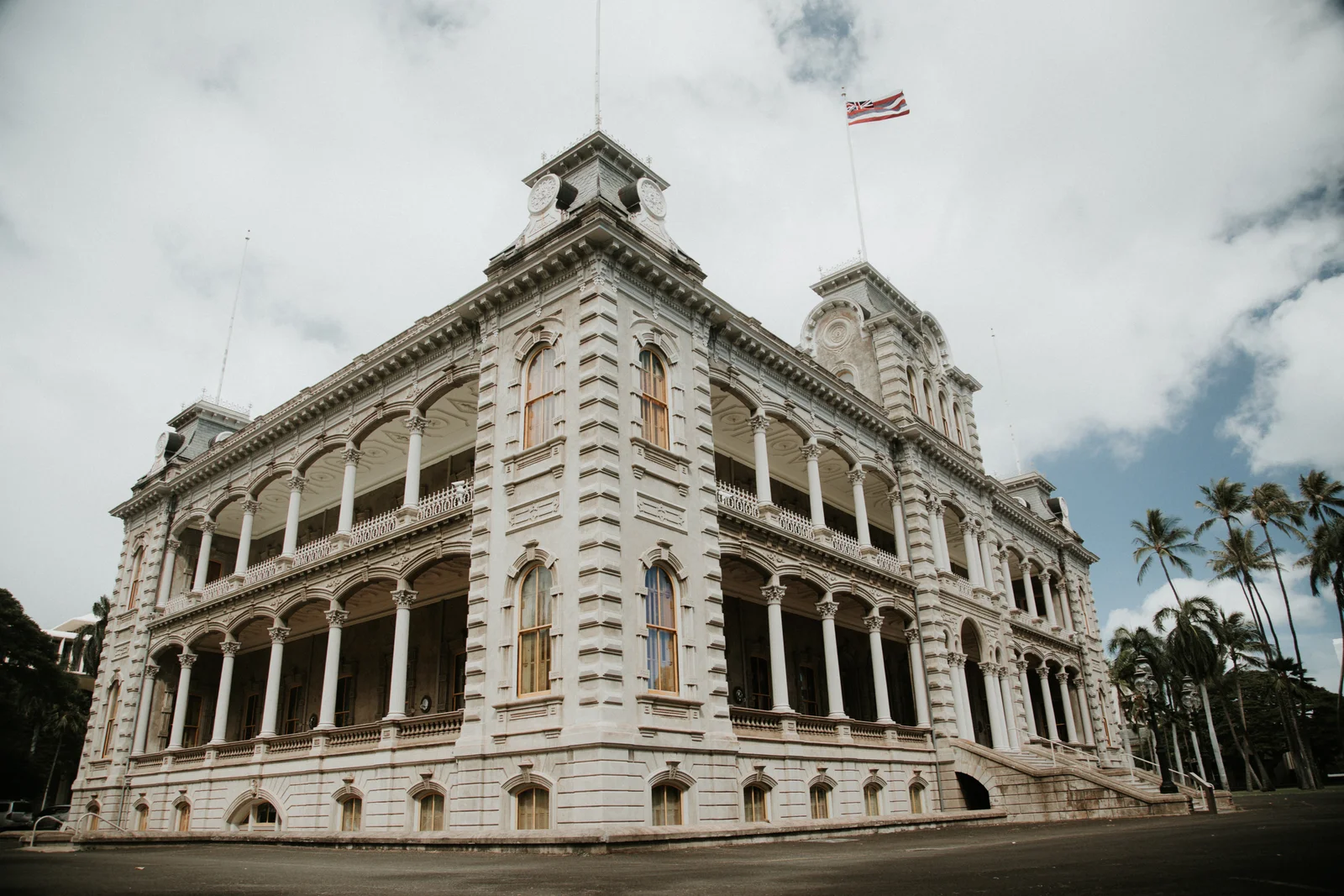
Iolani Palace in Pictures
When to Visit
Palace tours: Tuesday through Saturday, 9 AM to 4 PM; closed Sundays, Mondays, and state holidays. Palace grounds: Open daily from 6 AM to 6 PM, free to walk; the grounds include the Coronation Pavilion, the Royal Barracks, and the ancient banyan tree.
Best for guided tours: First tour of the day at 9 AM is typically the smallest; midday tours between 11 AM and 1 PM are busiest due to cruise ship schedules. Cultural events: Hawaiian music and hula performances occur on the grounds on select Fridays; check the palace website for the monthly schedule. Best season: The palace is an indoor attraction and excellent year-round; the grounds are especially beautiful after a morning rain when the gardens gleam.
Admission and Costs
Guided tour: $27 adults, $6 children ages 5-12; approximately 60 minutes with a trained docent covering both floors and all major rooms. Audio tour: $20 adults, $6 children; self-paced with a handheld device providing commentary in multiple languages. Palace grounds only: Free; the exterior, Coronation Pavilion, and Royal Barracks can be explored without a ticket. Basement gallery: $7 adults, $3 children; displays the crown jewels, royal regalia, and historical artefacts. Private group tour: $300-450 for groups up to 15 with a dedicated docent and extended access.
The Case for a Guide
Most American visitors arrive at Iolani Palace without ever learning in school that the Kingdom of Hawaii existed as a fully sovereign nation, recognised by the world's major powers through formal treaties and diplomatic exchange. Guides provide essential context that transforms the palace from a beautiful building into evidence of a nation that was deliberately extinguished.
- Sovereignty that textbooks omit: Guides explain how Hawaii maintained embassies, negotiated international agreements, and operated a constitutional monarchy — making the 1893 overthrow not a natural transition but a deliberate act that the United States formally apologised for in 1993.
- Kalakaua and Liliuokalani as vivid personalities: The Merrie Monarch revived hula from near-suppression, composed music, and became the first reigning monarch to circumnavigate the globe; his sister Liliuokalani wrote Aloha Oe during her imprisonment in the very rooms visitors now tour — guides bring these cultured, cosmopolitan figures fully to life.
- Technology that challenges assumptions: Electric lights illuminated these rooms in 1886, four years before the White House received electricity; guides point out the telephone, indoor plumbing, and central heating that made the palace more advanced than most American homes of the era.
- Original versus reproduced furnishings: Guides identify which pieces are original artefacts painstakingly tracked from private collections and auctions worldwide, which are period reproductions, and which spaces still await the return of objects whose locations remain unknown.
- The overthrow's human cost: Standing in the upstairs bedroom where Queen Liliuokalani was imprisoned for eight months in 1895 requires a guide to convey its weight — the contrast between the room's simplicity and the grandeur below speaks to a story that cannot be told by a plaque alone.
Tips for Visitors
Book ahead: Guided tours sell out during peak tourist season (December-March); reserve online at iolanipalace.org. Getting there: The palace is in downtown Honolulu, a 25-minute drive from Waikiki; TheBus routes 2 and 13 stop nearby, and metered street parking is available.
Combine with downtown: The Hawaii State Capitol, State Library, and historic Kawaiahao Church are all within walking distance; Pearl Harbor is a 20-minute drive west, and the Diamond Head crater trail lies a short drive east for a contrasting outdoor half-day. Cultural sensitivity: For many Native Hawaiians, the palace is a place of deep emotion connected to the loss of sovereignty; visitors should approach the experience with respect and open minds. Allow 90 minutes: The guided tour takes about an hour; add 30 minutes for the basement gallery and grounds. No large bags: Backpacks and large purses must be stored in provided lockers before the tour to protect the restored interiors.
Frequently Asked Questions
Does Iolani Palace have a best visiting season?
Honolulu's tropical climate keeps Iolani Palace comfortable year-round, with temperatures hovering between 24-30°C in every month and the palace interior providing welcome shade from the Hawaiian sun. There is no bad time to visit, though the drier months from April to October see slightly less chance of afternoon rain showers that can dampen the outdoor grounds tour. The palace gardens and surrounding historic district are equally impressive whether you visit in January or July.
When can visitors tour Iolani Palace?
Palace tours: Tuesday through Saturday, 9 AM to 4 PM; closed Sundays, Mondays, and state holidays.
How much is the entrance fee for Iolani Palace?
Guided tour: $27 adults, $6 children ages 5-12; approximately 60 minutes with a trained docent covering both floors and all major rooms. Audio tour: $20 adults, $6 children.
What should visitors know before visiting Iolani Palace?
Book ahead: Guided tours sell out during peak tourist season (December-March); reserve online at iolanipalace.org.