
Wildlife
Green sea turtles (honu) are the celebrities of Waikiki's marine life, frequently surfacing to breathe just beyond the shorebreak and hauling out to bask on the sand near the eastern end around Kaimana Beach. Protected under state and federal law, they must be given a respectful 10-foot berth; never touch or crowd a resting turtle. The endangered Hawaiian monk seal (ilio holo i ka uaua), one of the rarest marine mammals on Earth, occasionally comes ashore to sleep, prompting volunteers to rope off a protective perimeter.
The shallow reef fronting the beach shelters a vivid cast of tropical fish: yellow tang, the boldly patterned reef triggerfish (humuhumunukunukuapua'a, Hawaii's state fish), parrotfish grazing the coral, and schools of manini convict tang darting through the surge. Snorkellers drift over these gardens right off Queen's Beach, though the water is clearer at nearby Hanauma Bay.
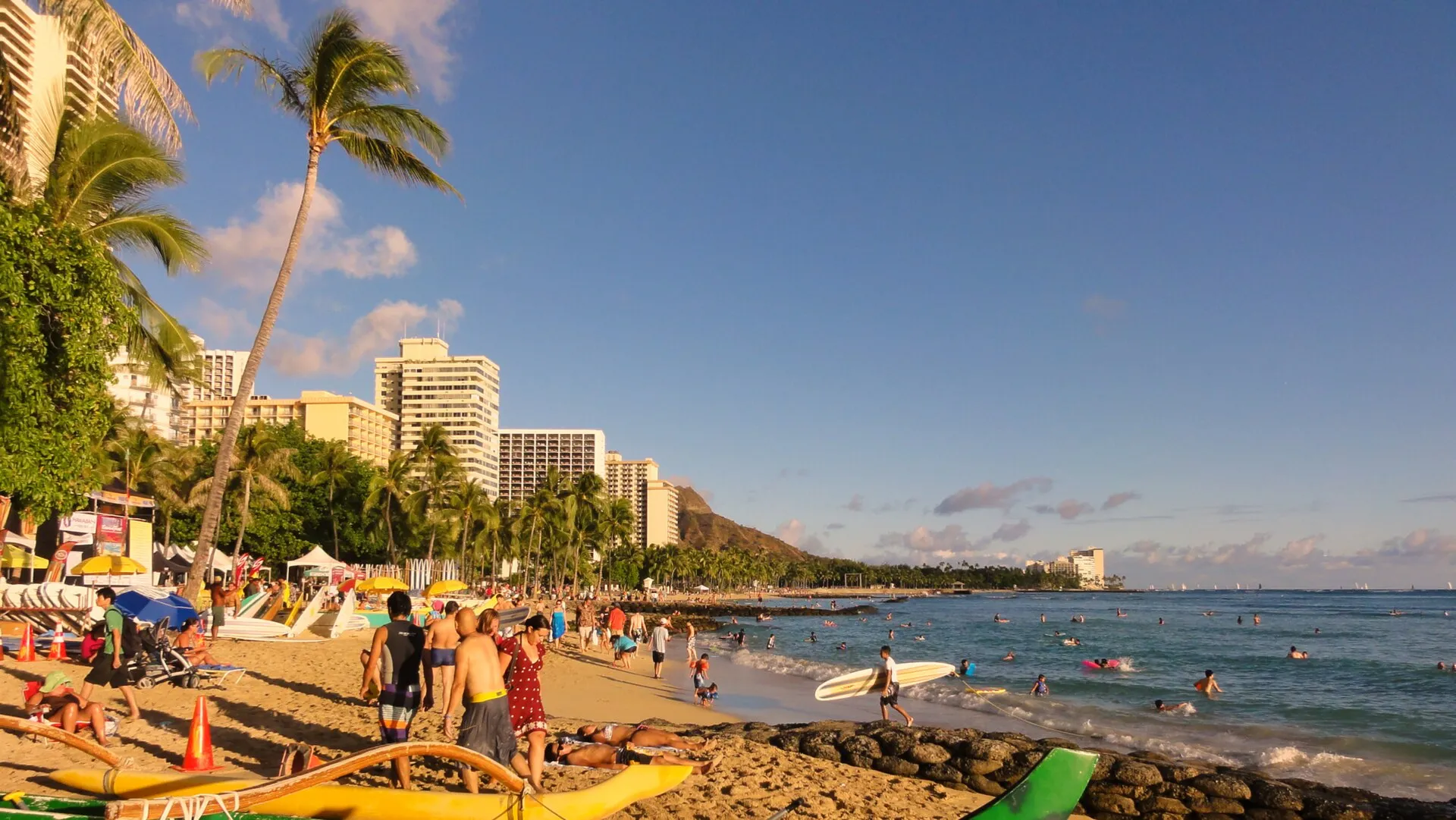
Above the waterline, coconut palms and hala (screwpine) frame the strand, while the offshore horizon rewards winter visitors from December through April, when migrating humpback whales breach and spout on their journey from Alaska to the warm Hawaiian breeding grounds. Zebra doves, mynas, and the occasional white fairy tern work the palm-lined promenade, and at dusk seabirds wheel above the outer breaks. All of it thrives within sight of Honolulu's high-rise skyline, a reminder that Waikiki remains a living tropical ecosystem despite the crowds.
Formation
Waikiki's calm, gentle water is a gift of geology. A broad coral reef platform lies just offshore, and it is this submerged limestone shelf that trips the incoming ocean swells into the long, forgiving waves that made the beach a surfing cradle. The reef absorbs the ocean's force, leaving the inshore lagoon shallow and protected — nature's own swimming pool. The Hawaiian name Waikiki, meaning spouting fresh water, records the springs, streams, and wetlands that once drained down from the Manoa and Palolo valleys, feeding the taro ponds later filled to build the resort strip.
Presiding over the eastern end is Diamond Head, a 300,000-year-old volcanic tuff cone born in a single explosive steam-driven eruption when rising magma met seawater and groundwater, blasting out fine ash that cemented into the ridged crater visible today. Its rusty flanks catch the morning light in gold and ochre.
Most surprising of all, much of Waikiki's famous golden sand is not native. Chronic erosion has stripped the natural beach for over a century, so sand has been repeatedly imported and replenished — historically barged from Manhattan Beach in California and from Papohaku on Molokai, and more recently dredged from an offshore sand deposit. The beach visitors stroll today is a carefully engineered landscape draped over an ancient reef.
When to Visit
Beach access: Open 24 hours a day, every day; lifeguards on duty from approximately 9 AM to 5:30 PM at major sections. Sunrise sessions: Waikiki faces south, so direct sunrise views are partial, but the early morning light on Diamond Head between 6 and 7 AM is spectacular and the beach is blissfully uncrowded.
Sunset: Waikiki sunsets are legendary, with the sky turning amber and violet behind the yacht harbour; the Kuhio Beach torch-lighting ceremony with hula performance occurs nightly at 6:30 PM. Best for swimming: Mornings before the trade winds pick up around 11 AM; the water is calmest and clearest in summer (May through September). Best for surfing: South swells from May through September bring consistent waves to the outer breaks; beginners can find rideable waves year-round in the shallower inside sections.
Admission and Costs
Beach access: Completely free; all beaches in Hawaii are public by law, even those fronting private hotels. Surfboard rental: $15-25 per hour for a longboard from the concessions on the beach; $60-80 for a full day. Surf lesson (group): $40-60 per person for a 90-minute group lesson including board and rash guard.
Outrigger canoe ride: $25-35 per person for a 30-minute ride that catches several waves; a quintessential Waikiki experience. Catamaran sunset sail: $35-50 per person for a 90-minute cruise departing directly from the beach, often with open bar.
Tips for Visitors
Reef-safe sunscreen: Hawaii law prohibits sunscreens containing oxybenzone and octinoxate; buy reef-safe brands before arriving or at any ABC Store along Kalakaua Avenue. Public beach access: Look for marked public access paths between hotels; Kuhio Beach Park has free public restrooms, showers, and changing facilities.
Getting there: TheBus routes 2 and 8 run along Kuhio Avenue through Waikiki from downtown Honolulu; parking is scarce and expensive. Combine with Diamond Head: The crater trailhead is a 20-minute walk or short bus ride from the eastern end of Waikiki; hike in the morning and beach in the afternoon for a perfect day. Valuables: Do not leave electronics or wallets unattended on the sand; use a waterproof pouch or leave valuables in your hotel safe. Snorkelling nearby: For clearer water and more marine life, take a short drive to Hanauma Bay, Oahu's premier snorkelling destination inside a volcanic crater.
Frequently Asked Questions
When is the best time of year to visit Waikiki Beach?
Waikiki is glorious year-round thanks to Hawaii's mild tropical climate, but the sweet spot runs from April through October when south swells deliver the best surf and water temperatures hover around 80 degrees. Winter months from November through March bring larger north shore waves and slightly more rainfall, though the beach remains excellent and hotel rates dip below peak-season highs.
When are lifeguards on duty at Waikiki Beach?
Beach access: Open 24 hours a day, every day; lifeguards on duty from approximately 9 AM to 5:30 PM at major sections.
How much should visitors budget for Waikiki Beach?
Beach access: Completely free; all beaches in Hawaii are public by law, even those fronting private hotels. Surfboard rental: $15-25 per hour for a longboard from the concessions on the beach; $60-80 for a full day.
What history and local knowledge do Waikiki Beach guides share?
Guides trace Duke Kahanamoku's journey from Honolulu to Olympic glory, explain the ahupua'a land division system, and identify the safest swimming areas while steering visitors to quieter spots like Sans Souci Beach.