
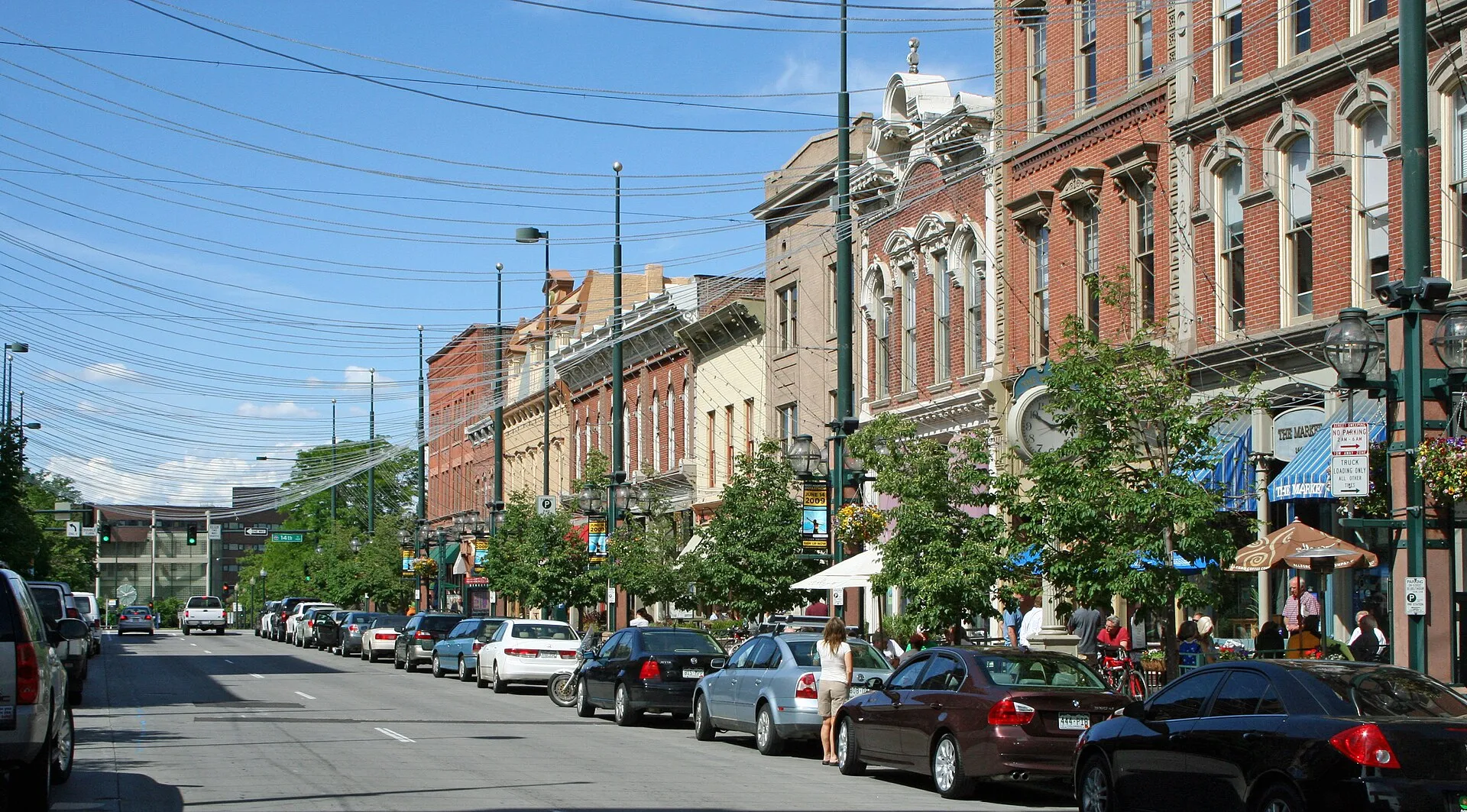
Photo Spots
Larimer Square is one of downtown Denver's most photogenic single blocks, and the light changes its character through the day. A few reliable shots:
- The string-light canopy at blue hour. The overhead lights strung between the facades are the signature image -- shoot down the centre of the block just after sunset, when the sky still holds colour and the bulbs read warm against it.
- Cast-iron facades on the 1400 block. These ornamental building fronts are among the finest surviving 1880s commercial fronts in the American West; morning light rakes across the arched windows and cornices to pick out the detail.
- The frontage against the modern skyline. Frame the Victorian rooflines with downtown's glass towers rising behind for a one-frame summary of Denver's old-versus-new story.
- Holiday lights, late November through January. The block wears its densest lighting of the year, and reflections on wet pavement after a snow flurry double the effect.
- Historical plaques and doorways. Bronze plaques and restored storefront details reward close-up shots that most visitors walk straight past.
Understanding what you are photographing deepens every frame: this is where a frontier encampment of 1858 became the confident commercial district of the 1880s, and the surviving facades are the physical record of that leap. For wider context, the walk continues to Union Station and its own celebrated neon and Beaux-Arts interior.
Landmarks Along
For a single block, Larimer Square packs in an unusual density of independent restaurants, bars, and shops -- the priority stops for anyone browsing the street:
- Rioja. James Beard Award-winning chef Jennifer Jasinski's flagship Mediterranean restaurant occupies a beautifully restored Victorian storefront and is the block's marquee dining reservation.
- Bistro Vendome & The Capital Grille. A classic French bistro and a polished steakhouse round out the sit-down options, both drawing pre-theatre and special-occasion crowds.
- The Cruise Room. A short walk into the adjacent Oxford Hotel (1891), this Art Deco bar was modelled on a lounge aboard the Queen Mary and has poured cocktails since 1933 -- one of Denver's oldest continuously operating bars.
- Independent boutiques. Long-running local shops such as Cry Baby Ranch (Western vintage), Eve (curated clothing), and Colorado jeweller John Atencio offer goods you will not find in a mall.
- The iron-front architecture itself. The ornamental cast-iron facades that line the block are as much an attraction as any single tenant, best appreciated slowly on foot.
Bronze historical plaques on several buildings tell the specific stories of the merchants and entrepreneurs who built each structure in Denver's early decades, turning a shopping stroll into a walk through the city's founding.
When to Visit
Public access: Open 24/7 as a public street and pedestrian area. Shops and boutiques: Generally 10:00 AM - 7:00 PM (varies by store). Restaurants and bars: Lunch service from 11:00 AM, most kitchens open until 10:00 PM, bars until midnight or later.
The block rewards different visitors at different hours:
- Late afternoon is the sweet spot -- the low sun rakes across the cast-iron facades and the string lights begin to glow just as the dining patios fill with the pre-dinner crowd.
- First Friday of each month brings LoDo's art-walk energy, with nearby galleries open late and Larimer Square's restaurants an ideal dinner stop.
- November through early January is peak season for atmosphere, when thousands of overhead lights drape the Victorian block into a holiday postcard -- the display typically switches on around Thanksgiving and runs through New Year's.
The single covered block stays comfortable in light rain or midday heat, but summer evenings (June-September) are when the patios, live music, and lights come together best.
Admission and Costs
Walking and exploring the block is completely free -- the value is in the setting, and you can linger as long as you like. Budget for what you consume:
- Dining: roughly $20-60 per person at restaurants such as Rioja, Bistro Vendome, and The Capital Grille; casual lunches and cafes run lower.
- Cocktails: $14-20 at craft bars, including the Art Deco Cruise Room in the nearby Oxford Hotel.
- Guided historical walking tour: $20-35 per person for a 1.5-2 hour walk covering Larimer Square and the surrounding LoDo streets.
- Private food-and-history tour: $200-350 for groups up to 8, pairing architectural history with tastings at three or four restaurants along and around the block.
Compared with ticketed sights like the Denver Art Museum, Larimer Square costs nothing to experience -- an easy, weather-flexible addition to any downtown itinerary.
The Case for a Guide
A block this small can be walked in five minutes, yet a knowledgeable guide can hold you here for two hours -- because almost nothing that makes Larimer Square matter is visible on the surface. The real story is layered into the brickwork, the property lines, and the near-death moment in the 1960s when the whole block was slated for demolition. A guide turns a pretty row of restaurants into the founding chapter of Denver.
Working with a local walking guide is worth it when you want to:
- Read the buildings. Guides decode why cast-iron fronts signalled fire-resistant modernity, how Italianate arched windows advertised cosmopolitan taste, and what the decorative cornices reveal about each merchant's ambitions.
- Follow the preservation battle. The campaign that Dana Crawford led here pioneered a private-investment model that reshaped how American cities value their old downtowns -- a story with national significance told best on the ground where it happened.
- Populate the street with characters. Frontier bankers, saloon keepers, vigilantes, and railroad-era shopkeepers all passed along this block; a good narrator brings them back.
- Connect the dots to LoDo. From here, guides extend the walk to Union Station and the warehouse district the square's rescue ultimately saved.
The block anchors most LoDo history and food tours, so a guide also handles the logistics -- restaurant introductions, the best photo stops, and the walking route -- while you concentrate on the story.
Tips for Visitors
Larimer Square is compact and easy to fold into a broader downtown day, but a little planning sharpens the visit:
- Parking: street meters are competitive, so use the garage at 14th and Market Streets or the lot behind the block -- or skip driving entirely and walk 5 minutes from Union Station.
- Reserve ahead: Rioja, Bistro Vendome, and other marquee tables book up 1-2 weeks out, especially Thursday through Saturday.
- Come at dusk: walk the block as the patios peak and the overhead string lights switch on against the darkening sky.
- Chain it into a LoDo loop: the square is the natural starting point for a stroll to Union Station, Coors Field, and the South Platte River trail.
- Time the holidays: visit between Thanksgiving and New Year's for Denver's most spectacular downtown lighting display.
For a full downtown day, pair the block with the Denver Art Museum in the Civic Center cultural district, then head west for a sunset show or hike at Red Rocks Amphitheatre.
Frequently Asked Questions
What are the access and business hours at Larimer Square?
Public access: Open 24/7 as a public street and pedestrian area. Shops and boutiques: Generally 10:00 AM - 7:00 PM (varies by store). Restaurants and bars: Lunch service from 11:00 AM, most kitchens open until 10:00 PM, bars until midnight or later.
Is Larimer Square free to visit?
Walking and exploring: Completely free. Dining: $20-60 per person at restaurants like Rioja, Bistro Vendome, and The Capital Grille. Cocktails: $14-20 at establishments like The Cruise Room (Art Deco bar in the Oxford Hotel).
Where should visitors park when visiting Larimer Square?
Parking strategy: Street meters are competitive; use the garage at 14th and Market Streets or the lot behind the block. Alternatively, walk from Union Station in 5 minutes.
Why is Larimer Square historically important to Denver?
This single block is where Denver began: General William Larimer laid his townsite claim here in November 1858, and the street became the young city's first commercial spine, home to its earliest bank, bookstore, and post office. After decades of skid-row decline, preservationist Dana Crawford assembled and restored the block in the mid-1960s, and in 1971 it became Denver's first designated historic district - the spark that saved the surrounding Lower Downtown (LoDo) warehouses from demolition.