
Guided Tours
Seventy thousand objects spread across nine curatorial departments create a challenge of abundance that defeats most visitors. Without guidance, you wander from gallery to gallery, dimly aware that important works surround you but uncertain which deserve lingering attention and which can be appreciated in passing. Guides curate the collection based on your interests, constructing routes that connect Remington bronzes to Bierstadt landscapes to contemporary Western art, showing how each generation reimagined the frontier and its meaning. They reveal hidden spaces most visitors miss, from the rooftop terrace with mountain views to the outdoor sculpture garden where Claes Oldenburg's massive Big Sweep presides.
The museum's 18,000-piece Indigenous arts collection represents one of the most comprehensive holdings of Native American art in the country, but appreciating it fully requires cultural sensitivity and deep knowledge. Ceremonial objects carry meanings that extend beyond aesthetics into spiritual practice. Tribal traditions inform techniques and motifs that the untrained eye cannot decode. The museum maintains ongoing relationships with Native communities whose heritage these objects represent. Guides versed in this context explain not just what you are seeing but what it meant to its makers, how it functioned in ceremonial or daily life, and what ethical considerations govern its display in a museum setting.
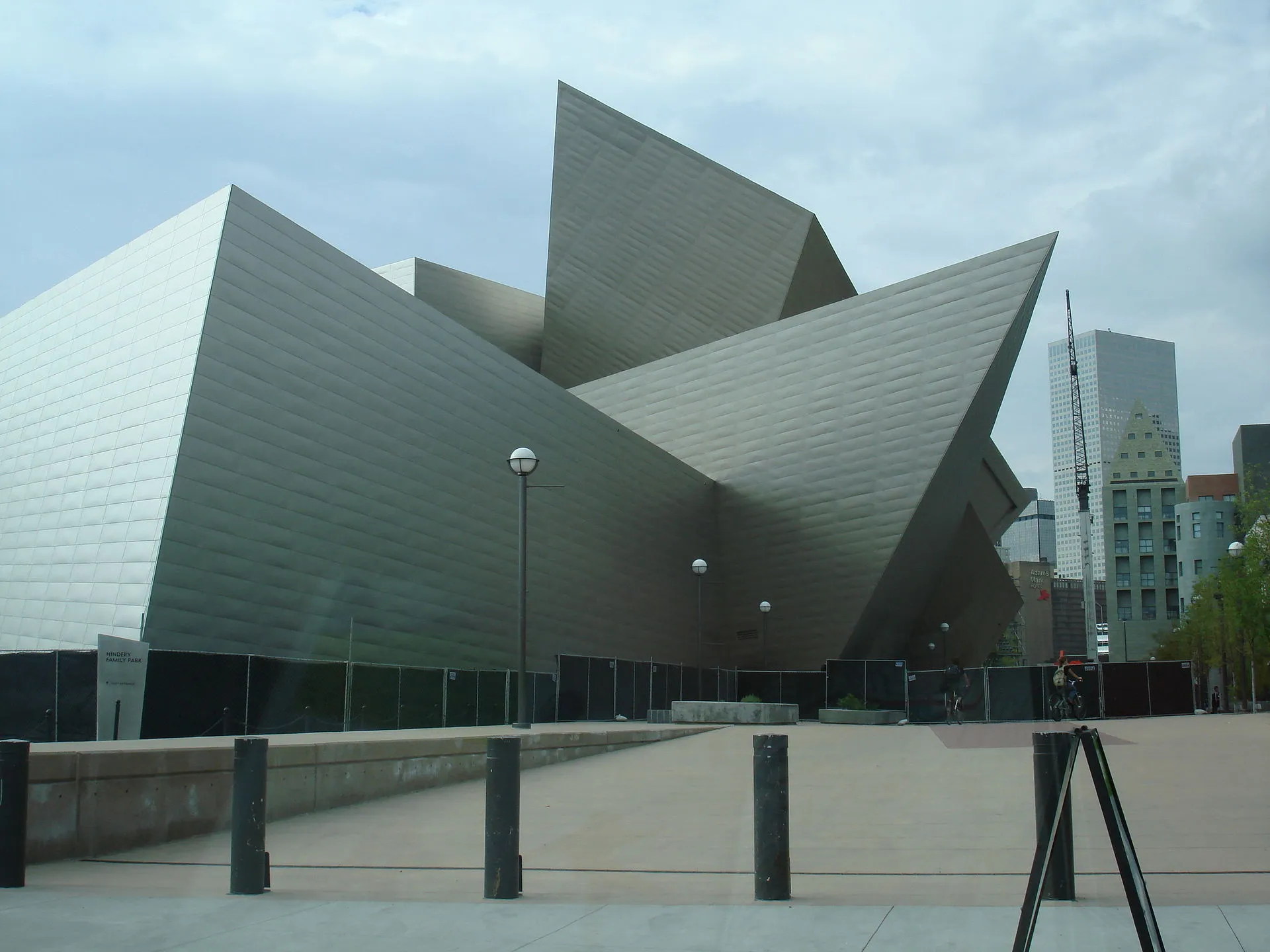
Daniel Libeskind's Hamilton Building is itself a work of art that demands interpretation. The jagged, titanium-clad structure contains no right angles, its peaks and facets inspired by Colorado's Rocky Mountains and the geometric crystals found in the foothills. Engineering this vision into buildable form presented challenges that conventional architecture never faces. Guides decode the design philosophy, explain the construction techniques, and show how the building's angular galleries shape the experience of viewing art within its unconventional walls. The interplay between container and contents becomes part of the museum experience. After exploring the museum, walk to nearby Larimer Square for dining in Denver's most historic block.
Collections Highlights
Hamilton Building exterior: Walk around the building to appreciate Libeskind's design from every angle -- each facade tells a different architectural story inspired by Colorado's geology. Native American galleries: The museum's crown jewel -- spanning centuries from ancient Ancestral Puebloan pottery to contemporary Indigenous art and regalia.
Western American Art wing: Remington sculptures, Russell paintings, and Georgia O'Keeffe canvases that defined how America sees its West. Precourt Collection of Photography: One of the nation's finest photography collections, strong in 20th-century American work. Martin Building rooftop: A hidden gem -- take the elevator to the top floor for mountain views framed by outdoor sculptures. Untitled Final Fridays: Monthly evening events with DJs, cash bar, and galleries open late -- a completely different museum atmosphere.
When to Visit
Hours: Tuesday-Sunday, 10:00 AM - 5:00 PM. Late night: Open until 8:00 PM on first Fridays of each month (Untitled Final Fridays). Closed: Mondays, Thanksgiving, Christmas Day, New Year's Day.
Best time: Tuesday and Wednesday mornings for the thinnest crowds and quietest galleries. Free days: First Saturday of every month offers free general admission for all visitors.
Admission and Costs
General admission: $15 adults, $5 students, free for children under 18. Special exhibitions: Additional $5-22 depending on the show. Docent-led gallery tour: Free with admission, offered daily at 1:00 PM.
Private guided tour: $200-350 for up to 10 people, 90 minutes to 2 hours. Architecture-focused tour: $150-250 per group, covering both buildings and outdoor sculpture.
Tips for Visitors
Start with the Hamilton Building: The Libeskind building's dramatic interior spaces and natural light make the strongest first impression. Allow 2-3 hours minimum: The collection is vast -- a guided tour helps you see the essentials without museum fatigue.
Combine with Civic Center: The museum sits within Denver's Civic Center park, steps from the State Capitol, History Colorado Center, and Larimer Square. Parking: Use the Cultural Complex Garage on 12th Avenue ($1/hour with museum validation) rather than circling for street parking. Families welcome: The children's galleries on the lower level of the North Building are interactive and genuinely engaging for kids of all ages. Photography allowed: Non-flash photography is permitted in permanent collection galleries but often restricted in special exhibitions.
Frequently Asked Questions
What are the opening hours at Denver Art Museum?
Hours: Tuesday-Sunday, 10:00 AM - 5:00 PM. Late night: Open until 8:00 PM on first Fridays of each month (Untitled Final Fridays). Closed: Mondays, Thanksgiving, Christmas Day, New Year's Day.
What does admission to Denver Art Museum cost?
General admission: $15 adults, $5 students, free for children under 18. Special exhibitions: Additional $5-22 depending on the show. Docent-led gallery tour: Free with admission, offered daily at 1:00 PM.
Where should visitors begin their tour at Denver Art Museum?
Start with the Hamilton Building: The Libeskind building's dramatic interior spaces and natural light make the strongest first impression.