
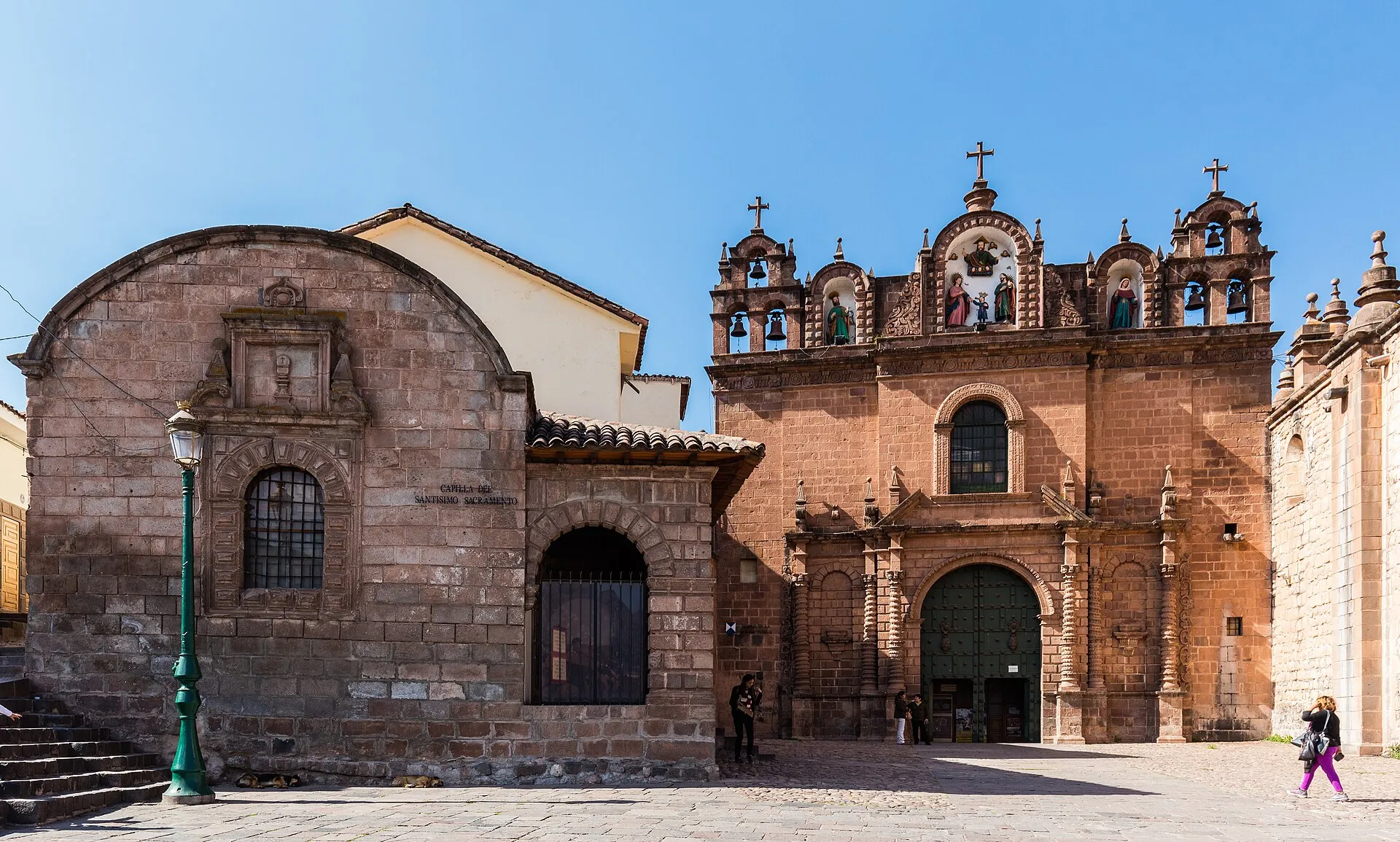
Architecture
Andean Last Supper: The Cathedral's Cusco School painting of the Last Supper featuring cuy and chicha — a startling cultural fusion found nowhere else. Inca foundations: Look at the base of colonial buildings along Calle Loreto and Calle Hatun Rumiyoc to see perfectly fitted Inca stonework supporting Spanish walls. La Compañía facade: The Jesuit church's ornate baroque frontispiece was so extravagant that the Bishop of Cusco complained to the Pope that it upstaged the Cathedral. Night illumination: Both churches and the arcaded buildings glow golden after dark, creating one of the most atmospheric city squares in South America. Cedar choir stalls: The Cathedral's carved cedar stalls depict saints, angels, and Catholic iconography mixed with Andean symbolism. Arcaded colonnades: The covered walkways surrounding the plaza house restaurants, tour agencies, and shops in a continuous colonial arcade.
Historical Significance
The Plaza de Armas sits at the intersection of two civilisations: the Inca Empire that made Cusco its capital and the Spanish colonial order that rebuilt the city on Inca foundations. The original Huacaypata was far larger than today's plaza — it extended east to encompass what is now the Plaza Regocijo — and served as the ceremonial heart of an empire stretching from Colombia to Chile. It was here that Inca emperors presided over the Inti Raymi sun festival, and here that Túpac Amaru, the last Inca ruler, was executed by the Spanish in 1572. The Cathedral, built between 1559 and 1654 using stones pillaged from Sacsayhuaman, contains silver altars, gilded chapels, and the Cusco School paintings that represent the most significant fusion of European and Andean artistic traditions in the colonial world. Walk to the San Pedro Market for a culinary immersion in the living culture that descends from both traditions, then climb to Sacsayhuaman to see the Inca engineering that preceded everything in the plaza below.
When to Visit
Plaza: Open 24 hours — liveliest between 10 AM and 9 PM. Cathedral: Monday-Saturday 10 AM - 6 PM, Sunday 2 PM - 6 PM. La Compañía church: Monday-Saturday 9 AM - 5:30 PM. Best: Early morning (8-9 AM) for photography before the tour groups arrive; evening for the illuminated facades and people-watching.
Admission and Costs
Cathedral entry: S/25 ($7) — separate from the Boleto Turístico. La Compañía: S/15 ($4). Guided plaza + Cathedral tour: S/50-100 ($14-27) per person, 1-1.5 hours. Private half-day Cusco walking tour: S/100-200 ($27-54) covering the plaza, Cathedral, San Blas, and Inca walls.
Tips for Visitors
No photos inside the Cathedral: Photography is strictly prohibited inside — absorb the experience with your eyes and let a guide explain what you're seeing. Start your Cusco visit here: The plaza provides perfect orientation — from here you can walk uphill to Sacsayhuaman, downhill to San Pedro Market, or into the artisan quarter of San Blas, and it is where most travelers base themselves to acclimatize for a day or two before boarding the train to Machu Picchu. Balcony restaurants: Second-floor restaurants with plaza views are pricier than side-street alternatives but the panorama is worth one splurge meal. Watch for touts: Tour agency representatives in the plaza can be persistent — politely decline and book through your hotel or a pre-researched operator instead. Twelve-Angle Stone: Walk one block to Calle Hatun Rumiyoc to see the famous 12-angle Inca stone fitted perfectly into a wall — a guide explains why it matters. Free evening entertainment: The plaza often hosts live music, dance performances, and community events, especially on weekends and holidays.
Frequently Asked Questions
What season is ideal for visiting Cusco's Plaza de Armas?
May through August is the dry season and the most reliable period, with cold but sunny days that fill the plaza with golden Andean light and make the baroque cathedral facades luminous. The Inti Raymi sun festival in late June brings Cusco's most spectacular celebration directly to the plaza. January and February are the heart of the rainy season, with heavy afternoon downpours that can drench the open square and make the steep cobblestone streets leading to it slippery.
When can visitors tour Plaza de Armas & Cathedral?
Plaza: Open 24 hours — liveliest between 10 AM and 9 PM. Cathedral: Monday-Saturday 10 AM - 6 PM, Sunday 2 PM - 6 PM. La Compañía church: Monday-Saturday 9 AM - 5:30 PM.
How much is the entrance fee for Plaza de Armas & Cathedral?
Cathedral entry: S/25 ($7) — separate from the Boleto Turístico. La Compañía: S/15 ($4). Guided plaza + Cathedral tour: S/50-100 (~$14-27) per person, 1-1.5 hours.
What should visitors know before visiting Plaza de Armas & Cathedral?
No photos inside the Cathedral: Photography is strictly prohibited inside — absorb the experience with your eyes and let a guide explain what you're seeing.