
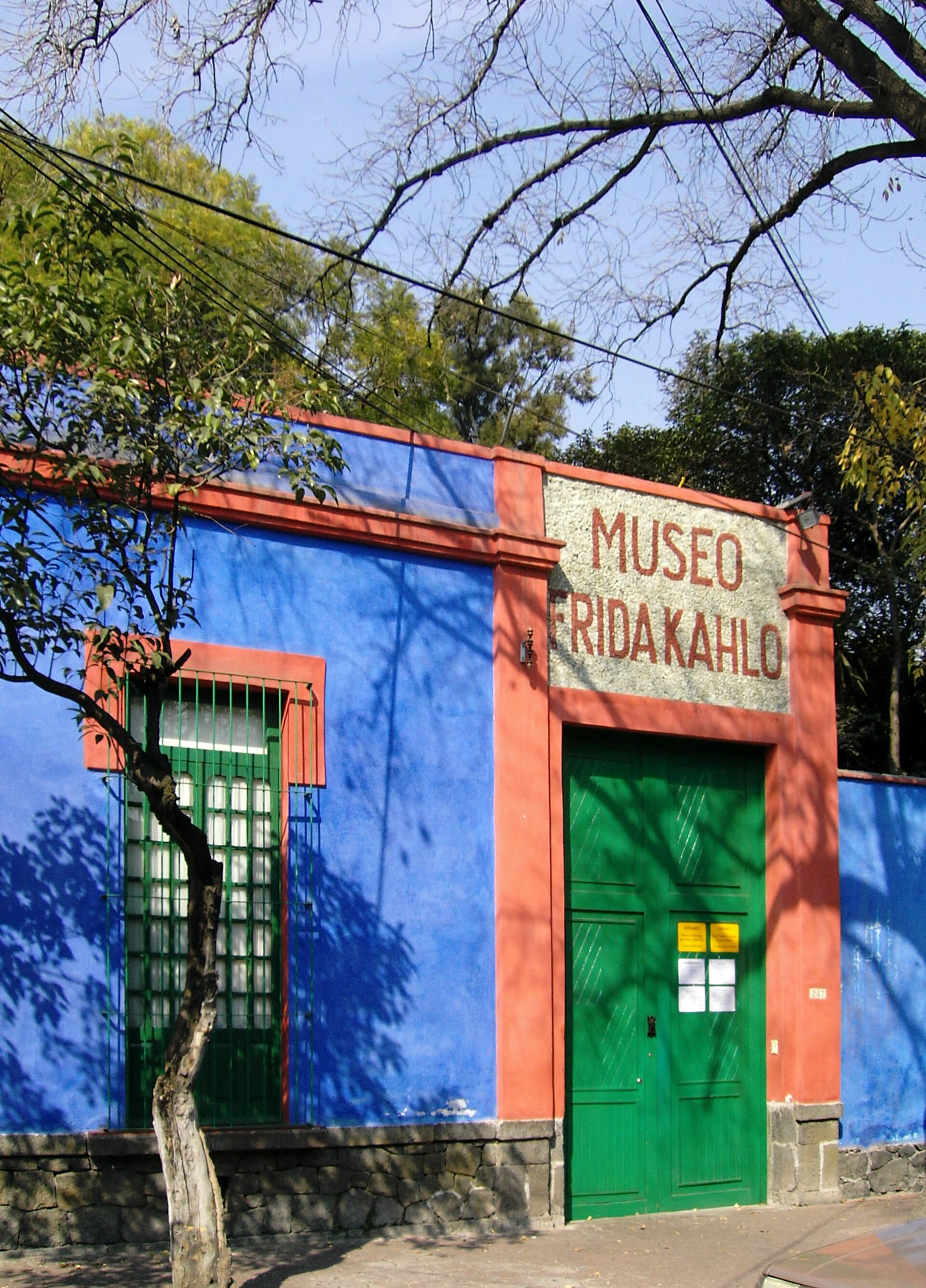

Overview
Tucked into a quiet street in the Coyoacán neighborhood of Mexico City, La Casa Azul (The Blue House) is far more than a museum — it is an intimate window into the life of Mexico's most internationally recognized artist. Frida Kahlo was born here in 1907, returned after her tumultuous marriage to Diego Rivera, and died in her upstairs bedroom in 1954. The cobalt-blue walls, lush courtyard garden, and rooms filled with her personal belongings create an atmosphere that feels less like a gallery and more like visiting someone's home — because that is exactly what it is.
Inside, you will find a rotating selection of Frida's paintings alongside pre-Columbian artifacts that she and Rivera obsessively collected, her custom corsets and Tehuana dresses, the wheelchair she used to paint in her final years, and the four-poster bed with the mirror mounted above it where she created many of her self-portraits while bedridden. A guide who understands Frida's biography — the bus accident, the politics, the affairs, the pain — transforms each room from something pretty to look at into a chapter of an extraordinary story. Combine with Chapultepec Castle for imperial history or Palacio de Bellas Artes for the wider muralismo movement.
Collections Highlights
The Blue House itself is as much a work of art as anything hanging on the walls — volcanic rock pathways, papier-mâché figures, and tropical plants fill the courtyard garden. Frida's studio preserves her easel positioned by the window, palette still set with oil paints, and the wheelchair where she worked through chronic pain. The bedroom with the canopy bed and overhead mirror made self-portraiture possible during the months she spent bedridden after surgeries — seeing this room in person is essential to understanding her art. Rivera's collection of pre-Columbian and folk art pieces displayed throughout reflects the couple's deep connection to indigenous Mexican culture. The kitchen, with its yellow walls and Frida and Diego's names spelled out in tiny ceramic cups on the wall, is one of the most photographed rooms in Mexico. The garden courtyard includes Frida's pet monkeys' old enclosures and Diego's pyramid-shaped stone structure housing their archaeological collection.
Guided Tours
A guide at La Casa Azul provides the biographical context that transforms the visit from a pleasant walkthrough into an emotionally powerful experience. Frida's art is deeply autobiographical — her paintings directly reference the bus accident at age 18 that left her with a broken spinal column, pelvis, and collarbone, the 30+ surgeries that followed, her complicated marriage to Rivera, their political activism alongside Trotsky, and her lifelong struggle between physical agony and creative ecstasy. Without this context, you see pretty rooms; with it, you understand why the mirror was mounted above the bed, why the corsets are displayed next to the paintings, and why the wheelchair sits facing the easel. Guides can also walk you through Coyoacán's colonial streets to the Trotsky Museum, connecting Frida's personal story to the revolutionary politics that shaped twentieth-century Mexico.
When to Visit
Tuesday - Sunday: 10 AM - 5:30 PM (closed Mondays). Wednesday: Extended hours until 6 PM. Best: Tuesday or Wednesday mornings at opening — far fewer visitors than weekends. Avoid: Saturday and Sunday afternoons (timed entry helps, but the small rooms still feel crowded). Duration: 1.5-2 hours for the museum; add 2-3 hours if you explore Coyoacán afterward.
Admission and Costs
General admission: MX$270 ($15) — one of the pricier museums in Mexico City, but worth it. Photography permit: MX$30 ($1.70) extra — no flash, no tripods. Guided museum tour: MX$500-900 ($28-50) on top of entry. Coyoacán walking tour + museum: MX$1,200-1,800 ($65-100) including entry.
Tips for Visitors
Buy tickets online weeks in advance: This museum regularly sells out, especially on weekends and during holidays — walk-ups are rarely possible. Combine with Coyoacán: The surrounding neighborhood is one of Mexico City's most charming, with the main plaza, Mercado de Coyoacán for tostadas, and the Leon Trotsky Museum just a few blocks away. Go with a guide: The museum provides limited English signage; a guide fluent in Frida's biography and art history makes the experience dramatically richer. Photography costs extra: Pay the MX$30 fee at the ticket counter — it is worth it, but respect the no-flash rule strictly. Accessibility: The museum has narrow doorways and stairs; some areas are difficult for wheelchair users, though ground-floor rooms are accessible.