
Architecture
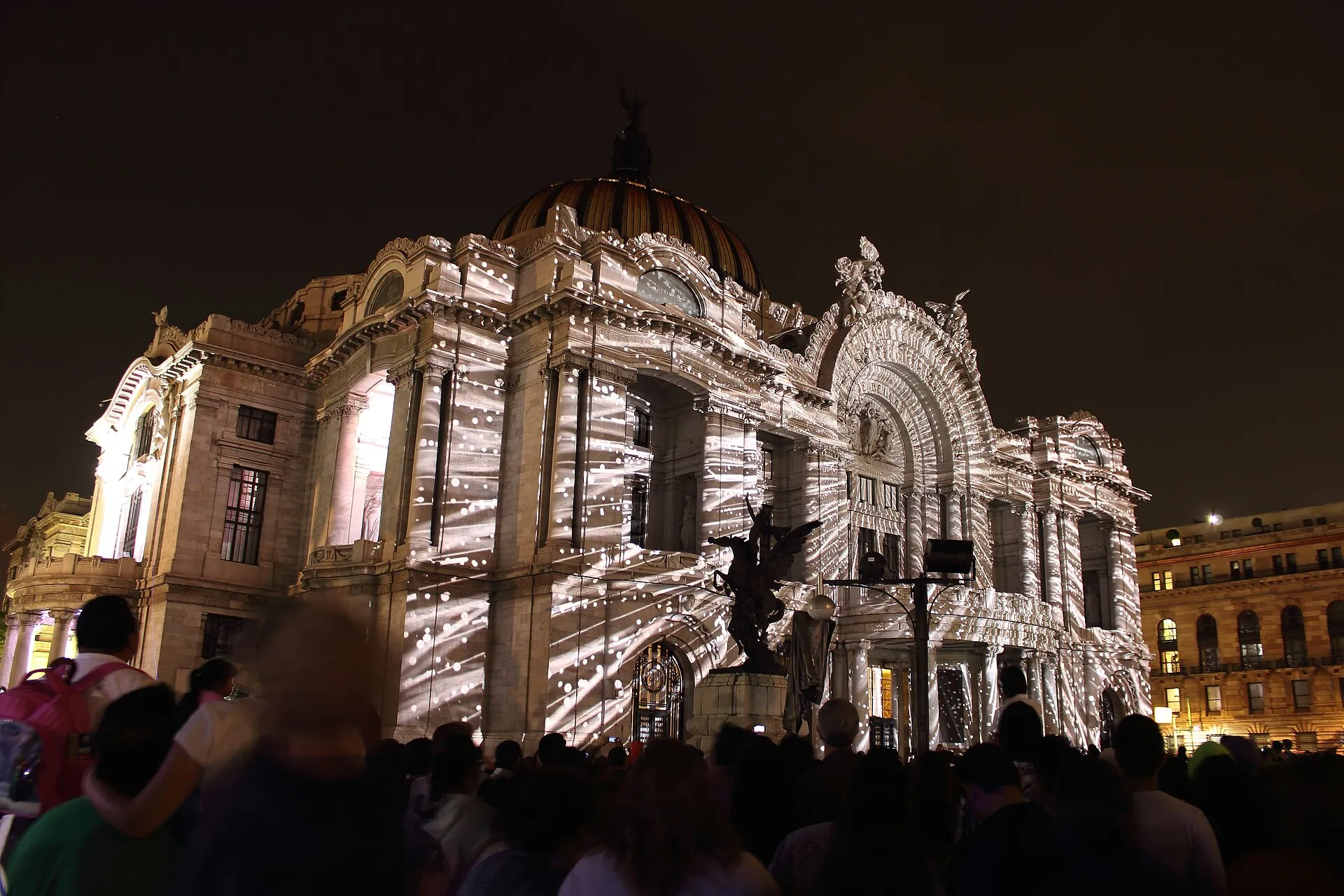
Boari's Art Nouveau exterior is clad entirely in Italian Carrara marble, with sinuous ironwork, sculptural groups representing the dramatic and lyric arts, and a central dome crowned with an eagle. The building has sunk more than 4 meters into Mexico City's soft lakebed since construction — a problem shared with the nearby Metropolitan Cathedral. Inside, the Art Deco interiors by Mexican architect Federico Mariscal feature geometric marble floors, angular bronze lamps, and ironwork balconies that contrast sharply with the organic curves outside. The Tiffany-style stained-glass curtain, assembled from nearly a million pieces of glass, depicts Popocatépetl and Iztaccíhuatl volcanoes and is lowered only before performances — timing your visit to coincide with a Ballet Folklórico show is the only way to see it fully displayed.
Historical Significance
Rivera's "Man, Controller of the Universe" is the mural the Rockefellers destroyed — Rivera repainted it here with Lenin's face even more prominent, the ultimate artistic revenge that crystallized the muralismo movement's refusal to separate art from politics. Orozco's "Catharsis" is a violent, swirling depiction of human conflict that contrasts sharply with Rivera's political optimism — standing between the two works is a masterclass in Mexican muralism's philosophical range. Siqueiros and Tamayo contribute pieces that push the movement in yet other directions, making the upper galleries a complete survey of Mexico's most important artistic movement of the twentieth century. The Ballet Folklórico de México, founded in 1952, performs traditional dances from across Mexico's regions with spectacular costumes and live orchestra, preserving folk traditions that might otherwise be lost.
When to Visit
Museum: Tuesday - Sunday, 10 AM - 6 PM (closed Mondays). Ballet Folklórico: Typically Wednesday evenings and Sunday mornings — check schedule and book well ahead. Best for murals: Tuesday or Wednesday mornings when visitor numbers are lowest. Best for photos: Late afternoon light through the upper windows illuminates the murals beautifully. Duration: 1-2 hours for the murals; add 2 hours if attending a performance.
Admission and Costs
Museum entry: MX$85 ($5) — free on Sundays for all visitors. Ballet Folklórico tickets: MX$400-1,600 ($22-90) depending on seat. Guided art tour: MX$500-1,000 ($28-55) on top of entry. Combined Historic Centre walking tour + Bellas Artes: MX$900-1,500 ($50-85).
Tips for Visitors
Free Sundays: Museum entry is free for everyone on Sundays — great for budget travelers, but expect larger crowds and longer waits. Book Ballet Folklórico ahead: Performances sell out weeks in advance, especially Sunday morning shows; buy through the official Bellas Artes website. Start at the top floor: Most visitors begin on the ground floor and tire before reaching the upper galleries — reverse the route to see the best murals while you are fresh. Combine with the Zócalo: The Historic Centre is compact enough to walk between Bellas Artes and the Zócalo along Calle Madero, one of the city's most vibrant pedestrian streets. Exterior at night: The marble facade is dramatically lit after sunset — worth a return visit even if you have toured the interior during the day. A guide unlocks the murals: Without context, these are impressive paintings; with a guide who explains the political rivalries, symbolism, and personal feuds behind them, they become unforgettable stories.
Frequently Asked Questions
Is there a particular season when Palacio de Bellas Artes is best visited?
The palace's indoor murals and performances make it a strong year-round destination, with consistent ratings from January through June. Late afternoon light through the upper windows illuminates the Rivera and Orozco murals most beautifully during the drier months of October through April. Ballet Folklorico performances run throughout the year, but booking is especially competitive during the December holiday season and Semana Santa.
When can visitors tour Palacio de Bellas Artes?
Museum: Tuesday - Sunday, 10 AM - 6 PM (closed Mondays). Ballet Folklórico: Typically Wednesday evenings and Sunday mornings — check schedule and book well ahead. Best for murals: Tuesday or Wednesday mornings when visitor numbers are lowest.
How much is the entrance fee for Palacio de Bellas Artes?
Museum entry: MX$85 ($5) — free on Sundays for all visitors. Ballet Folklórico tickets: MX$400-1,600 ($22-90) depending on seat. Guided art tour: MX$500-1,000 ($28-55) on top of entry.
What practical tips help visitors make the most of Palacio de Bellas Artes?
Book Ballet Folklorico ahead as performances sell out weeks in advance. Start at the top floor to see the best murals while fresh. A guide unlocks the political rivalries, symbolism, and personal feuds behind the murals.