

Overview
Humayun's Tomb, built in 1570, is the first garden-tomb on the Indian subcontinent and the direct architectural precursor to the Taj Mahal. Commissioned by Humayun's first wife Bega Begum and designed by the Persian architect Mirak Mirza Ghiyas, the tomb introduced the charbagh four-part garden layout, the double dome, and the symmetrical arched facade that would define Mughal funerary architecture for the next century. The UNESCO World Heritage Site also serves as a dynasty necropolis, with over 150 Mughal royals buried within the complex. A major restoration by the Aga Khan Trust in 2003 returned the gardens to their original Mughal-era layout, making it one of the most successful heritage restorations in India. Visit alongside Qutub Minar to see Delhi's architectural evolution from Sultanate to Mughal periods. A guide traces the architectural evolution from this tomb through to the Taj Mahal, points out innovations in symmetry and the Persian-Mughal hybrid design, and explains the symbolic water channels that once represented the rivers of paradise.
Architecture
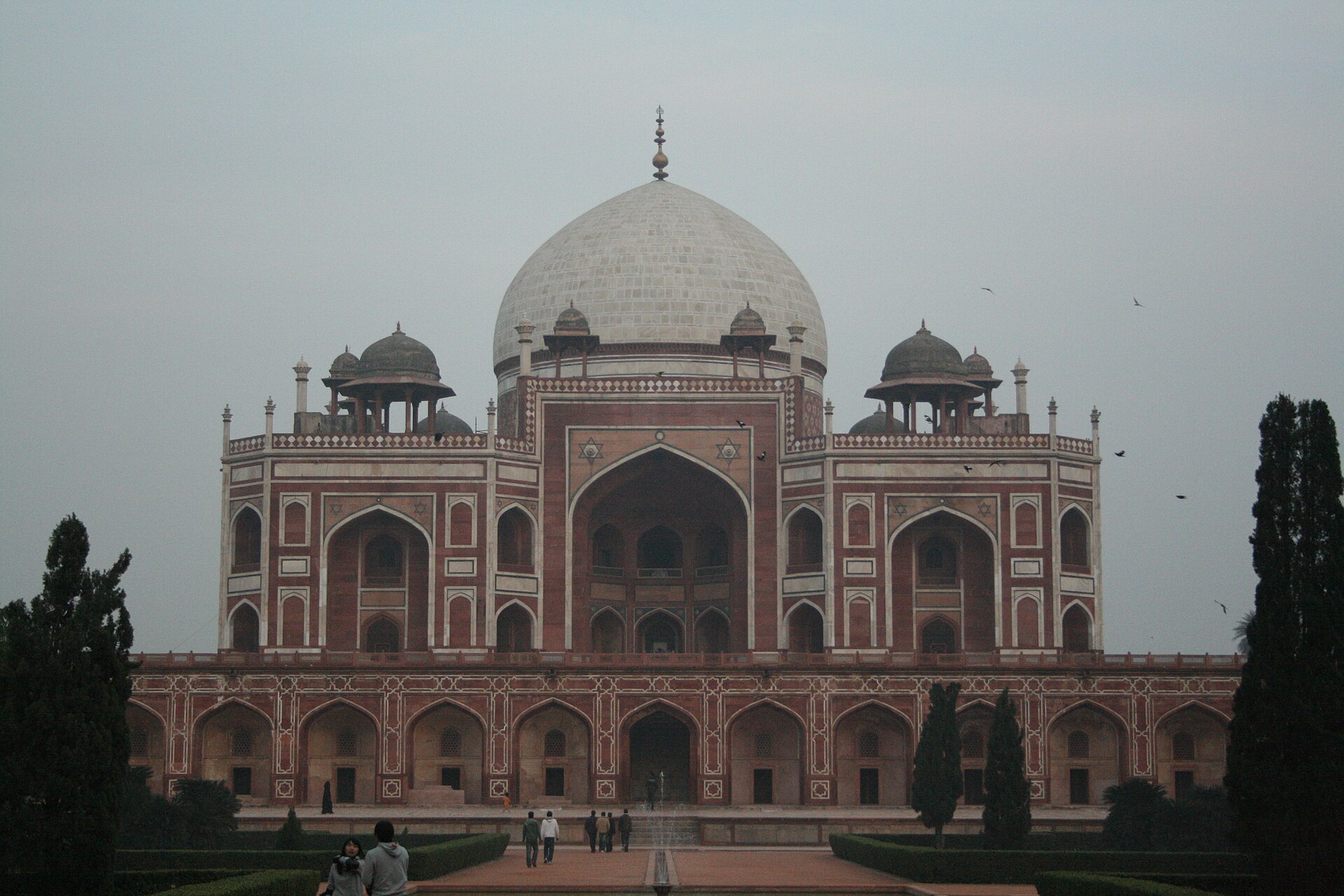
Built in 1570 by Empress Bega Begum for her husband, the second Mughal Emperor Humayun, this tomb introduced the concept of the Mughal garden tomb to the Indian subcontinent. Its double dome rising above a geometrically precise charbagh (four-part garden) directly inspired the construction of the Taj Mahal some 70 years later. The resemblance is unmistakable -- the elevated platform, the symmetrical arched facades, the white marble dome sitting atop red sandstone -- but Humayun's Tomb has a warmth and intimacy that the larger monument lacks.
A guide reveals details invisible to the casual visitor: the tomb contains over 150 graves of Mughal royals, making it effectively a dynasty necropolis. The Persian architect Mirak Mirza Ghiyas designed water channels that once flowed through the gardens in patterns representing the rivers of paradise. Guides also explain the 2003 restoration by the Aga Khan Trust, which reconstructed the gardens to their original Mughal-era layout -- one of the most successful heritage restorations in India. The charbagh gardens now have over 12,000 plants reintroduced. Isa Khan's tomb, a pre-Mughal octagonal structure (1547) in the complex, features stunning blue tile work and its own garden. The Arab Serai is a walled enclosure that housed the 300 Persian craftsmen who built the tomb, now a tranquil picnic spot. Every element of the tomb is placed with mathematical exactness -- the guide helps decode the symbolism. Visit alongside Qutub Minar to see Delhi's architectural evolution from Sultanate to Mughal periods.
Historical Significance
Built in 1570 by Empress Bega Begum for her husband, the second Mughal Emperor Humayun, this tomb introduced the concept of the Mughal garden tomb to the Indian subcontinent. Its double dome rising above a geometrically precise charbagh directly inspired the construction of the Taj Mahal some 70 years later. The resemblance is unmistakable -- the elevated platform, the symmetrical arched facades, the white marble dome sitting atop red sandstone. The tomb contains over 150 graves of Mughal royals, making it effectively a dynasty necropolis. The 2003 restoration by the Aga Khan Trust reconstructed the gardens to their original Mughal-era layout, one of the most successful heritage restorations in India. Visit alongside Qutub Minar and India Gate to see Delhi's full architectural arc.
When to Visit
Open: daily, 6:00 AM - 6:00 PM (sunrise to sunset). No closures: open every day of the year. Best time: early morning or late afternoon for golden light on the sandstone. Avoid midday in summer when the stone plaza radiates intense heat.
Admission and Costs
Foreigners: ₹600 ($7.20). Indian nationals: ₹35. ASI guide: ₹500-1,000 for a 1-hour tour. Photography: free (no tripod or drone without permission).
Tips for Visitors
Less crowded than the Red Fort: this site receives far fewer visitors despite being equally significant, making for a more peaceful experience. Near Nizamuddin: Walk to the adjacent Nizamuddin Dargah for Sufi qawwali music on Thursday evenings. Garden strolling: The restored gardens are ideal for a slow walk -- bring a book and enjoy the lawns. Metro access: JLN Stadium metro (Violet Line) is the closest station, about a 10-minute walk. Sunset visits: The tomb catches stunning warm light in the hour before closing.