
Red Fort timeline
-
Construction begins
Shah Jahan began building the fort as the palace citadel of his new capital, Shahjahanabad.
-
Mughal rule ends
After the uprising, British control ended the fort's role as the Mughal imperial seat.
-
Independence address
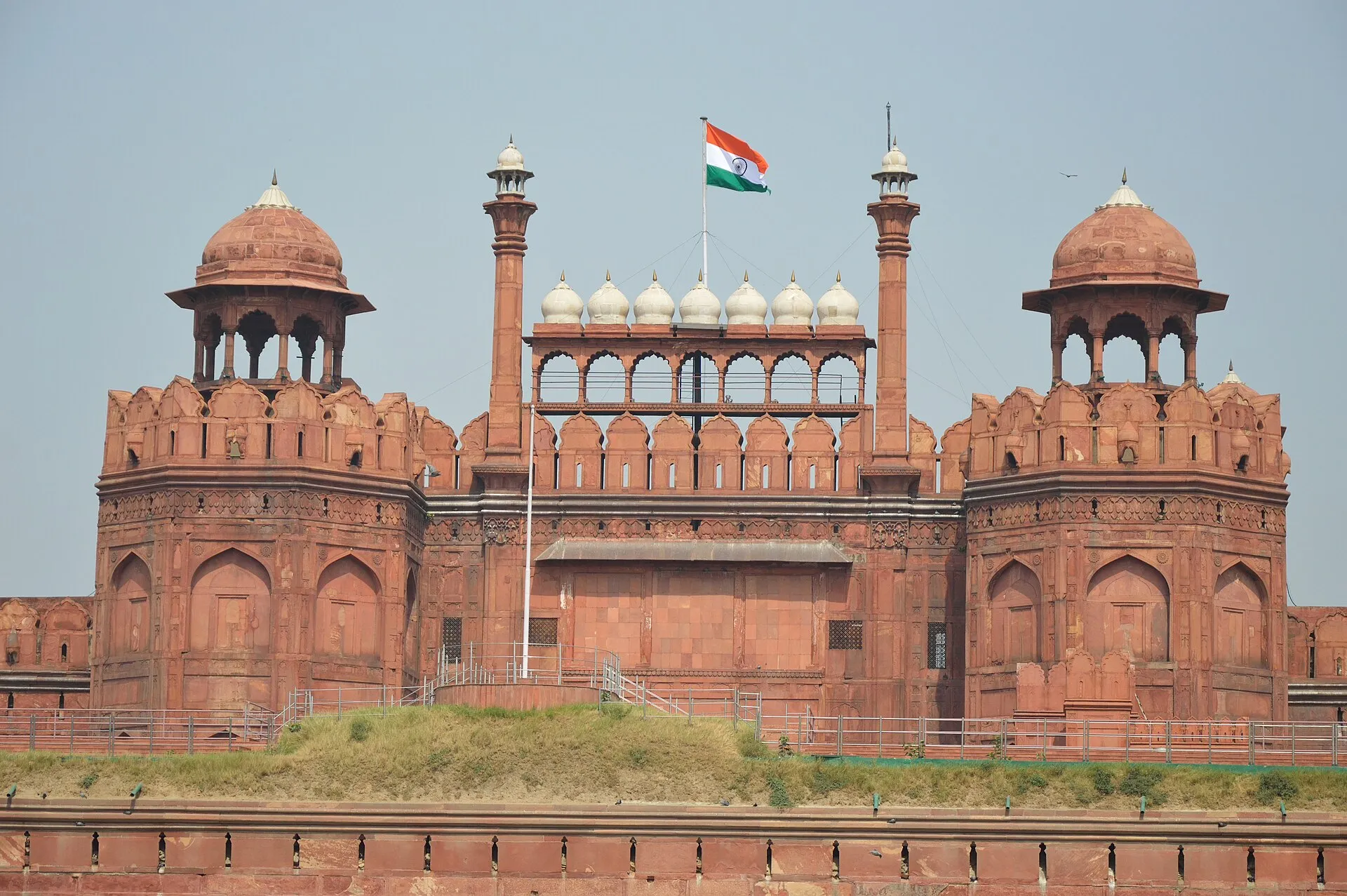
India's first prime minister raised the national flag at the fort after independence.
Fortification History
The Red Fort was commissioned by Emperor Shah Jahan in 1638 when he shifted the Mughal capital from the older Agra Fort to Delhi. It took nine years to build and served as the residence of Mughal emperors for nearly 200 years. The Lahori Gate is the main entrance where India's tricolor flies, the spot where the PM speaks on August 15th. Chhatta Chowk is a covered Mughal-era bazaar inside the fort walls. Behind its 2.5-kilometer wall of red sandstone rising 33 meters above Old Delhi lie marble palaces with silver ceilings. After 1857, the British built military barracks inside the fort, and bullet marks from the independence struggle remain visible on the walls.
Notable Rooms
The Red Fort (Lal Qila) was commissioned by Emperor Shah Jahan in 1638 when he shifted the Mughal capital from Agra to Delhi. It took nine years to build and served as the residence of Mughal emperors for nearly 200 years. Behind its 2.5-kilometer wall of red sandstone -- rising 33 meters above the streets of Old Delhi -- lie marble palaces with silver ceilings, a throne room adorned with the legendary Peacock Throne, and gardens modeled on the Quranic description of paradise.
With a guide, the Red Fort's stripped-down interiors regain their original splendor through storytelling. They explain how the Diwan-i-Khas once bore an inscription reading "If there is paradise on earth, it is this, it is this, it is this" -- words that described the hall when its ceiling was solid silver and its walls were inlaid with precious stones. The Diwan-i-Am served as the public audience hall, while the Hammam is the royal bathhouse with marble floors and rose-water fountains. The Hayat Bakhsh Bagh ("Life-Bestowing Garden") features lotus-shaped pools and pavilions. Guides also reveal the British-era military barracks built inside the fort after 1857, the bullet marks from the Indian independence struggle, and why India's Prime Minister addresses the nation from its ramparts every Independence Day.
When to Visit
Open: Tuesday-Sunday, 9:30 AM - 4:30 PM. Closed every Monday. Sound-and-light show: evenings (timings vary by season, usually 7-8 PM). Best time: early morning (9:30-11 AM) before crowds and midday heat.
Admission and Costs
Foreigners: ₹600 ($7.20). Indian nationals: ₹35. Sound-and-light show: ₹80. ASI guide: ₹800-1,500 for a 1.5-2 hour tour. Video camera fee: ₹25.
The Case for a Guide
The Red Fort's stripped interiors require storytelling to come alive — a guide restores the silver ceilings, inlaid throne rooms, and rose-water fountains through narration in the very spaces they once occupied.
- Mughal architectural symbolism: The fort's layout mirrors the Quranic description of paradise — four rivers running from a central point, gardens divided into quadrants, water everywhere — a design that guides trace from the Nahr-i-Behisht channel to the Hayat Bakhsh Bagh, explaining each element's cosmological meaning.
- Diwan-i-Khas "heaven on earth" inscription: The Persian couplet "If there is paradise on earth, it is this, it is this, it is this" circled the hall's silver ceiling; guides explain that the ceiling was stripped by the Maratha and Jat invaders before the British arrived, and reconstruct what the space looked like when those words were a statement of fact rather than archaeology.
- The Koh-i-Noor diamond's time here: The Peacock Throne stood in the Diwan-i-Khas and the Koh-i-Noor sat in its peacock's eye; guides trace the diamond's journey from the Mughal treasury through Nadir Shah's 1739 Persian sack and onward to the Sikh Empire before its controversial arrival in the Tower of London.
- British colonial changes after 1857: The barracks built inside the fort after the uprising demolished several palaces and gardens; guides identify where buildings once stood using surviving foundations and old photographs, explaining what was destroyed and why the British chose to garrison the emperor's private quarters specifically.
- Independence speech tradition started by Nehru: Every August 15th since 1947, India's Prime Minister addresses the nation from the Lahori Gate ramparts; guides explain why Nehru chose this location, what the first speech contained, and how the symbolism of reclaiming the Mughal emperor's gate for a free republic was absolutely deliberate.
Tips for Visitors
Combine with Old Delhi: the fort opens onto Chandni Chowk, making it easy to pair with a street food walk and Jama Masjid visit. Allow 2-3 hours, as the complex is vast and rushing through misses half the details. Carry water: limited shade inside, especially in warmer months. The evening sound-and-light show brings Mughal history to life with dramatic narration projected onto the walls. Security screening is airport-style at entry, and large bags may be restricted. Visit India Gate and Humayun's Tomb on the same day for a comprehensive Delhi heritage experience.
Frequently Asked Questions
When is the best time of year to explore the Red Fort?
November through February offers the most comfortable conditions for walking the vast 94-acre complex, where limited shade makes summer visits grueling. The evening sound-and-light show is particularly atmospheric during the cool winter months. August 15 is Independence Day, when the Prime Minister addresses the nation from the ramparts -- a historic occasion, though public access to the fort itself is restricted on that day.
When can visitors explore Red Fort?
Open: Tuesday–Sunday, 9:30 AM – 4:30 PM. Closed: Every Monday. Sound-and-light show: Evenings (timings vary by season, usually 7–8 PM). Best time: Early morning (9:30–11 AM) before crowds and midday heat
What is the admission price for Red Fort?
Foreigners: ₹600 ($7.20). Indian nationals: ₹35. Sound-and-light show: ₹80. ASI guide: ₹800–1,500 for a 1.5–2 hour tour. Video camera fee: ₹25
What should visitors know before exploring the Red Fort?
Combine with Old Delhi as the fort opens onto Chandni Chowk for a street food walk and Jama Masjid visit. Carry water since shade is limited. The sound-and-light show brings Mughal history to life with dramatic narration projected onto the walls.