

Overview
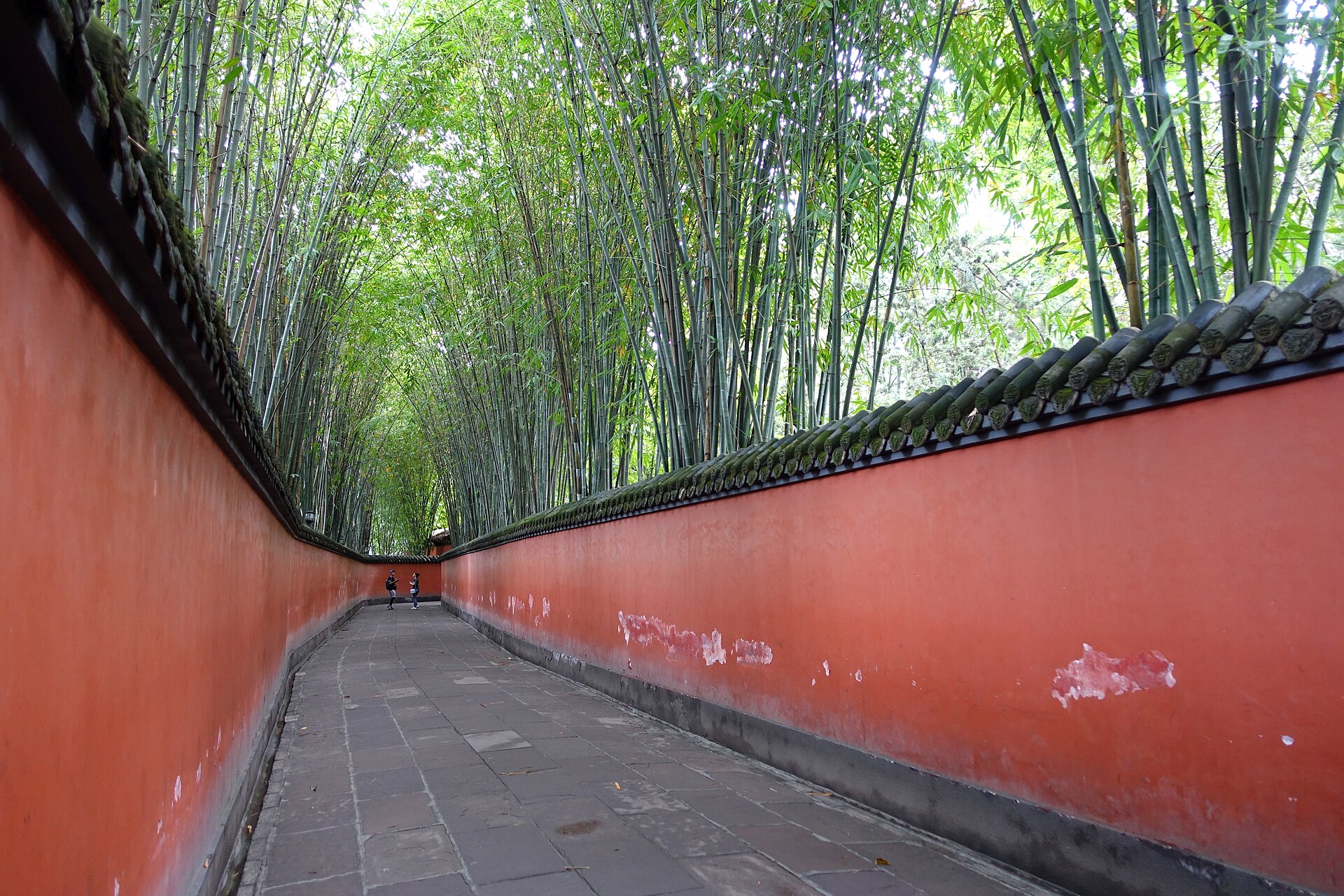
Wuhou Shrine is the only temple in China that jointly commemorates both a ruler and his minister — Liu Bei, the founding emperor of the Shu Han kingdom, and Zhuge Liang, the legendary strategist whose counsel shaped the course of the Three Kingdoms period. The complex traces its origins to the fourth century, though the present buildings largely date from a Qing Dynasty reconstruction in 1672. What makes this site so compelling is not architectural grandeur but narrative depth: every hall, corridor, and courtyard tells a chapter of the Shu Han story, from Liu Bei's humble beginnings weaving straw sandals to Zhuge Liang's daring Empty Fort Strategy that turned an army away without a single arrow fired. The main axis runs south to north through a ceremonial gate, the Liu Bei Hall with its gilded throne statue, and the rear Zhuge Liang Hall where incense smoke curls around a seated figure holding a feather fan — the iconic image of the man known as the Sleeping Dragon. Flanking these halls are corridors lined with painted clay statues of 28 civil and military officials of the Shu Han court, each with a small placard summarizing their deeds and eventual fates. Behind the formal temple area, the grounds dissolve into a serene classical garden: winding paths through bamboo groves, a red-walled corridor covered in moss and framed by overhanging ginkgo branches, and a peaceful bonsai courtyard rarely found by hurrying tour groups. The shrine's eastern wall opens directly onto Jinli Ancient Street, a reconstructed Qing-era commercial lane packed with Sichuan street food, shadow puppet performances, and lacquerware shops — making it effortless to combine the two into a half-day outing. Visitors with more time in Chengdu will find the city's other treasures equally rewarding: the Giant Panda Research Base in the northern suburbs for a morning among China's most beloved animals, or a day trip to the colossal Leshan Giant Buddha carved into a riverside cliff two hours south.
Collections Highlights
Hall of Zhuge Liang: The spiritual heart of the shrine — a solemn chamber where Zhuge Liang sits in bronze holding his feather fan, flanked by his son and grandson who died defending the kingdom. Gallery of 28 Officials: Painted clay statues of Shu Han's most famous generals and advisors line two long corridors, each face rendered with distinct personality and bearing. Liu Bei's Tomb (Huiling): A tree-covered earthen mound at the rear of the complex, encircled by a stone wall — one of the few Three Kingdoms royal tombs that was never looted. Red Wall Bamboo Path: A narrow corridor bounded by high vermillion walls draped in ivy, with towering bamboo arching overhead — one of the most photographed spots in all of Chengdu. Three Kingdoms culture museum: A recently renovated exhibition hall displaying weapons, pottery, and documents from the Shu Han period with English-language panels. Bonsai and garden courtyard: Tucked behind the main halls, a tranquil space of miniature landscapes and centuries-old trees where you can sit and escape the crowds entirely
Guided Tours
Expert guides at Wuhou Shrine offer specialized knowledge that transforms a casual visit into an educational experience. Tours range from general highlights to thematic deep dives, with guides adapting their commentary to visitor interests and expertise levels.
When to Visit
Summer hours (May - Oct): Daily 8:00 AM - 6:00 PM (last entry 5:30 PM). Winter hours (Nov - Apr): Daily 8:00 AM - 5:30 PM (last entry 5:00 PM). Best time to visit: Early morning on weekdays — by mid-morning the halls are packed with school groups and organized tours. Seasonal highlight: Late October and November, when the ginkgo trees lining the red wall corridor turn blazing gold against the crimson backdrop
Admission and Costs
Admission: ¥50 (includes the shrine complex, Liu Bei's tomb, and the garden areas). Children under 1.2m: Free. Audio guide: ¥20 (English version available — highly recommended, as most signage is Chinese only). Getting there: Metro Line 3 to Gaoshengqiao station (Exit D), then a 5-minute walk south along Wuhou Ci Dajie. Jinli Ancient Street: Free to enter, directly accessible from the shrine's east exit
Tips for Visitors
Read up on Three Kingdoms first: The shrine assumes familiarity with the characters and events — even a quick summary of the novel Romance of the Three Kingdoms will transform a confusing succession of statues into a gripping narrative. Hire a guide or rent the audio tour: English signage is minimal, and without context the statues and halls blur together — a good guide brings the political intrigue and battlefield drama to life. Exit through the east gate: This deposits you directly onto Jinli Ancient Street where you can sample Sichuan snacks like san da pao (glutinous rice balls) and bo bo ji (cold skewers in chili oil). Allow 2-3 hours: Rushing through in under an hour means missing the garden, the tomb, and the museum wing entirely. Visit on a rainy day: The covered corridors and indoor halls make this one of Chengdu's best wet-weather attractions, and the gardens look particularly atmospheric in mist