
Historical Significance
The Plaza de Armas encodes Chilean political history in stone and space:
- The founding of Chile — The exact location where Valdivia's expedition camped in February 1541 is commemorated by a plaque; the conquistador's choice of this site — a flat river bend at the foot of Cerro Santa Lucía — determined the shape of the city for the next 500 years
- The September 11, 1973 coup — While the bombardment of La Moneda palace took place five blocks southwest, the Plaza de Armas was one of the gathering points for the Pinochet government's initial arrest operations; a guide can explain the specific sequence of events on that day and their relationship to the plaza's position in the city
- The 2019 social uprising — Santiago's Plaza de Armas and surrounding streets became the center of the largest mass protests in Chilean history from October 2019, when demonstrations over metro fare increases expanded into a national movement demanding constitutional reform; the walls and buildings around the plaza still carry traces of that period in graffiti remnants and repair work that a guide can identify and explain
Architecture
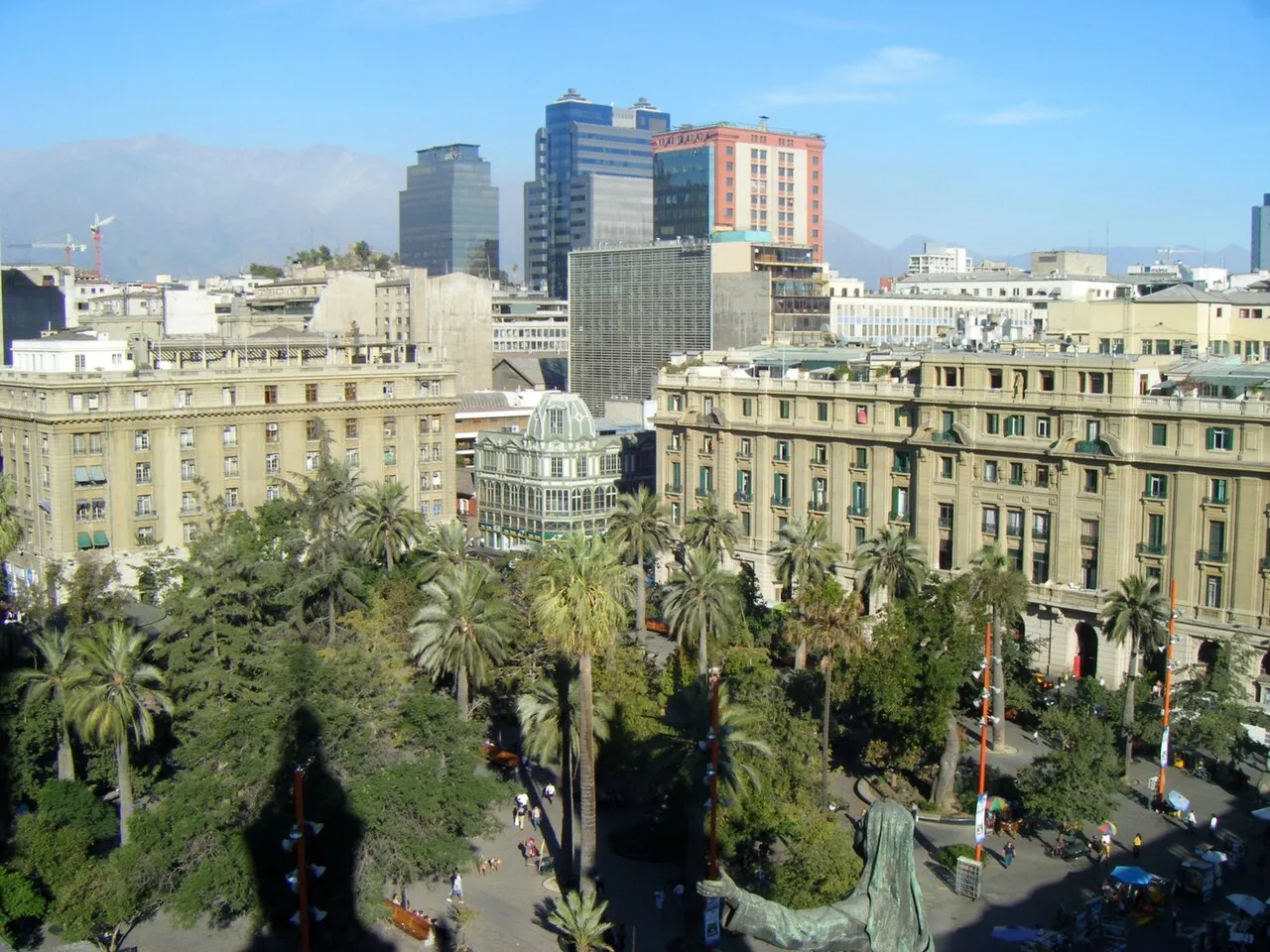
The Plaza de Armas is framed by four centuries of Chilean public architecture, and each side of the square reads as a distinct chapter. The Metropolitan Cathedral on the west is the dominant monument: a neoclassical basilica begun in 1748 whose severe stone facade and paired towers were reworked by the Italian architect Joaquín Toesca — the same designer responsible for the nearby Palacio de La Moneda — giving the plaza its restrained classical vocabulary after the 1800 dedication.
The north side pairs two former seats of colonial authority. The Palacio de la Real Audiencia, now the National History Museum, is a two-storey neoclassical block completed in 1808 around a central courtyard, built to house Spain's high colonial court. Beside it, the Correo Central (Central Post Office) was rebuilt in 1882 on the site of the colonial governors' palace and later crowned with a French Second-Empire mansard and a glass-roofed hall, the plaza's most ornate 19th-century flourish.
The eastern and southern edges preserve the square's older and more human-scaled fabric: the burgundy Casa Colorada of 1769 on the east, and along the southern arcade the Portal Fernández Concha, a 19th-century commercial gallery whose ground-floor colonnade still shelters the cafés, chess players, and lustrabotas that give the plaza its daily rhythm.
When to Visit
Open plaza: 24 hours. Metropolitan Cathedral: Daily 9 AM–7 PM (earlier opening Sundays for mass). National History Museum: Tuesday–Sunday 10 AM–5 PM, free entry. Casa Colorada (Museum of Santiago): Tuesday–Sunday 10 AM–6 PM, $3 USD. Best time: 8–10 AM weekdays for the plaza before office workers and lunch crowds arrive; Sunday afternoons for the most active family gathering atmosphere.
Admission and Costs
Plaza and exterior: Free. Metropolitan Cathedral: Free. National History Museum: Free. Casa Colorada / Museum of Santiago: $3 USD. Guided walking tour: CLP 10,000–20,000 ($12–24) per person in groups. Private guide: CLP 60,000–120,000 ($70–140) for a half-day.
The Case for a Guide
The Plaza de Armas rewards a guide who can animate its political layers:
- The succession of cathedrals — The current cathedral is the fifth building on the same site, each destroyed by earthquake and rebuilt larger; a guide traces the footprints of the predecessors, explains what changed in each reconstruction, and shows the specific sections of the current building that predate the 1800 completion date
- The municipal chess and social culture — The permanent chess tables at the plaza's edge are occupied by the same players at the same times every day; a guide introduces the ritual and social geography of the plaza as a living community space rather than a tourist monument
- The street trades and informal economy — The artisan jewelers, shoe shiners, and lustrabotas (shoe shiners) operating on the plaza have micro-territories with informal protocols maintained across generations; a guide who knows the regulars can facilitate conversations that reveal the human economy beneath the heritage surface
Tips for Visitors
History Museum first: The National History Museum on the plaza's north side is free, uncrowded, and contains the best overview of Chilean history from pre-Columbian through contemporary — an excellent 90-minute introduction before walking the city. Sunday lunch: The restaurants on the streets immediately behind the cathedral serve traditional Chilean cazuela and pastel de choclo to local families every Sunday — far better value than the tourist-facing cafés on the plaza itself. Earthquake damage: Ask your guide to point out the subtle structural evidence of the multiple earthquakes that have cracked and repaired the cathedral's facade — the geological story of Santiago is written in the building's maintenance record. Build a route: the plaza is the natural starting point for the historic center — walk ten minutes southeast into the Lastarria neighborhood for lunch under the jacarandas, or head north across the Mapocho to the Bellavista funicular up San Cristóbal Hill for the Andean panorama.
Frequently Asked Questions
What is the historical significance of Santiago's Plaza de Armas?
Pedro de Valdivia laid out Santiago's first street grid on February 12, 1541, placing the Plaza de Armas at its center — the traditional Spanish colonial practice of centering new settlements on a main square surrounded by the church, government house, and commercial buildings. The plaza has witnessed every major event in Chilean history from that founding day through the colonial period, independence from Spain in 1818, and the Pinochet coup of 1973, when the Palacio de la Moneda just five blocks away was bombed from the air. The Casa Colorada on the plaza's east side, built in 1769, is the oldest surviving building in Santiago.
What buildings surround the Plaza de Armas?
The Metropolitan Cathedral (Catedral Metropolitana) occupies the entire western side — a neoclassical building begun in 1748 and completed in 1800, the fifth cathedral on the same site since 1541. The National History Museum (Museo Histórico Nacional) occupies the former Royal Palace on the north side and contains the most comprehensive collection of Chilean history from pre-Columbian times through the 20th century. The Casa Colorada on the east side is the oldest colonial house in Santiago. The Central Post Office occupies the former Government House site on the north.
Is the Plaza de Armas safe to visit?
The Plaza de Armas is Santiago's most active public space and is safe during daylight hours and early evenings. The tourist police maintain a visible presence. The plaza is busiest on weekdays during lunch hours and Sundays when families gather. Petty theft is the main risk in crowded conditions — standard precautions with valuables apply. Evening visits are pleasant when the cathedral is illuminated; the area around the plaza is well-lit and patrolled.
How do you get to the Plaza de Armas, and is it step-free?
The plaza is the easiest downtown landmark to reach on public transport — the Plaza de Armas metro station sits directly beneath the square, served by Line 5 with a transfer to Line 3, and lifts connect the platforms to street level for step-free access. The square itself is flat and fully paved, so wheelchair users and families with strollers can cross it without difficulty; the Metropolitan Cathedral and the National History Museum both have level or ramped entrances from the plaza. From the Bellavista side of the river it is a ten-minute walk south across the Mapocho.