
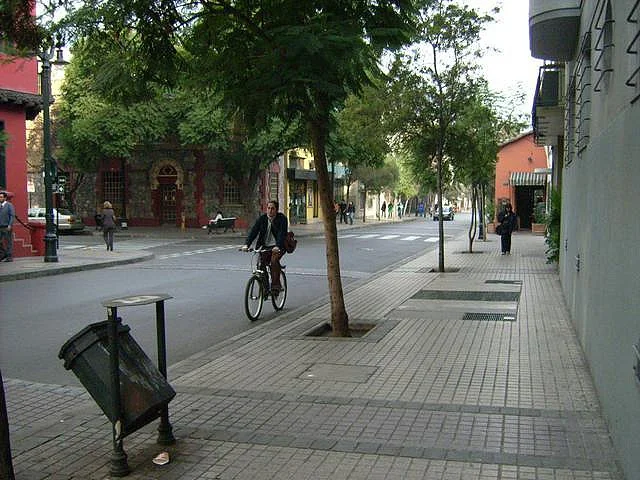
Local Life
Lastarria's history as Santiago's intellectual quarter runs deeper than its current café culture:
- The 19th-century literary clubs — The Sociedad Literaria de 1842, founded by José Victorino Lastarria in the very streets that now bear his name, was the first formal organization to argue that Chilean literature should develop independently from Spanish models — a debate that preceded the political independence movement and whose echoes are still audible in the neighborhood's bookshop conversations
- The Pinochet-era underground culture — During the 1973–1990 military dictatorship, the apartments and bookshops of Lastarria served as informal meeting points for prohibited cultural activities; a guide who knows the neighborhood's recent history can identify specific buildings that sheltered underground theatre groups, samizdat publication networks, and political meetings during the worst years of the dictatorship
- The 2019 protest art — The social uprising of October 2019 produced an extraordinary concentration of street art and political murals throughout Santiago; Lastarria's walls contain some of the most significant surviving examples, including works by artists who have since been recognized internationally; a guide traces these murals in context of the protest movement they document
When to Visit
Neighborhood: Always accessible (public streets). MAVI: Tuesday–Sunday 10:30 AM–6:30 PM; CLP 3,000 adults, free Sundays. GAM: Tuesday–Sunday 10 AM–9 PM; most events free or low cost. Antique market (Parque Forestal): Saturday and Sunday mornings, approximately 10 AM–4 PM; free entry. Restaurants: Lunch 12–3 PM; dinner from 8 PM. Bookshops: Most open 10 AM–8 PM daily.
Admission and Costs
Walking the streets: Free. MAVI entry: CLP 3,000 ($3.50); free Sundays. GAM entry: Mostly free for permanent collection; ticketed events vary CLP 3,000–15,000. Restaurant mains: CLP 12,000–35,000 ($14–41). Café lunch: CLP 8,000–14,000 ($9–16). Bookshops: Chilean literature paperbacks from CLP 8,000–20,000.
The Case for a Guide
Lastarria rewards a guide who knows its cultural geography:
- The bookshop curation — Each of Lastarria's independent bookshops reflects a specific curatorial perspective on Chilean culture; a guide introduces the owners and explains which shop to visit for pre-coup Chilean poetry, which for contemporary Latin American fiction, and which for the political pamphlets and periodicals of the Pinochet resistance that are unavailable anywhere else in the city
- The MAVI permanent collection — MAVI's collection of Chilean visual art from the 20th century requires context that the museum wall labels alone cannot provide; a guide who knows the Chilean art history explains which works were created in exile (many artists fled after 1973), which were created in response to specific political events, and how the collection's political dimension was itself a form of cultural resistance
- The restaurant culture and food geography — The distinction between the tourist-facing restaurants on the main street and the neighborhood restaurants on the side streets reflects Santiago's class geography; a guide points out which kitchens are cooking the genuine Chilean repertoire and which are serving international food in Chilean buildings
Tips for Visitors
Sunday morning combination: Start at the Parque Forestal antique market (10 AM), walk into Lastarria for lunch, then continue to Plaza de Armas for the afternoon — this sequence captures three distinct Santiago experiences in a single day without transport. Cerro Santa Lucía: The small hill visible from Lastarria's main street is the founding site of Santiago in 1541 and a free-entry public park with city views — allow 30 minutes for the climb and reward yourself with a terrace table in Lastarria after. Evening dining: Book ahead for the neighborhood's best restaurants on weekends — Lastarria's dining culture is popular with Santiago professionals and tables fill by 9 PM.
Frequently Asked Questions
What makes Lastarria worth visiting in Santiago?
Lastarria is the most concentrated expression of Santiago's contemporary cultural life — a compact neighborhood of independent bookshops, contemporary art galleries, antique dealers, vintage clothing shops, and terrace restaurants that has none of the corporate uniformity of Santiago's upscale Providencia or Las Condes districts. The neighborhood's streets are lined with heritage buildings from the late 19th and early 20th century, and the outdoor terrace culture — tables under jacaranda trees along the main pedestrian street — is unique in the city. It is also home to the Museum of Visual Arts (MAVI) and the Gabriela Mistral Cultural Center, two of Santiago's best contemporary art institutions.
When is the best time to visit Lastarria?
Lastarria is good year-round, but shines in autumn (March–May) and spring (September–November) when the outdoor terraces are at their most pleasant. Weekend mornings bring an antique market to Parque Forestal adjacent to the neighborhood, adding a browseable dimension to the walk. Evening visits are excellent year-round — the restaurant and wine bar scene runs from 8 PM until late, and the bars and cocktail spots on Rosal and Lastarria streets stay open until 2–3 AM on weekends. The jacaranda trees along the main street bloom purple in November — one of Santiago's most photogenic natural phenomena.
Is Lastarria expensive?
Lastarria has a reputation as an upscale neighborhood that is somewhat deserved at dinner time, when the best restaurants charge CLP 18,000–35,000 ($21–41) for main courses. However, the neighborhood's daytime economy — its bookshops, cafés, and museum entry fees — is reasonably priced by any standard. The Sunday antique market at Parque Forestal is free. The Gabriela Mistral Cultural Center (GAM) has free or low-cost entry to its permanent collection and occasional free evening concerts. Lunch menus at most Lastarria restaurants run CLP 8,000–14,000 ($9–16), which is good value for the quality.