
Tips for Visitors
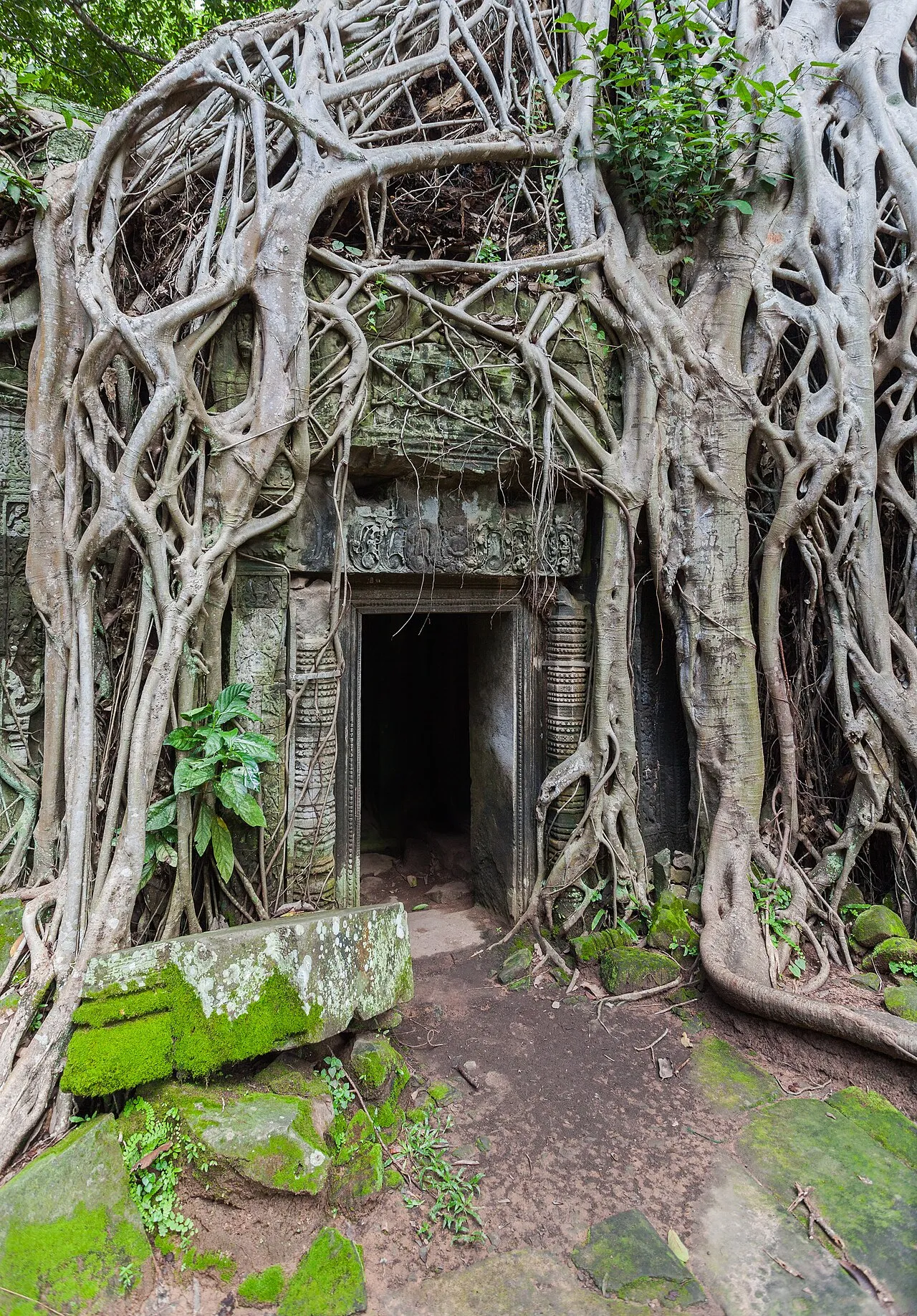
Arrive at opening: 7:30 AM is the only reliable window for photographs without tour-group crowds at the famous root-over-doorway shot in the central area. Monsoon visit: Ta Prohm in August–September with morning mist and intensely green moss is as atmospheric as the dry-season visit — if you are in Siem Reap in the wet season, do not skip it. Corridors: Many visitors rush the exterior and miss the gallery corridors — take time in the inner enclosure's passages where devata carvings are at their finest and the jungle-stone interaction is most dramatic. Exit route: Leave via the eastern gopura (opposite the main tour-bus entrance) for the least crowded route and the best view of the causeway approach from outside.
When to Visit
Open: 7:30 AM – 5:30 PM daily. Best time: 7:30–9 AM for low light filtering through the canopy and fewer visitors. Mid-monsoon (July–September): The jungle is at its most intensely green; morning mist creates extraordinary atmosphere. Avoid: 9:30 AM–12 PM when tour buses concentrate here after Angkor Wat.
Admission and Costs
Included in Angkor Archaeological Park pass: $37 (1 day) / $62 (3 days). Licensed guide: Same day rate as other Angkor sites ($35–60 full day).
The Case for a Guide
Ta Prohm rewards visitors who know where to look — beyond the three or four photographic set-pieces at the famous tree roots, the temple has extraordinary carved detail in its corridors and galleries that is entirely invisible to the standard group-tour circuit.
- Devata figures: Ta Prohm's carved female guardian figures differ from those at Angkor Wat in pose, jewelry style, and expression — a guide identifies the finest examples in the eastern gopura and the central sanctuary galleries and explains the iconographic differences between devata styles across different Angkor periods
- Tree identification: The three tree species growing on Ta Prohm structures are botanically distinct and have different root systems — a guide distinguishes between the spung (the flat-rooted buttress trees most photographed), the silk-cotton (with rounded roots), and the fig species (growing downward from above)
- Conservation evidence: Indian Archaeological Survey stabilization work is visible throughout — steel supports, injected resin consolidation, controlled root trimming — a guide explains the conservation decisions and why some areas have been more aggressively managed than others
- The Tomb Raider locations: For visitors who know the film, a guide identifies the exact filming positions and explains which sections of the temple were used — a surprisingly effective way of getting visitors to actually look at the architecture carefully
Frequently Asked Questions
Why was Ta Prohm left in its ruined state?
When the École française d'Extrême-Orient (EFEO) began clearing Angkor for visitors in the early 20th century, the French archaeologist Henri Marchal and later conservators decided deliberately to leave Ta Prohm partially uncleared as a romantic ruin — demonstrating the state in which the temples were found when the jungle was first cleared from the complex. This decision has been maintained as conservation policy since the 1990s, with Indian Archaeological Survey teams now stabilizing the trees and structures in place rather than removing them.
What is the history of Ta Prohm?
Ta Prohm was built by King Jayavarman VII in approximately 1186 CE as a Buddhist monastery and university dedicated to his mother — the face of the central tower's devata (divine female figure) is believed to be modelled on her. At its peak, Ta Prohm housed 12,640 residents including 18 high priests, 2,740 officials, 2,232 assistants, and 615 dancers, supported by 79,365 people in 3,140 surrounding villages — making it one of the largest institutional complexes of the medieval world.
Which famous film was shot at Ta Prohm?
Lara Croft: Tomb Raider (2001) used Ta Prohm's jungle-swallowed ruins as its primary filming location, specifically the faces carved in the gopura (gateway) portals and the collapsed hallways near the central sanctuary. This exposure introduced Ta Prohm's imagery to a global audience and significantly increased visitor numbers; guides can point out the specific filming locations used in the movie.