
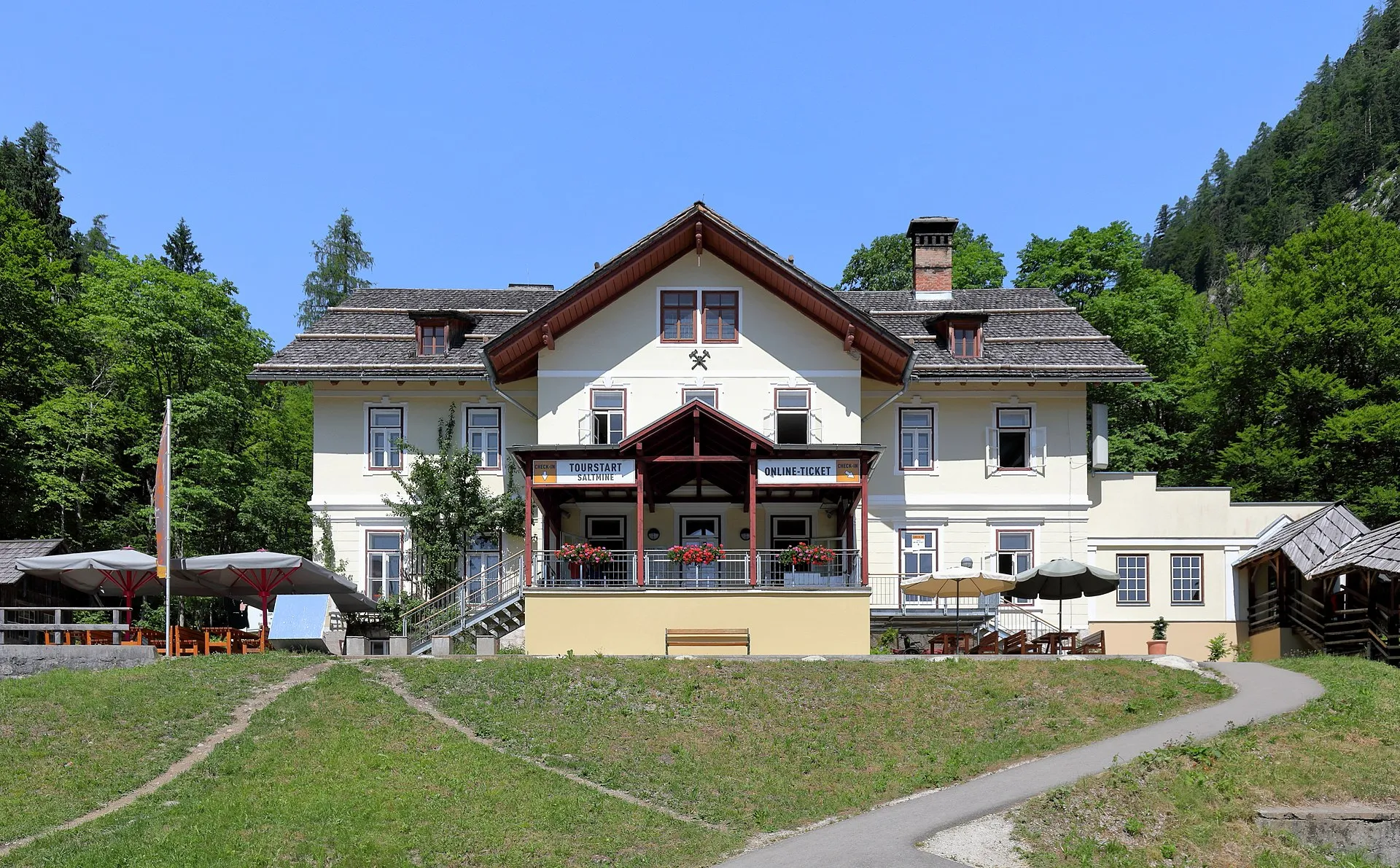
Hallstatt Salt Mine timeline
- c. 5000 BCE
Neolithic salt extraction begins
Stone Age miners first worked the rock-salt seams inside the Salzberg, opening what is now the world's oldest documented salt industry.
- c. 1344 BCE
Bronze Age wooden staircase built
The eight-metre timber staircase later found in the prehistoric workings was felled and assembled this year, dated by tree-ring analysis — the oldest preserved wooden staircase in Europe.
-
The 'Man in Salt' discovered
Miners uncovered the salt-preserved body of a prehistoric colleague deep in the tunnels, an early clue to the mine's immense age.
-
Ramsauer excavates the burial ground
Mine overseer Johann Georg Ramsauer began digging the Iron Age cemetery above the mine, documenting nearly 1,000 graves that gave the 'Hallstatt culture' its name.
-
UNESCO World Heritage listing
The Hallstatt-Dachstein/Salzkammergut Cultural Landscape was inscribed, protecting the salt mountain, village, and lake as a single heritage site.
Architecture
The visitor route is less a single building than a section through 7,000 years of engineering, and it is deliberately staged for the eye as much as for history:
- Bronze Age staircase — an eight-metre timber stair, dated by tree-ring analysis to circa 1344 BC, is the oldest preserved wooden staircase in Europe; the fragile original is conserved by researchers while the mine presents its context in situ.
- Miners' slides — two long wooden slides (the longer is 64 metres) once carried miners quickly between levels and now let visitors do the same; a light-beam timer clocks your speed, making the slide the tour's signature photo.
- Underground salt lake — an illuminated subterranean brine lake with a light-and-sound installation that reflects off the mirror-still water — the single most photogenic frame in the mine.
- The mining outfit — every visitor suits up in traditional white-and-grey overalls before entering, mandatory for the slides and a favourite group portrait.
- The mine train — the tour ends with a ride out through the mountain on a narrow Grubenhunt rail car, straddling a bench single-file as the tunnel lights streak past.
- Mann im Salz presentation — the display recalling the salt-preserved Bronze Age miner found in the tunnels, a discovery that helped rewrite European prehistory.
For the best photographs, the brine lake and the slide are the obvious keepers underground; above ground, the mine ticket's Skywalk platform — 350 metres over the rooftops with glass floor panels and lake views — supplies the classic aerial shot of the village.
Historical Significance
The salt inside the Salzberg formed roughly 250 million years ago, when an ancient sea evaporated and left behind seams of Steinsalz (rock salt) that Neolithic humans first worked around 5000 BC. By the Bronze Age, Hallstatt had become one of the wealthiest communities in Central Europe: salt preserved food long before refrigeration, and the trade in this "white gold" made the valley's miners rich enough to import amber from the Baltic and ivory from Africa.
The perfectly preserved tools, textiles, and leather shoes recovered from the tunnels — and the salt-mummified body of a prehistoric miner, the Mann im Salz, first reported in 1734 — gave archaeologists an unmatched window into a world that otherwise leaves almost nothing behind.
The decisive discovery came above the mine. From 1846, mine overseer Johann Georg Ramsauer excavated the Iron Age burial ground, documenting close to 1,000 graves in meticulous watercolours over nearly two decades. The richness of those finds led scholars to name an entire cultural horizon after the site — the Hallstattkultur (800-450 BC) — and the ongoing research is coordinated to this day by Vienna's Natural History Museum. Extraction continued through the Roman era, the medieval salt monopoly, and into the present, an unbroken 7,000-year chain that makes this the oldest continually operated industrial site in the world. That archaeological weight, together with the lakeside village and the surrounding Salzkammergut landscape, earned the Hallstatt-Dachstein/Salzkammergut Cultural Landscape its UNESCO World Heritage listing in 1997.
When to Visit
The mine is open daily 9:30 AM-4 PM (last entry), with extended hours in peak summer, and the season runs from late March to early November — it closes entirely in winter. The Salzbergbahn funicular is included in the ticket and runs from the village to the mine entrance throughout the season; you can also walk the steep Salzberg trail up in about 45 minutes if you prefer.
Plan on roughly 70 minutes underground, plus the funicular ride and the Skywalk, so a comfortable visit fills about three hours including waits. Book the first morning slot (9:30 AM) to stay ahead of the day-trip coaches arriving from Salzburg around mid-morning. For a season-by-season view of when reflections, weather, and crowds line up, our month-by-month guide to the best time to visit Hallstatt breaks it down.
Admission and Costs
All tickets are timed and bundle the funicular and the Skywalk:
- Adults (mine + funicular + Skywalk): €40 (about $44)
- Children 4-15: €20 (about $22)
- Family (2 adults + 1 child): €90 (about $99)
- Under 4: not admitted — minimum height 1 metre required
Online booking is strongly recommended, as summer time slots regularly sell out days in advance. A private guide for the wider Hallstatt area runs €180-300 (about $198-330) for a half-day and is separate from the salt-mine guide, who leads every underground tour as part of the ticket. The Salzburg Card does not cover Hallstatt, so budget the mine ticket on its own.
The Case for a Guide
The underground tour comes with a Salzwelten mine guide as standard, but a private guide for the wider Hallstatt visit transforms the day from a themed attraction into a walk through European prehistory. From the moment you board the funicular, a good guide reads the layers of history stacked on the Salzberg:
- Prehistoric context — explaining how Neolithic miners found the salt, why the Hallstattkultur takes its name from this valley, and what the tools, textiles, and Mann im Salz reveal about Bronze and Iron Age life.
- The economics of salt — why this "white gold" made a village of a few hundred people wealthy enough to trade for Baltic amber and African ivory.
- Reading the mine's engineering — how the reconstructed staircase, the slides, and the brine lake fit into millennia of extraction technique.
- Logistics and timing — sequencing the funicular, mine, and Skywalk, and pairing them with the Dachstein Ice Cave so you beat the day-trip crush from Salzburg.
Because the mine tour itself is fixed and guided, most private guides package the Salzberg into a broader village-and-mountain tour rather than treating it in isolation.
Tips for Visitors
- Wear a warm layer — the mine interior holds a constant 8°C year-round, so a jumper under the mining suit is wise even in August.
- Closed-toe shoes are required — no sandals or flip-flops; the floor is uneven and the slides are fast.
- Mind the height and age limits — minimum age 4 and minimum height 1 metre; the slides and tunnels can intimidate very young children.
- Consider claustrophobia — some passages are narrow and the workings run deep; there is no step-free route, so weigh it beforehand.
- Do the Skywalk — it is on the same ticket and a short walk from the mine exit, so don't skip it.
- Book a private guide for context — a guide gives you the full Hallstattkultur backstory before you enter, which makes the underground experience far more meaningful.
- Allow a full morning — funicular, mine tour, Skywalk, and the return easily fill three hours with wait times.
Frequently Asked Questions
What time of year is best for visiting the Hallstatt Salt Mine?
The mine operates from late March through early November, with May through September offering the most reliable weather for the funicular ride and Skywalk views. July and August draw the heaviest day-trip crowds from Salzburg, so June or September strike the best balance between good conditions and manageable visitor numbers. The mine interior stays a constant 8°C regardless of season, so a warm layer is worth carrying even in high summer.
When can visitors tour Hallstatt Salt Mine?
Open daily 9:30 AM-4 PM (last entry), with extended hours in peak summer. Season runs late March to early November; closed in winter. Tours are guided and depart in timed groups, so book the first morning slot (9:30 AM) to beat day-trip crowds arriving from Salzburg.
How much is the entrance fee for Hallstatt Salt Mine?
Adults (mine + funicular + Skywalk): €40 (about $44). Children 4-15: €20 (about $22). Family ticket (2 adults + 1 child): €90 (about $99). Under 4: not admitted (minimum height 1 meter required). Online booking is strongly recommended, as summer time slots sell out days ahead.
How long does the underground tour take, and what does it involve?
The guided underground portion lasts about 70 minutes: you suit up in a miner's overall, walk in through the Bronze Age gallery, ride two wooden miners' slides (the longer runs 64 meters), see the reconstructed prehistoric staircase and the illuminated salt lake with its light-and-sound show, then exit on a small mine train. Add the funicular ride and the Skywalk platform and the whole visit fills roughly three hours.
Is the Hallstatt Salt Mine accessible for people with limited mobility or claustrophobia?
Not fully. The tour involves stairs, uneven floors, narrow passages, and the two slides (which can be bypassed on foot), and the minimum height is 1 meter with a minimum age of 4. There is no step-free route through the mine and the deep tunnels can feel confining, so visitors with serious mobility limits or strong claustrophobia should weigh it carefully. The Skywalk platform, reached from the same funicular, offers the views without going underground.
How do I get to the Hallstatt Salt Mine, and can I walk up instead of taking the funicular?
The Salzbergbahn funicular climbs from the western edge of Hallstatt village to the Salzberg high valley in about three minutes, and its fare is already included in the mine ticket. From the top station the mine entrance and the Skywalk share a short, signposted path. You can also hike the Salzberg trail up from the village in roughly 45 minutes, but it is steep and saves no money, so most visitors ride. Many arrive as a day trip from Salzburg, about 75 minutes away by car or bus.
What should visitors know before touring the Hallstatt Salt Mine?
Book online for a timed slot, wear closed-toe shoes and a warm layer for the constant 8°C interior, and arrive for the first departure to stay ahead of the coach crowds. A private guide adds the full Hallstatt-culture backstory before you enter, which turns the slides-and-lake experience into a walk through 7,000 years of European prehistory.