
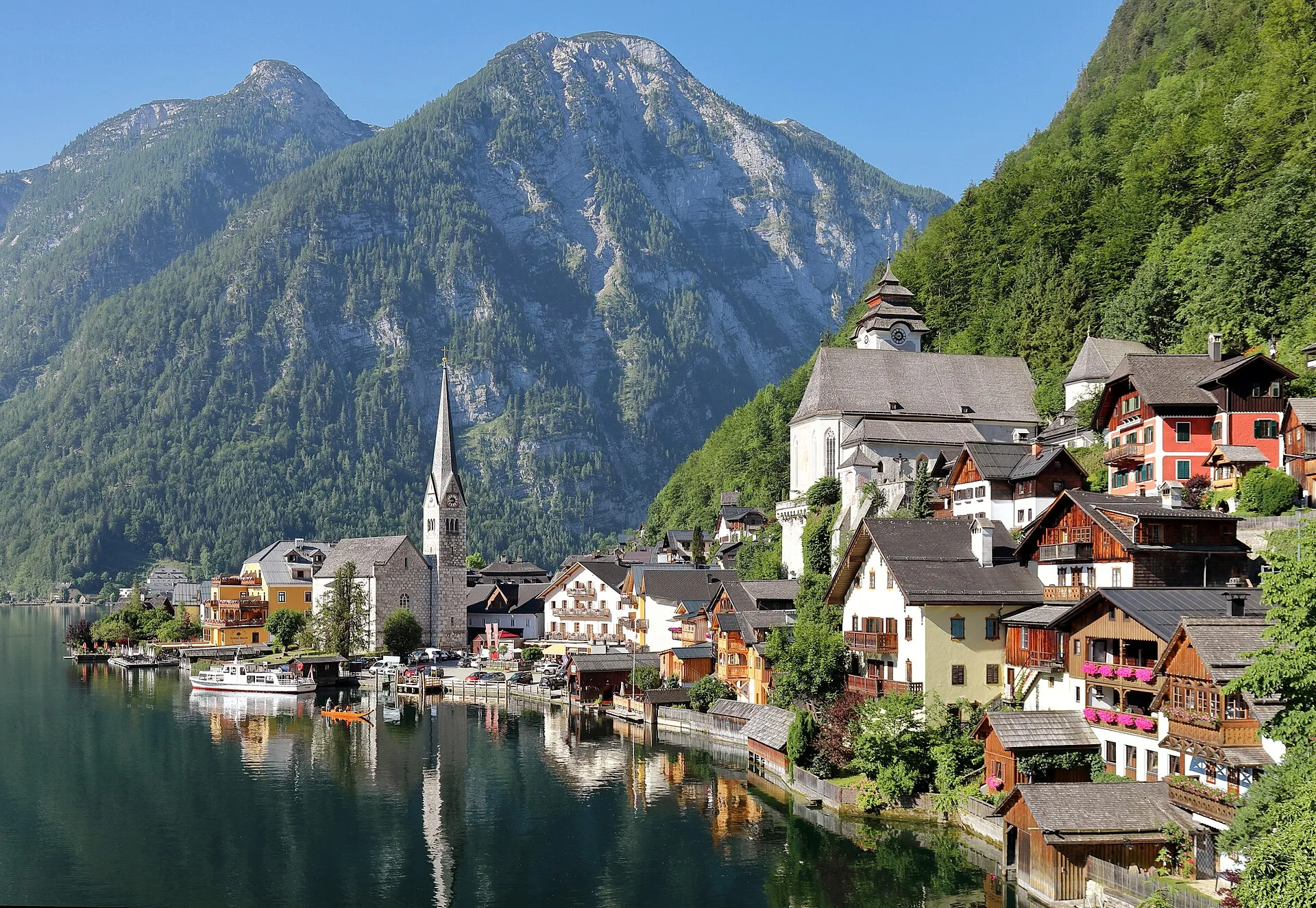
Hallstatt timeline
- c. 800 BCE
Hallstatt culture flourishes
Salt wealth made the village name a shorthand for an Iron Age cultural horizon.
-
Market rights granted
Medieval privileges formalized Hallstatt's role as a salt and lake settlement.
-
UNESCO landscape
World Heritage status linked the village, lake, and Dachstein salt landscape.
Cited city facts
Key facts for visiting Hallstatt
7,000 years of continuous salt mining
Hallstatt's salt mines have been worked since approximately 5000 BC, making them among the oldest documented mining operations anywhere on Earth
Fewer than 800 permanent residents
Despite receiving over one million visitors annually, the village of Hallstatt has a resident population smaller than a single city block in most European capitals
1,200 painted skulls in the Beinhaus
The charnel house at St. Michael's Chapel holds skulls hand-decorated with floral motifs and the deceased's name since 1720, a tradition born from the village's lack of cemetery space
Source: tour-guide.com — Free to cite with attribution
Things to see
What are the top attractions in Hallstatt?
- Salt Mine — Underground slides, a wooden staircase from the Bronze Age, and a subterranean salt lake
- Skywalk platform — Glass-floored viewpoint 350 meters above the lake with Dachstein backdrop
- Dachstein Ice Cave — Illuminated frozen waterfalls and ice chambers inside the mountain
- Beinhaus (Bone House) — Charnel house in St. Michael's Chapel with 1,200 painted skulls, a tradition since 1720
- Evangelical Church — The lakeside church spire that defines Hallstatt's iconic silhouette in every photograph
- Lake crossing — Ferry from the train station across the Hallstätter See to the village center
- Hallstatt Museum — Archaeological finds spanning 7,000 years of continuous habitation
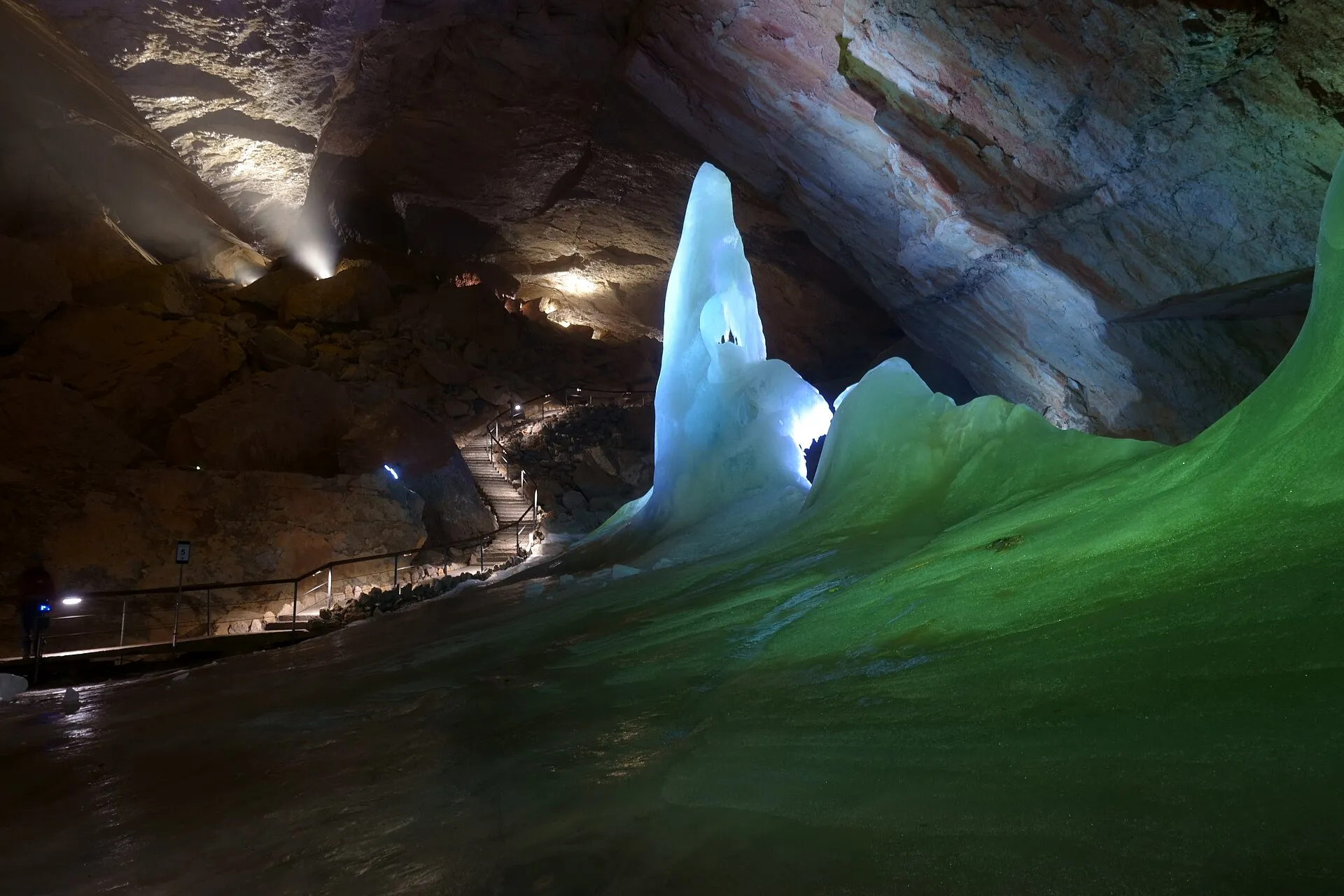
Dachstein Ice Cave
Frozen waterfalls and ice chambers inside the Dachstein massif at 1,174 meters
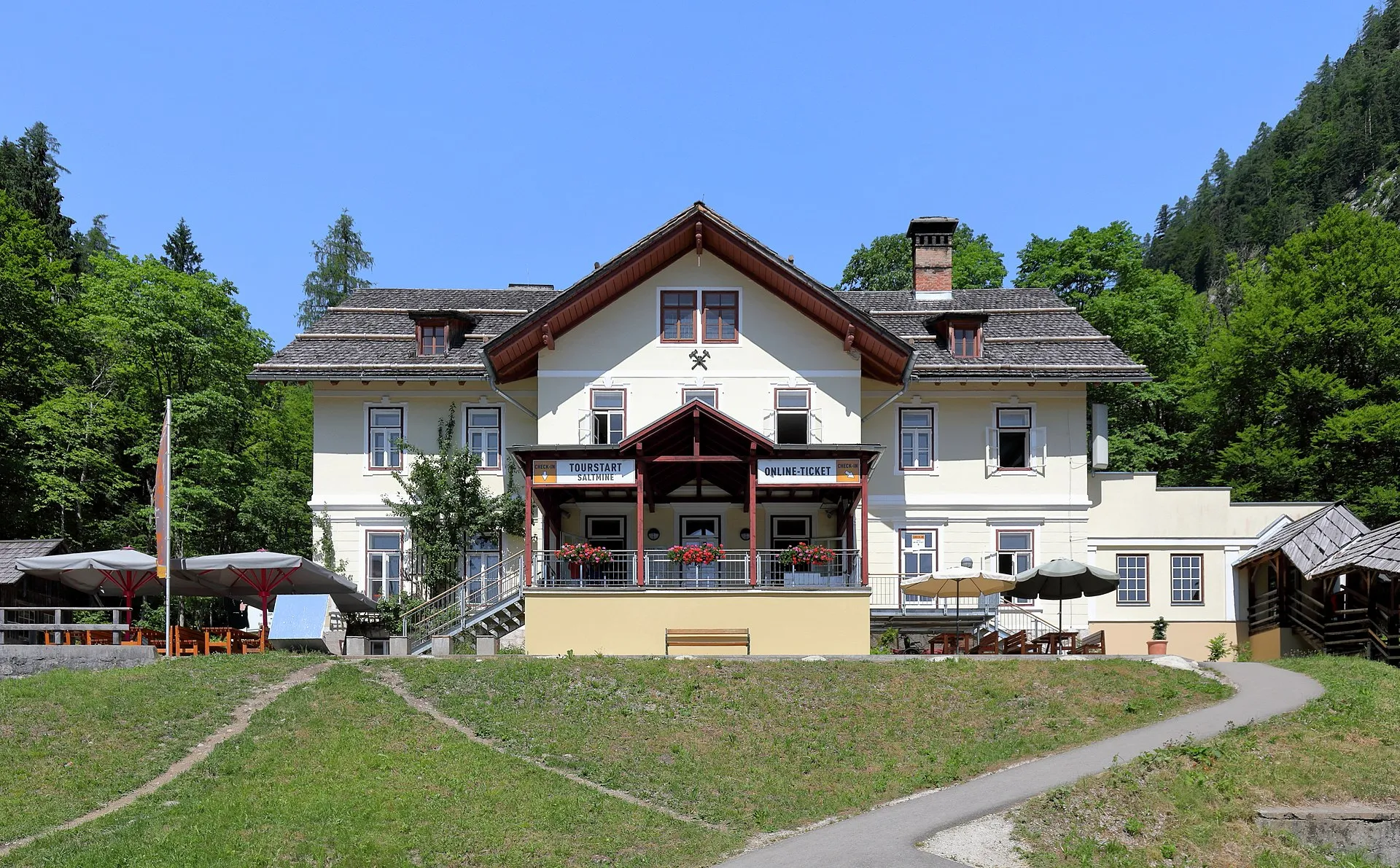
Hallstatt Salt Mine
7,000 years of salt mining — underground slides, a Bronze Age staircase, and a subterranean lake
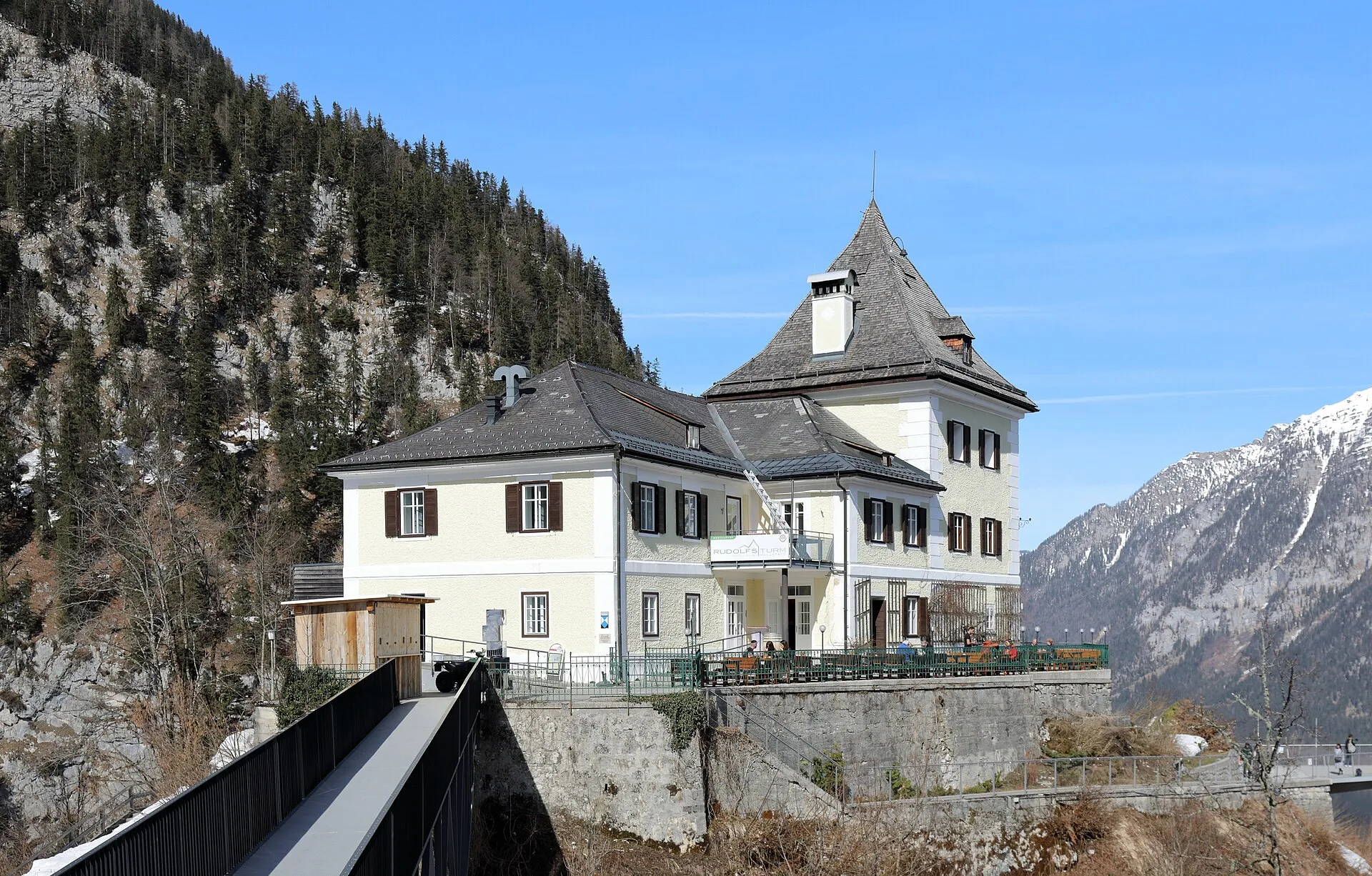
Hallstatt Skywalk
350 meters above the village — glass floor panels, lake views, and the Dachstein massif
Guide planning
How much does a tour guide cost in Hallstatt?
A licensed private guide in Hallstatt typically runs €180-300 (about $195-325) for a half-day walking tour of the village, lakeshore, and Beinhaus, with full-day rates climbing toward €400 (about $435) once the salt mine and a Dachstein excursion are folded in. Because the village is so small, most visitors hire a guide less for navigation than for the deep prehistoric and salt-mining story beneath the postcard surface — and for help timing a visit around the day-trip crowds.
Individual attraction tickets add up fast, and the Salzburg Card does not cover Hallstatt. The salt-mine combined ticket — mine, Salzbergbahn funicular, and the Skywalk — is about €40 (around $44) per adult, while the Dachstein Ice Cave and its cable car are a separate fare across the valley. Pre-booking the salt mine online is strongly recommended in summer to guarantee a time slot.
Season planner
When is the best time to visit Hallstatt?
Timing makes or breaks a visit to a village of fewer than 800 people that draws over a million tourists a year. Our month-by-month guide to the best time to visit Hallstatt covers which attractions stay open each season, when the autumn reflections peak, and the quiet hours before the day-trip coaches arrive.
- May-June — Warm enough for the lake and mountains, before the heaviest summer crowds arrive
- September-October — Stunning autumn colors reflected in the lake, thinner crowds, mild days
- Early mornings — Arrive before 9 AM (or stay overnight) to experience the village before day-trippers flood in
- Winter — Atmospheric and nearly empty, though Dachstein attractions close and weather limits some activities
- Avoid — Midday in July-August when the single street becomes congested; a guide helps plan around the peak
Hallstatt's calendar of events
Beyond the seasons, a handful of fixed occasions reward planning your trip around them — and a couple are worth avoiding if you prefer the village quiet:
- Corpus Christi lake procession (late May or June) — Hallstatt's most distinctive tradition. On the feast of Fronleichnam — a movable Catholic holiday falling on a Thursday in late spring — the procession leaves the shore and continues onto the Hallstättersee, with the community's decorated wooden boats rowing the ceremony across the water. It is a spectacle shared by only a few Salzkammergut lake villages, and the lake setting makes Hallstatt's version the best known.
- Peak summer (July-August) — Every attraction runs its longest hours: the salt mine, the Salzbergbahn funicular up to the Skywalk, and the Dachstein Ice Cave are all open, and the ferry runs frequently. It is also the most crowded stretch of the year, so book timed tickets ahead and start early.
- Autumn reflections (late September-October) — Larch and beech turn gold on the slopes above the lake, and still mornings hand you the mirror-calm water that graces every Hallstatt photograph — the quieter, more photogenic counterpart to high summer.
- Advent and Christmas (December) — A small Advent market brings stalls and lights to the lakeside square, and the pastel houses reflected in the dark winter water are strikingly atmospheric. Note that the Dachstein mountain attractions close for the season, so plan a winter visit around the village, the salt mine, and the lake itself.
Spring
Mar-May
Summer
Jun-Aug
Autumn
Sep-Nov
Winter
Dec-Feb
Each score averages that season’s monthly ratings out of 5. The top-rated window is usually the peak season too, so read the guidance above for its trade-offs before you book.
On the ground
How do you get around Hallstatt?
- Book salt mine tickets online — Summer time slots sell out; walk-up visitors may wait hours or miss out entirely
- Arrive early or stay overnight — Day-tripper buses arrive around 10 AM and the village transforms from tranquil to packed
- Parking is limited — Use the P1 tunnel parking and walk 10 minutes, or take the ferry from the train station
- Dress in layers — The salt mine interior is 8°C year-round; the Dachstein ice cave is below freezing even in summer
- Day trip from Salzburg — 75 minutes by car or bus; trains require a ferry transfer at the lake
- Respect the village — Residents have asked visitors not to block narrow streets — a guide keeps groups moving efficiently
Frequently Asked Questions
What is the best time to visit Hallstatt?
May-June: Warm enough for the lake and mountains, before the heaviest summer crowds arrive. September-October: Stunning autumn colors reflected in the lake, thinner crowds, mild days.
How much does a tour guide cost in Hallstatt?
Hallstatt's small size and huge visitor numbers make a guide useful for logistics and depth rather than navigation. A licensed private guide runs roughly €180-300 (about $195-325) for a half-day village-and-lake walk, rising toward €400 (about $435) for a full day that adds the salt mine or a Dachstein excursion. Attraction tickets are separate — the salt-mine combined ticket is about €40 (around $44) per adult, and the Salzburg Card does not cover Hallstatt.
How do you get around Hallstatt?
The village core is car-free and small enough to cross on foot in about 20 minutes, so most visitors simply walk. Cars use the P1 tunnel car park and walk in, trains arrive across the lake and connect by a short ferry to the village centre, and the Salzbergbahn funicular climbs to the Skywalk and salt mine. Book salt mine time slots online in summer, since walk-up visitors may wait hours or miss out entirely.
What is the population of Hallstatt?
Hallstatt has only around 750 permanent residents, one of the smallest populations of any village on a UNESCO World Heritage list. That figure is dwarfed by the roughly one million visitors who arrive each year, which is why the single main street can feel deserted at dawn and shoulder-to-shoulder by midday — and why residents have asked day-trippers to keep to marked paths and give the narrow lanes room.
What does "Hallstatt" mean, and how is it spelled and pronounced in English?
In English the village keeps its original spelling — Hallstatt — with a double "l" and the ending "-statt"; it is not translated to a different name. Say it roughly "HALL-shtat": the first half sounds like the English word "hall", and "statt" is pronounced "shtat". The name itself means "salt place" — "hall" comes from an ancient Celtic word for salt and "statt" is German for a place or settlement — a direct nod to the 7,000-year-old salt mines above the village. English speakers often misspell it "Halstatt" with one "l" or "Hallstadt" with a "d", but the correct form keeps both letters: Hall-statt.