
Formation
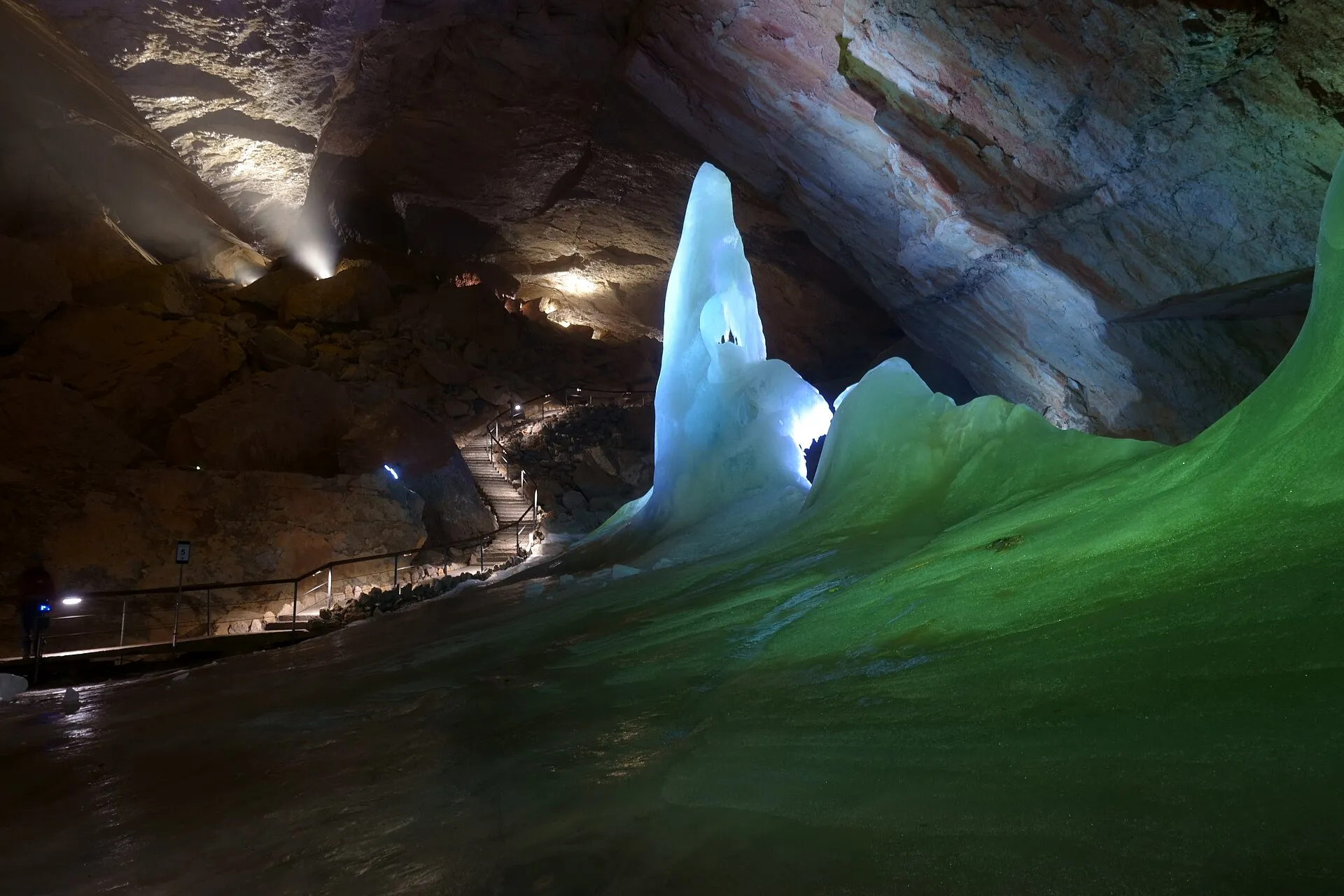
The ice here is a cold-air trap, not glacial permafrost. In winter, dense freezing air sinks into the cave through its lower openings and deeply chills the surrounding rock; in summer that heavy cold air stays pooled in the lower chambers while warmer air passes harmlessly above it, so the ice survives the warm months intact. Meltwater and seepage trickling through the limestone then refreeze on the chilled rock, building the sheeted waterfalls, columns, and curtains layer upon layer over centuries. Because that annual balance of freezing and thaw shifts from year to year, the formations genuinely grow, retreat, and change shape over time — the Eispalast you see is never quite the same twice, which is why the cave has fascinated researchers since it was first systematically explored in 1910.
Trails
The guided route threads a sequence of named ice chambers rather than open-air paths. The Eispalast (Ice Palace) is the largest, its frozen waterfalls climbing up to 8 meters and floodlit in blue and white; the König-Artus-Dom (King Arthur's Dome) is a cathedral-scale hall where the sculpted ice takes on an almost otherworldly stillness. Between them, illuminated ice curtains — translucent sheets lit from behind — reveal trapped air bubbles and fine mineral traces frozen in place. Outside, the same cable car climbs on to the Five Fingers viewpoint, five steel platforms cantilevered over a 400-meter cliff above the Hallstätter See, and continues to the Krippenstein summit at 2,100 meters for high-alpine hiking and panoramas. Add the neighbouring Mammuthöhle and its enormous karst passages, and the mountain fills an easy half-day of contrasting underground and clifftop scenery.
Wildlife
The Dachstein massif above the cave entrance supports Alpine wildlife adapted to high-altitude conditions. Alpendohlen (Alpine choughs) — glossy black birds with yellow bills — swirl in flocks around the cable car stations and cave entrance, boldly approaching visitors for crumbs. Gämsen (chamois) inhabit the rocky slopes above the treeline, occasionally visible from the Five Fingers platform or the hiking trails above Schönbergalm. Marmots whistle warnings from boulder fields in summer, and golden eagles patrol the ridgelines. The karst landscape itself — over 1,000 known caves honeycomb the Dachstein system — is a geological wonder in its own right, and a guide with mountain expertise explains how water, ice, and time sculpted the limestone into the formations you see both above and below ground.
Dachstein Ice Cave in Pictures
When to Visit
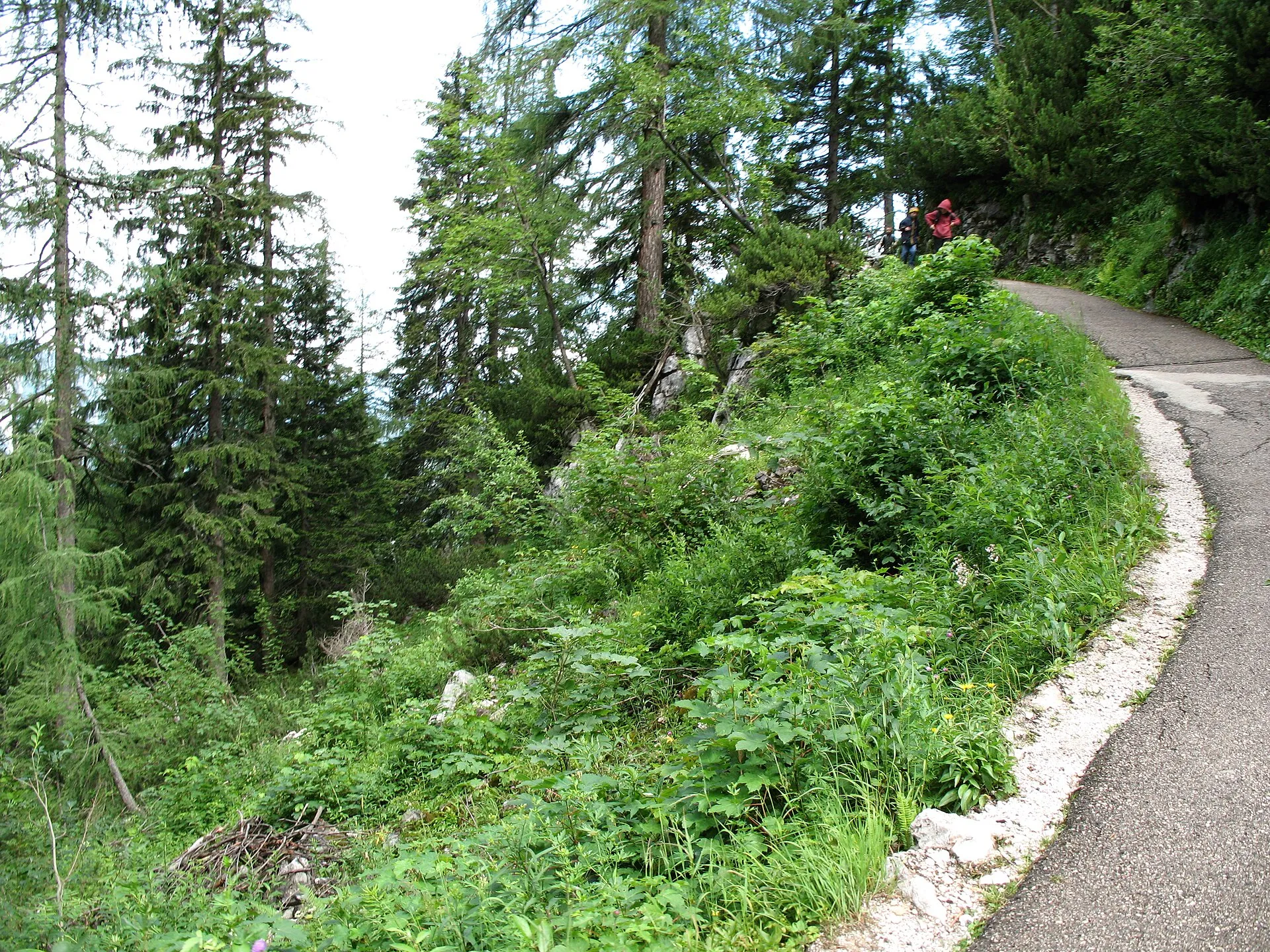
The ice cave is open for the season from late May to late October and closes entirely in winter, when the Krippenstein cable car switches to serving skiers. Guided tours depart roughly every 15-30 minutes between about 9:20 AM and 3:30 PM, and each spends around 50 minutes underground. Reaching the entrance means the cable car up to Schönbergalm followed by a 15-minute uphill walk, so allow buffer time before your chosen tour slot. The interior stays a constant below-freezing temperature whatever the forecast, which makes a hot summer afternoon the most rewarding time to descend — and the first tours of the morning are the quietest, before the Hallstatt day-trip crowds ride up. For a season-by-season view of the wider area, our month-by-month guide to the best time to visit Hallstatt covers which mountain attractions stay open when.
Admission and Costs
Tickets bundle the cave with the cable car, since there is no other way up. The ice cave plus the return cable car is about €42 (about $46) for adults. A combined ticket adding the neighbouring Mammoth Cave runs about €48 (about $53), and the all-inclusive ticket covering both caves, the Five Fingers viewpoint, and the cable car is about €55 (about $60). Children aged 4-15 pay roughly half the adult fare. The cable car alone, with no cave tour, is about €30 (about $33) and still reaches the Five Fingers, while a private full-day mountain guide for the wider Dachstein runs €250-400 (about $275-440).
The Case for a Guide
A cave attendant leads every tour for safety, but a private mountain or nature guide turns the outing from a walk-through into an interpreted day on the massif. Where the standard tour simply points out the biggest formations, a guide reads the whole landscape for you:
- Ice science made visible — explaining the cold-air-trap mechanism at the exact spot where you can see fresh ice refreezing, and why the Eispalast changes shape from year to year.
- Karst geology of the Dachstein — connecting the ice cave, the dry Mammuthöhle, and the 1,000-plus caves of the system into one story of water, limestone, and deep time.
- Alpine ecology — naming the choughs, chamois, and marmots around Schönbergalm and the plants that cling to the high karst.
- Logistics and sequencing — timing the cable car, the two caves, and the Five Fingers so you avoid the midday crush and still catch the last descent.
Because the caves sit on the opposite side of the valley from the Salt Mine and Skywalk, a guide who knows the Hallstatt day rhythm is especially useful for stitching both sides of the lake into a single, unhurried visit.
Tips for Visitors
- Dress for winter, even in August — the cave sits below 0°C year-round, so warm layers, a hat, and gloves are essential for the 50-minute tour.
- Wear sturdy, grippy shoes — the floor is wet and icy and the route climbs and descends 500+ metal steps; sandals and smooth soles are a bad idea.
- Expect real exertion — the stairs make the cave unsuitable for anyone with limited mobility, and a demanding outing for young children (minimum age 4).
- Plan 4-5 hours total — cable car, uphill walk, cave tour, and an optional Five Fingers detour fill a comfortable half-day.
- Pack a layer for the walk too — Schönbergalm at 1,350m can be cold and foggy even when Hallstatt below is sunny.
- Go on a hot day — the sub-zero interior is at its most striking precisely when the valley is sweltering.
Frequently Asked Questions
How do you get to the Dachstein Ice Cave from Hallstatt?
The cave sits above Obertraun, on the opposite shore of the Hallstätter See from Hallstatt village, roughly a 15-minute drive or a short regional train hop away. From the valley station you ride the Dachstein Krippenstein cable car up to the Schönbergalm middle station at about 1,350 metres, then walk 15 minutes uphill on a signposted alpine path to the cave entrance. There is no road to the entrance itself — the cable car is the only practical way up, so build the ride, the walk, and the wait for your timed tour into your plan.
How much do Dachstein Ice Cave tickets cost?
A ticket covering the ice cave plus the return cable car is about €42 (roughly $46) for adults. Adding the neighbouring Mammoth Cave brings a combined cave-and-cable-car ticket to about €48 (about $53), and the all-inclusive ticket for both caves, the Five Fingers viewpoint, and the cable car is about €55 (about $60). Children aged 4-15 pay roughly half the adult fare, and the cable car on its own — no cave — is about €30 (about $33). A private full-day mountain guide runs €250-400 (about $275-440).
What is the difference between the Dachstein Giant Ice Cave and the Mammoth Cave?
The Giant Ice Cave (Rieseneishöhle) is the icy one: its chambers hold frozen waterfalls, ice columns, and translucent ice curtains up to 20 metres thick, lit in blue and white. The Mammoth Cave (Mammuthöhle) is named for its mammoth proportions rather than the animal and has almost no ice — it is a vast, dry karst system of enormous passages carved by ancient underground rivers. Both open from the same Schönbergalm station, so many visitors buy the combined ticket and tour one straight after the other for two contrasting underground experiences.
Is the Dachstein Ice Cave worth visiting, and is it suitable for children?
On a warm day it is one of the most rewarding half-days around Hallstatt, precisely because the cave stays below freezing while the valley bakes — the frozen waterfalls and the cable-car ride over the Hallstätter See are the draw. It is physically demanding, though: the guided route climbs and descends more than 500 metal steps on a wet, icy floor, so it is not suitable for anyone with limited mobility. The minimum age is 4, but the cold, dark, and stairs make it a stretch for under-8s — weigh it carefully for young children.
When is the Dachstein Ice Cave open, and when is the best time to visit?
The cave opens for the season from late May to late October and closes entirely in winter, when the cable car serves skiers instead. Guided tours run roughly every 15-30 minutes between about 9:20 AM and 3:30 PM, and each lasts around 50 minutes underground. Because the cave holds a constant sub-zero temperature regardless of the weather outside, a hot summer day is actually the most rewarding time to go — and the first tours of the morning are the quietest, before the Hallstatt day-trip crowds work their way up the mountain.
What should visitors wear and bring inside the Dachstein Ice Cave?
Dress as if for winter even in August: the cave sits below 0°C all year, so warm layers, a hat, and gloves make the 50-minute tour comfortable rather than miserable. Wear sturdy, grippy shoes — the floor is wet and icy and the route runs up and down more than 500 metal steps, so sandals and smooth soles are a bad idea. The Schönbergalm station at 1,350 metres can be cold and foggy even when Hallstatt below is in full sun, so keep a layer for the 15-minute walk to the entrance too.
How does the ice inside the Dachstein cave form and survive the summer?
The ice is a cold-air trap, not permafrost. In winter, freezing air sinks into the cave through its lower openings and chills the rock deep inside; in summer the heavier cold air stays pooled in the lower chambers while warmer air passes above it, so the ice never fully melts. Meltwater and seepage then refreeze on that chilled rock, building the waterfalls and columns layer by layer. The oldest ice is up to 500 years old and reaches 20 metres thick, and because the balance shifts year to year, the formations genuinely grow, shrink, and change shape over time — a story a guide can read from the ice in front of you.