

Overview
Plaza de Mayo is the political epicenter of Argentina, the square where independence was declared in 1810, where Juan and Eva Perón addressed half a million workers from the Casa Rosada balcony, where the Madres de Plaza de Mayo have marched every Thursday since 1977 demanding answers about their disappeared children, and where economic crises have repeatedly boiled over into protests that toppled governments. Every critical moment in Argentine history has passed through this plaza.
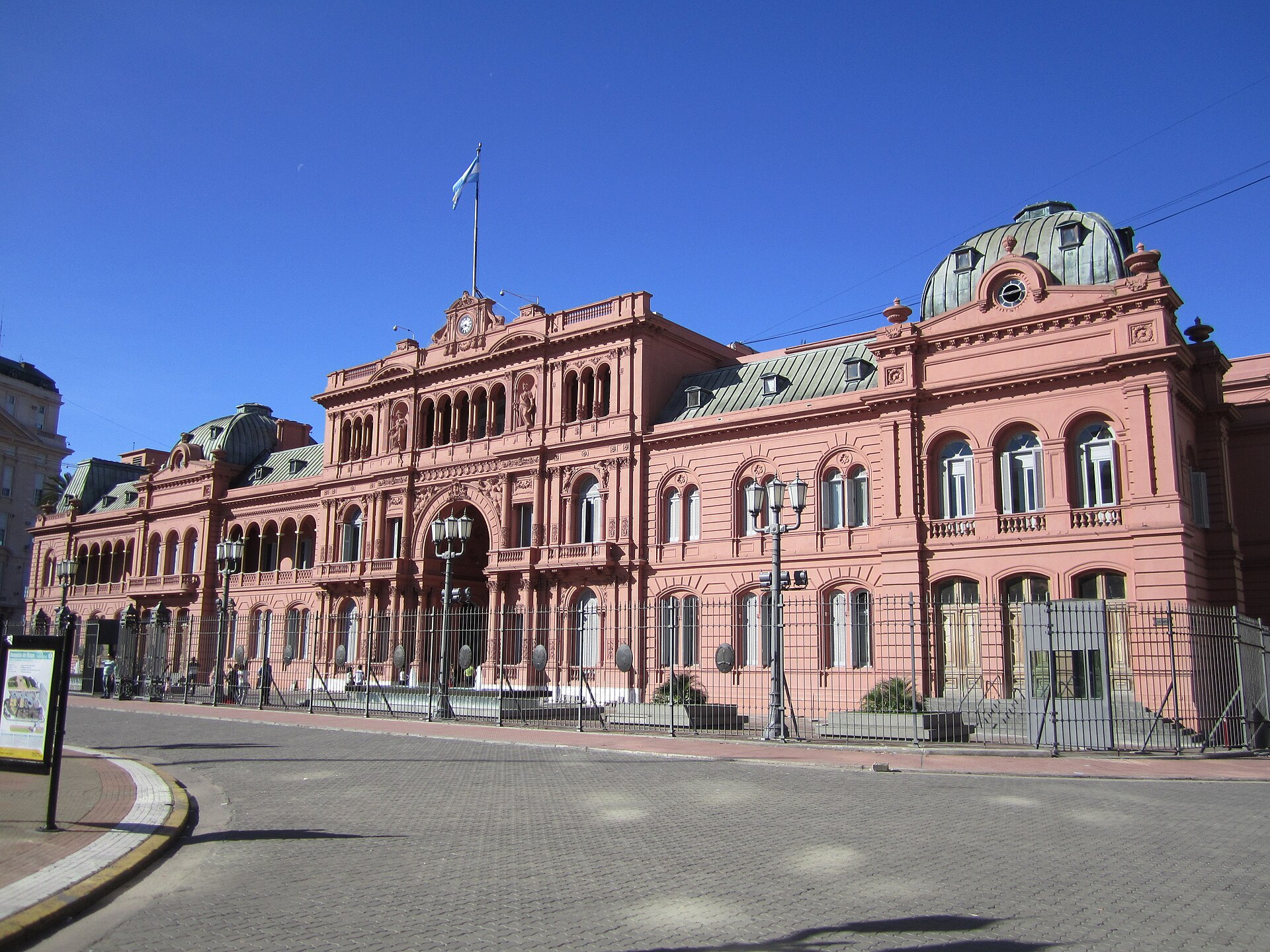
The eastern end is dominated by the Casa Rosada (Pink House), the presidential executive office whose distinctive salmon-pink color allegedly resulted from mixing white lime with ox blood. On the opposite end stands the Metropolitan Cathedral, a neoclassical church that looks more like a Greek temple, housing the tomb of General José de San Martín, the liberator who led independence wars across Argentina, Chile, and Peru. Between them, the Pirámide de Mayo — a modest white obelisk erected in 1811 — marks the exact center of the plaza, and the painted white headscarf symbols on the pavement trace the circular path the Mothers walked during the dictatorship. A knowledgeable guide transforms a 20-minute photo stop into a two-hour masterclass in Argentine political identity. The plaza connects naturally to Teatro Colón (15-minute walk) and San Telmo (10-minute walk south).
Architecture
Casa Rosada balcony: The most iconic balcony in South America — where Perón rallied descamisados, where Evita sang "Don't Cry for Me Argentina" (in the musical version, at least), and where Maradona celebrated the 1986 World Cup. Metropolitan Cathedral: Its austere neoclassical columns hide a lavishly painted interior and the mausoleum of José de San Martín, guarded by an eternal flame and grenadier soldiers. Cabildo: The colonial town hall where the independence movement gathered in May 1810, now a museum with original-period artifacts. Painted headscarves on the pavement: White outlines of the Mothers' pañuelos are painted on the ground around the Pirámide — a guide explains the symbolism and the stories behind them. The Pirámide de Mayo at the plaza's center, erected in 1811, is a modest obelisk yet the most politically charged point in all of Argentina.
Historical Significance
Plaza de Mayo has witnessed every turning point in Argentine nationhood. The Revolución de Mayo in 1810 ignited the independence movement from this very square. The Cabildo on the plaza's western edge served as the seat of the revolutionary junta, and its balcony was where the cry for self-governance first echoed. In the 20th century, the plaza became the stage for Peronist mass rallies — October 17, 1945 saw hundreds of thousands of workers demanding Perón's release, a date still celebrated as Día de la Lealtad. The darkest chapter came during the 1976-1983 military dictatorship, when the Madres began their silent circular marches to demand information about their desaparecidos. Their white headscarves became an international symbol of resistance. More recently, the economic crisis of 2001 brought furious cacerolazos (pot-banging protests) to the plaza that toppled multiple presidents in a single week. A visit to Recoleta Cemetery completes the picture with the tombs of many figures whose political careers played out on this square.
When to Visit
Plaza: Open 24 hours — it's a public square. Casa Rosada tours: Weekends and holidays, by prior registration online. Casa Rosada Museum: Wednesday to Sunday, 11 AM - 6 PM (free). Madres de Plaza de Mayo march: Every Thursday at 3:30 PM around the Pirámide de Mayo. Best: Thursday afternoons to witness the Mothers' march, or weekday mornings for a quieter historical tour. Duration: 1-2 hours including the cathedral and surrounding colonial buildings.
Admission and Costs
Plaza entry: Free. Casa Rosada guided tour: Free (register online through the Casa Rosada website). Metropolitan Cathedral: Free. Private guide for Plaza de Mayo area: AR$25,000-50,000 ($25-50) for 2 hours. Historical walking tour of Monserrat district: AR$15,000-25,000 ($15-25) per person.
Tips for Visitors
Register for Casa Rosada ahead: Weekend tours of the presidential palace are popular and must be booked through the official website — often filling up days in advance. Thursday is special: If you can visit on a Thursday afternoon, witnessing the Mothers' march adds an emotional dimension that no museum can replicate. Political sensitivity: Argentine politics is passionate and deeply personal. A guide helps navigate the nuances of Peronismo, the Guerra Sucia, and current debates without stepping into polarizing territory. Safety: The plaza itself is well-patrolled, but demonstrations can flare unpredictably. If you see large crowds gathering with flags and drums, assess from a distance before approaching. Walk to San Telmo: Head south along Defensa street for an easy 10-minute walk into the antique district — the transition from political center to bohemian barrio is one of Buenos Aires' great contrasts.