
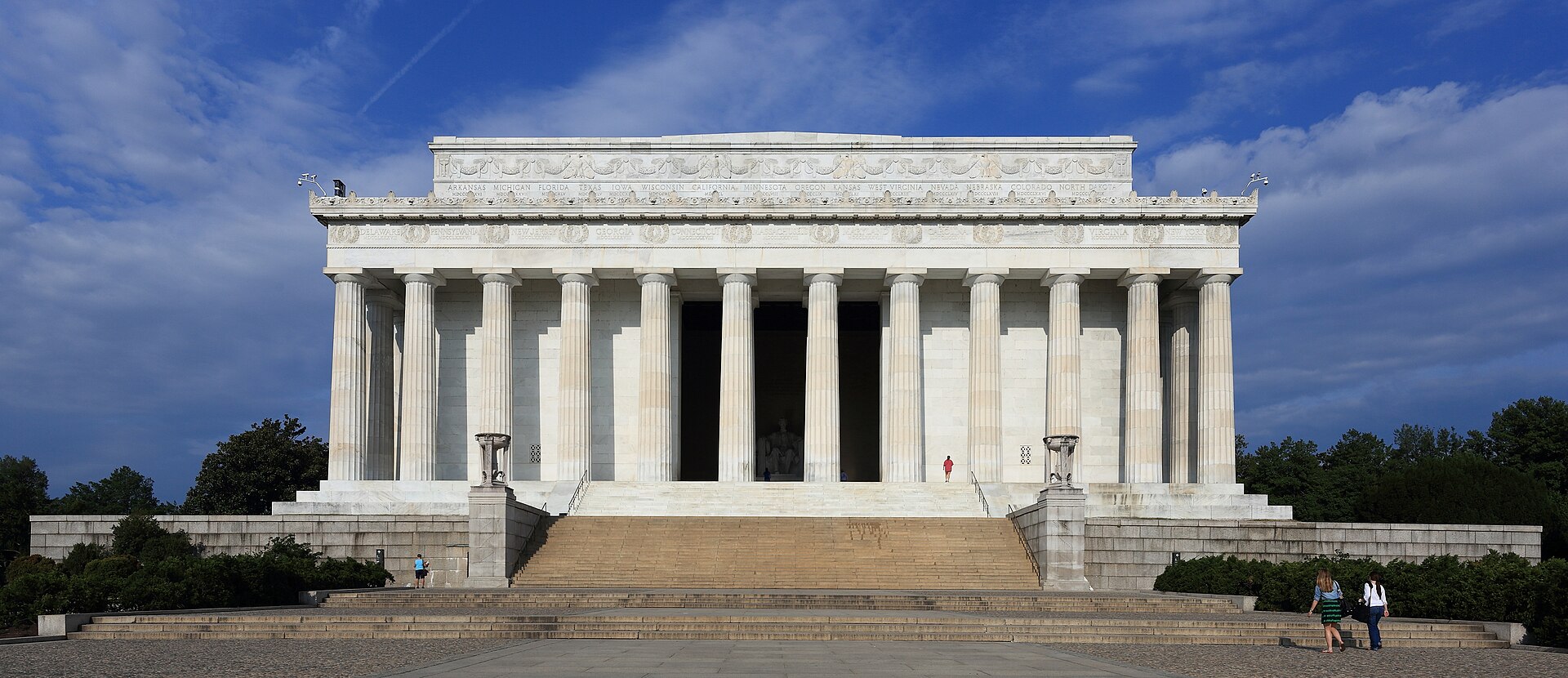

Overview
There are monuments, and then there is the Lincoln Memorial. Dedicated in 1922, this colossal marble temple at the western end of the National Mall does something no photograph can capture: it makes you feel small in exactly the right way. Daniel Chester French's 19-foot seated figure of Abraham Lincoln gazes eastward across the Reflecting Pool toward the Capitol, as if still watching over the union he fought to preserve.
The Second Inaugural Address is carved into the north wall, the Gettysburg Address into the south, and between them sits a man whose words still define what America aspires to be. Architect Henry Bacon designed the building as a Greek Doric temple with 36 columns representing the states of the union at Lincoln's death. The statue's hands are positioned in American Sign Language, forming the letters A and L. On August 28, 1963, Martin Luther King Jr. stood on these very steps and delivered his "I Have a Dream" speech to 250,000 people, transforming the Memorial from a tribute to one president into a living symbol of the ongoing struggle for equality.
Historical Significance
Dedicated in 1922, this colossal marble temple at the western end of the National Mall makes you feel small in exactly the right way. The Second Inaugural Address is carved into the north wall, the Gettysburg Address into the south, and between them sits a man whose words still define what America aspires to be. The Memorial's significance extends far beyond Lincoln himself. On August 28, 1963, Martin Luther King Jr. stood on these very steps and delivered his "I Have a Dream" speech to 250,000 people. That moment, etched into the marble where he stood, transformed the Memorial into a living symbol of the ongoing struggle for equality.
Marian Anderson sang here in 1939 after being barred from Constitution Hall. Vietnam War protesters gathered here by the hundreds of thousands. Every guide who brings you here carries those layered stories forward. The hidden basement exhibit documents the Memorial's construction, and a famous typo carved into the south wall — where a stonemason misspelled a word and the correction remains visible — rewards those who know where to look. The nearby Arlington National Cemetery and Vietnam Veterans Memorial gain deeper resonance when approached through this lens of American memory and the ongoing struggle for equality that the Memorial has come to symbolize.
Architecture
Henry Bacon designed the Memorial as a Greek Doric temple, its 36 columns of Colorado marble each representing a state in the union at Lincoln's death, with each state name inscribed above its column. The attic frieze above the colonnade lists the 48 states that existed when the Memorial was dedicated in 1922.
The seated Lincoln, 19 feet tall, was carved from 28 blocks of white Georgia marble by the Piccirilli brothers, Italian-born stone carvers working from Daniel Chester French's plaster model. Lincoln faces east toward the Capitol and the Reflecting Pool — a deliberate orientation placing the president forever watching over the union he preserved. The interior murals by Jules Guerin depict allegorical scenes of Emancipation and Reunion above the inscribed addresses.
When to Visit
Access: Open 24 hours a day, staffed by park rangers from 9:30 AM to 10:00 PM daily. Best time: Sunrise, when golden light floods through the columns and the Reflecting Pool becomes a mirror.
Evening magic: The Memorial is dramatically illuminated after dark, and far fewer visitors compete for the steps. Avoid: 10:00 AM to 3:00 PM during summer and holiday weekends, when crowds can make the interior feel cramped. Ranger talks: Free interpretive talks every 30 minutes during staffed hours explain the architecture and history.
Admission and Costs
Most visitors climb the 87 steps, snap a photograph of the seated Lincoln, glance at the Gettysburg Address, and descend having spent perhaps fifteen minutes in a place that deserves hours of contemplation. They miss the hidden basement exhibit documenting the Memorial's construction. They do not notice the famous typo carved into the south wall, where a stonemason misspelled a word and the correction remains visible to those who know where to look. They walk past the exact spot on the landing where Martin Luther King Jr. stood on August 28, 1963, unaware that the marble beneath their feet marks one of the most consequential moments in American history. What transforms a quick photo stop into a profound experience is storytelling, and the Lincoln Memorial rewards a guide who can layer its meanings. Henry Bacon designed the building as a Greek Doric temple with 36 columns representing the states of the union at Lincoln's death, each column inscribed with a state name above. The statue's hands are positioned in American Sign Language, forming the letters A and L. Lincoln faces east toward the Capitol and the Reflecting Pool, a deliberate orientation that places the president forever watching over the union he preserved. Understanding the Memorial's role in civil rights requires a narrator who can transport you to 1963, to the moment when a quarter million people gathered on this spot and a preacher from Atlanta abandoned his prepared text to share a dream. That context does not emerge from reading placards. It emerges from walking the steps with someone who can make you feel the crowd, hear the echoes of Marian Anderson's 1939 concert after she was barred from Constitution Hall, and comprehend why this marble temple to Lincoln became the stage where America confronted its unfulfilled promise. The nearby Arlington National Cemetery and Vietnam Veterans Memorial gain deeper resonance when approached through this lens.
Entry: Completely free, no tickets or reservations needed at any time. Ranger programs: Free, offered throughout the day during staffed hours. Group walking tours: $30-55 per person for 2-3 hour monument tours that include Lincoln Memorial as a highlight. Private guide: $200-350 for a focused 2-hour Lincoln Memorial and Mall western end tour. Audio guides: Various apps offer self-guided audio tours for $5-10.
Tips for Visitors
Start or end here: The Lincoln Memorial works beautifully as either the beginning or climax of a National Mall walk. Accessibility: Elevator access is available on the north side for those who cannot climb the 87 steps. Metro station: Foggy Bottom-GWU (Orange/Blue/Silver lines) is the closest Metro stop, about a 15-minute walk.
Photography: The interior is dimly lit, so adjust your camera settings, and the best exterior shots come at dawn or after dark when illuminated. Combine visits: The Korean War Memorial, Vietnam Veterans Memorial, and Arlington National Cemetery (across Memorial Bridge) are all within walking distance. Restrooms: Located in the lower level, accessible from either side of the Memorial. No food or drink: Eating and drinking are not permitted inside the Memorial chamber.