
.jpg)
Overview
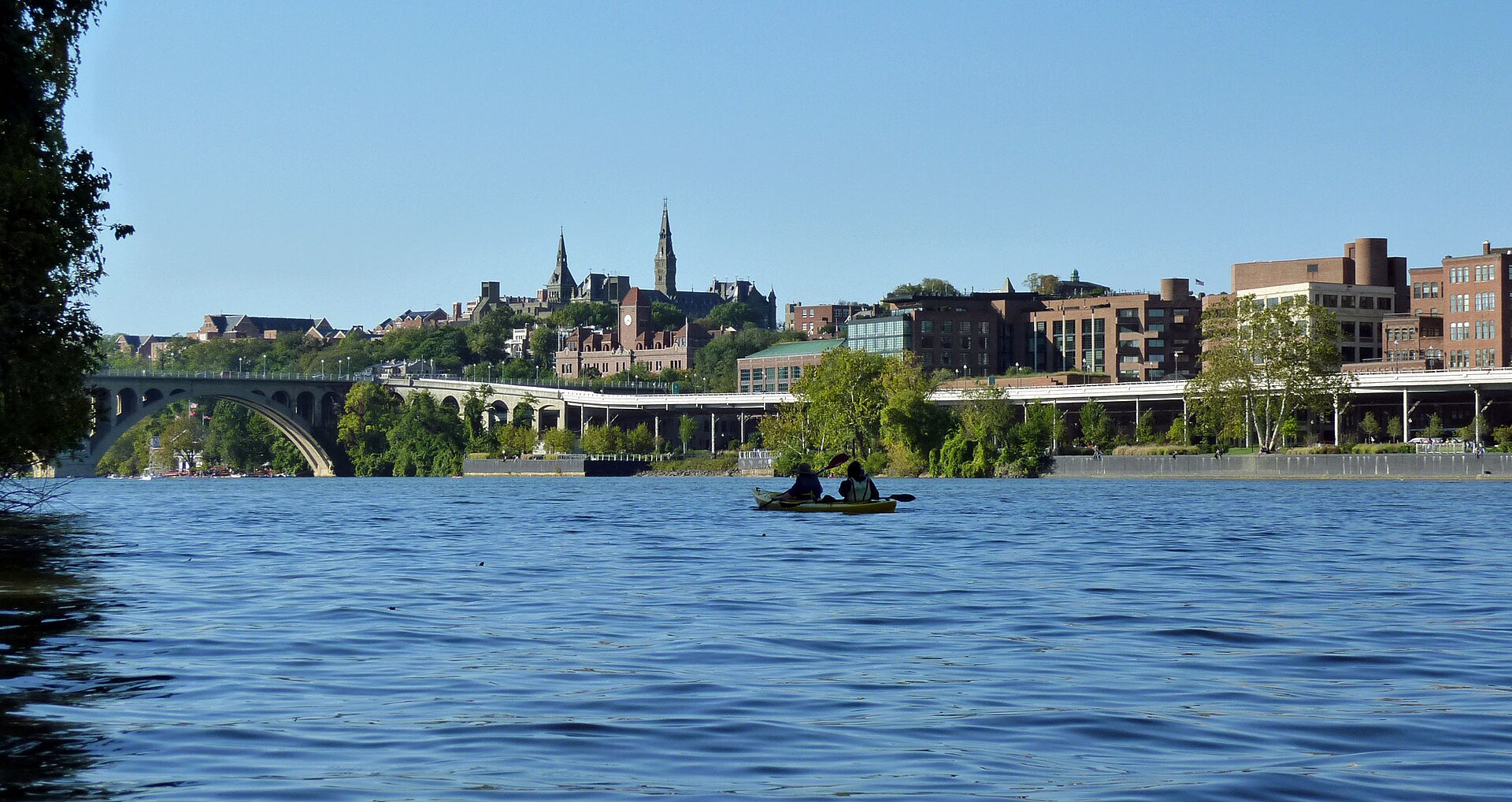
Georgetown existed before Washington DC did. Founded in 1751 as a tobacco trading port on the Potomac River, the neighborhood was already a thriving commercial center when Congress selected the surrounding area for the new federal capital in 1790. That seniority gives Georgetown a character fundamentally different from the rest of Washington. While the monumental core was designed on a grand plan of wide avenues and neoclassical buildings, Georgetown evolved organically over centuries, producing narrow cobblestone streets, Federal-style row houses, hidden gardens behind iron gates, and a walkable village atmosphere that feels more like a European town than an American capital. The neighborhood's social history is equally layered. Georgetown University, the nation's oldest Jesuit and Catholic institution of higher learning, has crowned the hilltop since 1789. John F. Kennedy lived on N Street before moving to The White House, and the home still stands as a private residence. The C&O Canal, which once carried coal barges from the Appalachian Mountains to the Potomac, now serves as a tree-lined towpath popular with joggers and cyclists. And M Street and Wisconsin Avenue form the commercial spine where designer boutiques, independent bookshops, Georgetown Cupcake, and some of the finest restaurants in the capital coexist with 18th-century buildings that have witnessed every era of the American republic. Walking Georgetown with a guide peels back the centuries layer by layer.
Shopping note: Georgetown's boutiques range from accessible brands to high-end luxury. Window shopping along M Street and Wisconsin Avenue is free and endlessly entertaining.
Local Life
Walking Georgetown's cobblestone streets alone, you see handsome Federal row houses, ivy-covered brick, and iron-gated gardens whose contents remain invisible from the sidewalk. What you miss are the stories that transform pretty architecture into living history. Behind that unmarked door on N Street, John F. Kennedy lived before moving to the White House. Down that blind alley, a garden designed in the 18th century still blooms for private owners who occasionally open the gate for the Georgetown Garden Tour. Guides know which doorbells to ring, which garden walls conceal treasures, and which seemingly ordinary houses sheltered Cold War operatives trading secrets over Georgetown cocktail parties. The neighborhood's architectural layers tell the story of American wealth across three centuries, but reading that story requires visual literacy most visitors lack. Federal-style houses from the early republic display symmetrical facades and delicate fanlights over their doors. Georgian townhouses announce their owners' colonial-era prosperity through elaborate brickwork and classical proportions. Victorian additions burst with ornamental excess, while discreet modern insertions by contemporary architects slip between their historic neighbors. On a single block, these styles coexist, and a guide teaches you to date buildings by their windows, doorways, and rooflines, revealing how Georgetown's physical fabric documents the evolution of American taste and money. Connecting the neighborhood to the broader Washington experience enriches any Georgetown visit. The C&O Canal towpath winds east toward the National Mall and the Lincoln Memorial, a tree-lined walk that once carried coal barges from the Appalachian Mountains. Georgetown University's Gothic spires crown the hill above M Street, the nation's oldest Catholic and Jesuit institution of higher learning, where future diplomats and politicians have trained since 1789. The Exorcist Steps at 36th and Prospect became famous through Hollywood, but guides explain the pre-film history of that vertiginous staircase and the neighborhood's darker legends that precede any movie. Each element adds texture to a neighborhood that rewards deep exploration.
Walking Routes
Cobblestone streets of upper Georgetown: Wander the residential blocks above M Street, where gas-lit lamps and ivy-covered walls transport you to another century. C&O Canal towpath: Walk along the historic canal, passing through lock mechanisms and beneath stone arches that have stood since the 1830s. Georgetown University campus: The Healy Hall clock tower is one of Washington's finest Gothic Revival buildings, and the campus gates are open to respectful visitors. The Exorcist Steps: The steep staircase at 36th and Prospect Streets where the famous movie scene was filmed, now a popular fitness challenge and tourist stop. Georgetown waterfront: The revitalized Potomac riverfront offers restaurants, a boardwalk, and kayak rentals with views toward the Kennedy Center and Arlington. Dumbarton Oaks: A stunning museum and ten acres of terraced gardens maintained by Harvard University, rivaling any garden in the United States. M Street dining: The commercial corridor offers everything from Martin's Tavern, where JFK proposed to Jackie, to cutting-edge restaurants by award-winning chefs
When to Visit
Neighborhood access: Public streets open 24 hours. Shops and restaurants typically operate 10 AM to 9 PM, with dining extending later. C&O Canal towpath: Open dawn to dusk year-round for walking, running, and cycling. Best time to visit: Weekday afternoons when the streets are lively but manageable, especially in spring and fall when the tree-lined blocks are at their most photogenic. Weekend evenings: M Street and Wisconsin Avenue come alive after dark with restaurant terraces and bar scenes. Garden season: Late April through June, when Georgetown's hidden private gardens are occasionally opened during the annual garden tour
Admission and Costs
Walking the neighborhood: Completely free. Guided historical walking tour: $25-45 per person for a 2-hour tour covering colonial history, architecture, and notable residents. Ghost and mystery tour: $20-35 per person for an evening walk exploring Georgetown's darker legends and the filming locations of The Exorcist. Private guide: $200-350 for a 2-3 hour customized tour for up to 6 people, adaptable to your interests in history, food, or architecture. Dining on M Street: $20-75 per person depending on restaurant, from casual Georgetown Cupcake to fine dining at Fiola Mare
Tips for Visitors
No Metro station: Georgetown is famously not served by the Metro. Take the DC Circulator bus from Rosslyn or Dupont Circle, or walk from Foggy Bottom-GWU station (20 minutes). Wear comfortable shoes: The cobblestone streets and steep hills make Georgetown a challenging walk in heels or flimsy sandals. Parking: Extremely limited and expensive. Street meters and small garages fill quickly on weekends. Public transit or rideshare is strongly recommended. Combine with the Mall: Georgetown sits just west of the National Mall. Walk the towpath east to reach the Lincoln Memorial in about 25 minutes. Day trip structure: Morning at Arlington National Cemetery, afternoon exploring Georgetown, and dinner on M Street creates a full and varied day. Book lovers: Bridge Street Books on Pennsylvania Avenue is one of Washington's last great independent bookstores, with a carefully curated collection of politics, poetry, and philosophy. Seasonal charm: Georgetown is especially beautiful in autumn when the mature trees lining its residential streets turn brilliant orange and gold against the brick and stone facades