

Overview
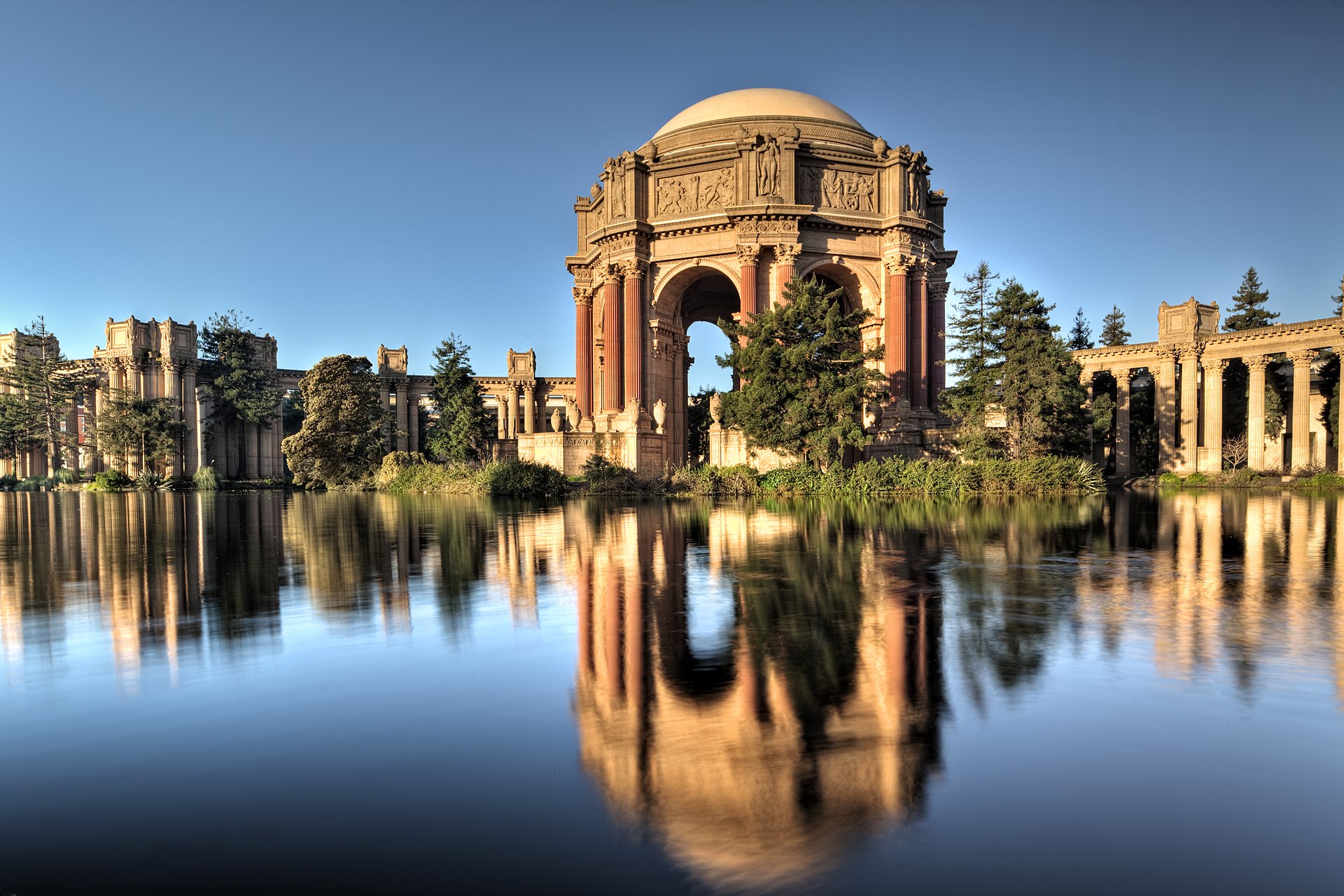
Bernard Maybeck designed the Palace of Fine Arts for the 1915 Panama-Pacific International Exposition, a world's fair that announced San Francisco's resurrection from the devastating 1906 earthquake and fire. Inspired by Roman ruins and Arnold Bocklin's painting Isle of the Dead, Maybeck created a rotunda and colonnade meant to evoke the melancholy of fallen empires -- a meditation on impermanence that was, ironically, never meant to last. The original plaster-and-wood structure was scheduled for demolition after the fair, but San Franciscans loved it too much to tear down. It stood in gentle decay for decades until a complete reconstruction in 1964-1974 replaced the crumbling materials with reinforced concrete, preserving Maybeck's vision for another century. Today the Palace is the only structure from the 1915 Exposition still standing on its original site, listed on the National Register of Historic Places since 2005. The reflecting lagoon, free-roaming swans, and surrounding parkland make it one of the city's most photographed landmarks and a peaceful counterpoint to the bustle of nearby Fisherman's Wharf. The Golden Gate Bridge is a short walk along the waterfront through Crissy Field.
Architecture
The rotunda rises 162 feet above the lagoon, its coffered dome open to the sky in a deliberate evocation of Roman grandeur. Maybeck's colonnade curves outward from the rotunda in a semicircular sweep, each column topped with weeping figures and urns that reinforce the theme of noble decay. The original 1915 structure was built of staff (a mixture of plaster and burlap over a wooden frame), never intended to survive beyond the Exposition. When reconstruction began in 1964, engineers faced the challenge of replicating Maybeck's ornamental details in cast concrete -- a process that took a decade. Guides point out subtle differences between the original design and the reconstruction, and explain how Maybeck's Beaux-Arts training at the Ecole des Beaux-Arts in Paris shaped his unique approach to blending classical forms with romantic atmosphere.
Historical Significance
The 1915 Panama-Pacific International Exposition transformed San Francisco from a city defined by catastrophe into one celebrating rebirth. Just nine years after the 1906 earthquake and fire destroyed 80% of the city, San Francisco hosted a world's fair that drew 19 million visitors and proved the city had risen from the ashes. Every other Exposition building was demolished afterward, but civic attachment saved Maybeck's Palace. Its survival through decades of gentle decay, a spirited public campaign, and eventual reconstruction mirrors the city's own story of resilience. The surrounding Presidio, a former military post turned national park, adds another layer of San Francisco history accessible on foot from the Palace grounds.
When to Visit
Grounds and rotunda: Open 24 hours a day, 7 days a week, completely free at all times. Indoor theater and event space: Tuesday-Sunday 10:00 AM - 5:00 PM, closed Monday (theater only opens for scheduled events). Best for photography: Early morning for mist over the lagoon, or golden hour before sunset when the rotunda glows warmly. Least crowded: Weekday mornings year-round. The Palace is beautiful in all weather -- overcast days create moody reflections, clear days showcase the rotunda against blue sky.
Admission and Costs
Grounds, rotunda, and lagoon: Completely free, no tickets or reservations needed. Theater events: Ticket prices vary by performance (check the Palace of Fine Arts website). Guided walking tours: $30-50 per person for Presidio and waterfront tours that include the Palace as a highlight. Private guide: $150-250 for a 2-hour Marina District and Palace architectural tour. Free parking available in the adjacent lot (fills on weekends).
Tips for Visitors
Photography: The lagoon reflection shot is best from the eastern bank in early morning or late afternoon light. The rotunda interior is open and can be explored up close. Combine with Crissy Field: A waterfront path leads directly to the Golden Gate Bridge (30-minute walk). Dress in layers: The Marina District is exposed to bay winds. The Palace hosts rotating art exhibitions and performances in its 140,000 square-foot theater -- check the schedule before visiting. Parking fills on weekends: Consider walking from the Marina District or taking the 30 bus.