

Overview
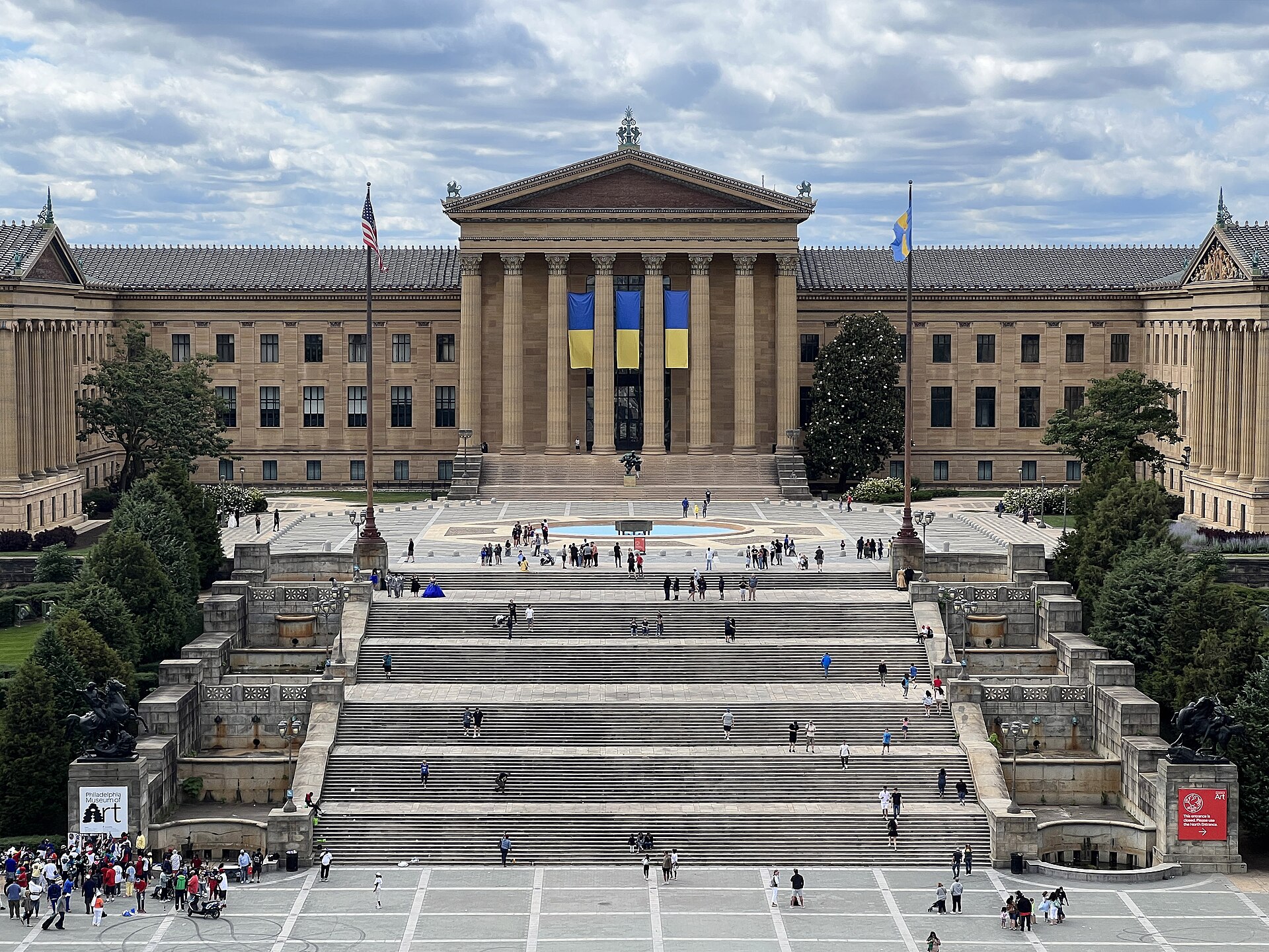
There is an irony at the heart of the Philadelphia Museum of Art that the city has learned to embrace. The building houses one of the finest art collections in the Western Hemisphere, with over 240,000 objects spanning 2,000 years from medieval armor to Marcel Duchamp's enigmatic final work. It holds the largest collection of Duchamp's art anywhere on Earth, a reconstructed 12th-century French cloister, a complete Japanese ceremonial teahouse, and paintings by Renoir, Van Gogh, Cezanne, and Picasso. And yet most of the world knows it as the building where Sylvester Stallone ran up the steps in 1976. The 72 stone steps leading up to the museum's Greek Revival entrance have become a pilgrimage site. Visitors from every corner of the globe jog up them, raise their fists at the top, and pose with the bronze Rocky statue at the base. That view from the top, looking down the Benjamin Franklin Parkway toward LOVE Park and City Hall, is genuinely one of the best urban panoramas in the United States. But the real reward waits inside. A 2021 renovation by Frank Gehry added dramatic new gallery spaces and restored original features that had been hidden for decades. A knowledgeable guide helps you navigate a collection so vast that trying to see it all guarantees seeing none of it well.
Guided Tours
Two hundred galleries spread across three floors contain 240,000 objects spanning 2,000 years, and trying to see everything guarantees seeing nothing well. Expert guides design routes tailored to your interests, whether that means focusing on the Impressionist collection's Renoirs and Monets, exploring the Arms and Armor galleries' medieval weaponry, or tracing the evolution of American decorative arts through period rooms transplanted from colonial homes. They know which galleries are quietest in the morning, which paintings reward returning to multiple times, and how to pace a visit so the final work you encounter resonates rather than exhausts. The museum holds the world's largest collection of Marcel Duchamp's work, including the enigmatic final piece he assembled in secret over twenty years and revealed only after his death. "Etant donnes" can only be viewed through two small peepholes in an old wooden door, and what lies beyond provokes reactions ranging from shock to bewilderment to revelation. Guides explain why this matters, why Duchamp assembled it in secrecy, and how it connects to his earlier work including the urinal that redefined what art could be. Without context, you peer through holes at a strange tableau; with it, you encounter one of the twentieth century's most consequential artistic statements. Entire rooms transported from their original locations fill the museum's period galleries, including a reconstructed twelfth-century French cloister, an authentic Japanese ceremonial teahouse, and colonial American parlors. These spaces need storytelling to transform them from empty rooms into time machines. Guides draw connections between the collection and Philadelphia's history, from the museum's founding during the 1876 Centennial Exposition to Frank Gehry's 2021 renovation that added dramatic new galleries. After your visit, walk the Benjamin Franklin Parkway toward LOVE Park, stopping at the Rodin Museum along the way, to experience the cultural corridor the city created a century ago.
Collections Highlights
The Rocky Steps: Sprint up all 72 steps, turn around at the top, and take in the sweeping view down the Parkway to City Hall. The bronze Rocky statue waits at the base for your victory photo. Duchamp's "Etant donnes": His secret final work, assembled over 20 years and revealed only after his death. Peer through the wooden door's peepholes to see the provocative tableau. Arms and Armor Gallery: One of the finest collections of medieval and Renaissance weaponry and armor in the world, including complete jousting sets. Japanese Ceremonial Teahouse: An authentic teahouse and garden transported from Japan, offering a moment of Zen calm amid the vast galleries. Impressionist collection: Rooms filled with Renoir, Monet, Cezanne, and a luminous collection of Van Gogh paintings including "Sunflowers". Romanesque Cloister: A reconstructed 12th-century French cloister with carved stone columns that transport you to medieval Languedoc
When to Visit
Open: Wednesday through Monday, 10:00 AM to 5:00 PM. Friday evenings extend until 8:45 PM. Closed: Tuesdays, Thanksgiving, December 25, and January 1. Best time: Wednesday and Thursday mornings see the lightest crowds, giving you space to linger before paintings without jostling. Friday evenings: The museum stays open late with a more relaxed atmosphere, live music in the Great Stair Hall, and special programming. Rocky Steps: The exterior steps and Rocky statue are accessible 24 hours a day, free of charge
Admission and Costs
General admission: $25 for adults, $23 for seniors (65+), $14 for students and youth (13-18), free for children 12 and under. Pay-what-you-wish: First Sunday of each month and every Friday evening from 5:00 PM to 8:45 PM. Two-day ticket: Your admission includes a second consecutive day at the museum and also covers the Rodin Museum on the Parkway. Guided group tours: $35-65 per person for 2-hour highlight tours with an art historian. Private museum guide: $250-500 for a 2-3 hour personalized tour tailored to your interests
Tips for Visitors
Start with the steps: Run (or walk) the Rocky Steps first, enjoy the view, then head inside while your energy is high. Pick a focus: Choose 2-3 collections rather than trying to cover everything. The American art, Impressionist, and Asian wings each deserve at least an hour. Use the Parkway: Walk the Benjamin Franklin Parkway from LOVE Park to the museum, stopping at the Rodin Museum (included with your ticket) along the way. Friday nights: The pay-what-you-wish evening sessions are perfect for a more intimate, less crowded experience with live music. Food options: The museum restaurant offers sit-down dining with a view, while the cafe near the east entrance serves quicker fare. Parking: A large garage sits behind the museum, but the Parkway walk from Center City is far more scenic and connects you to Philadelphia's cultural corridor. Accessibility: Wheelchair accessible throughout, with elevators connecting all levels and wheelchairs available for loan at the information desk