

Overview
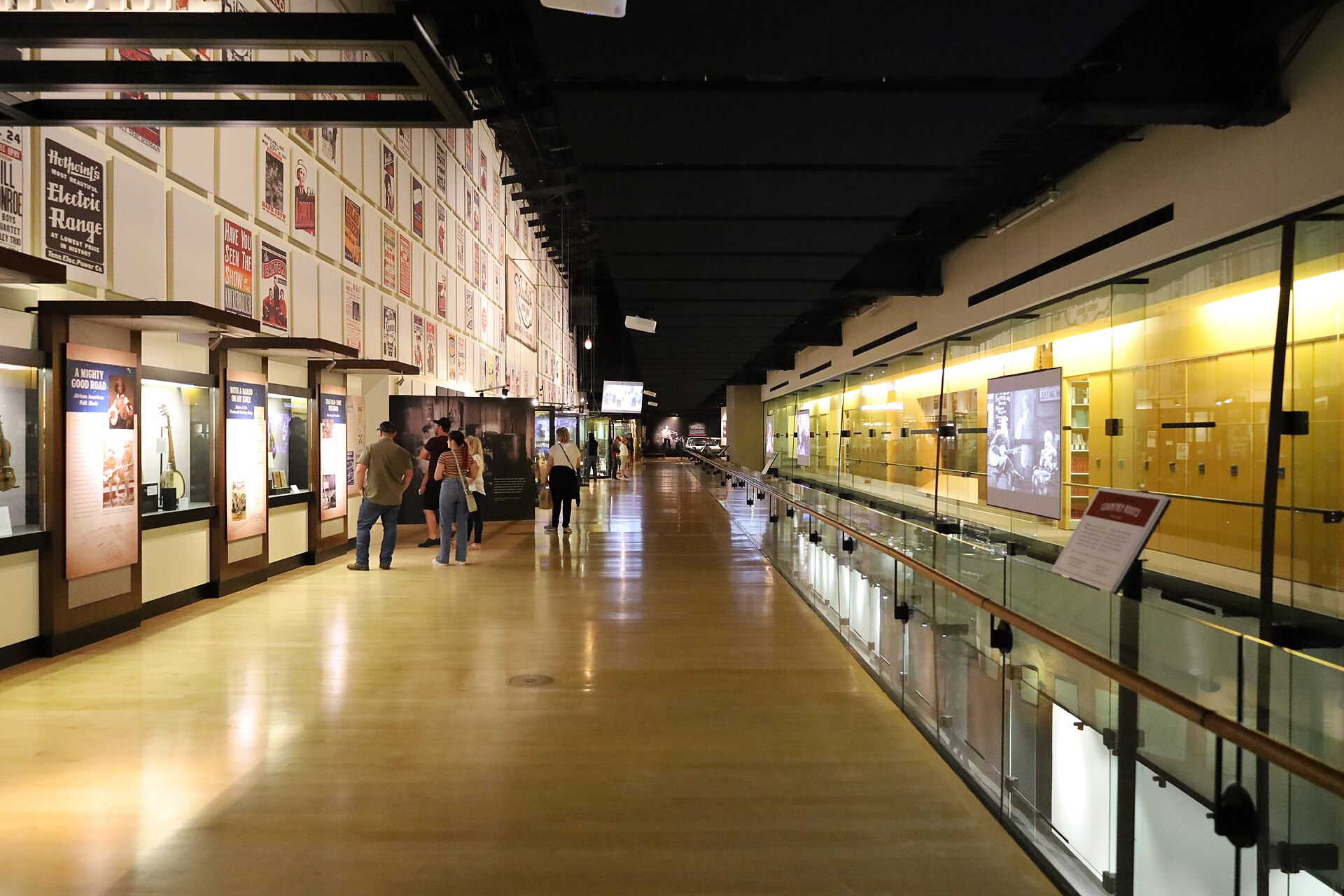
The Country Music Hall of Fame and Museum is the world's largest repository of country music artifacts, housing over 350,000 items in a striking building on Nashville's Music Mile whose architecture is deliberately shaped like a bass clef when viewed from above. Since its founding in 1961 and relocation to this $37 million purpose-built facility in 2001 (expanded further in 2014), the museum has chronicled the full arc of country music - from its Appalachian and African American origins through the honky-tonk revolution, the Nashville Sound, outlaw country, and into today's genre-blending era. The permanent collection includes Elvis Presley's gold Cadillac, Hank Williams' Western suits, Taylor Swift's handwritten lyrics, Johnny Cash's black stage clothes, and Dolly Parton's rhinestone-studded costumes. Located just one block from Broadway, it provides the scholarly depth that transforms a fun Nashville trip into a genuinely enriching one.
Guided Tours
Over 350,000 artifacts spread across multiple floors and rotating exhibitions create a collection that overwhelms even dedicated music enthusiasts. Visitors without guidance inevitably spend too long in the early galleries, run out of energy before reaching critical exhibits, or wander past significant items without understanding their importance. Knowledgeable guides curate the experience around your specific musical interests, whether that means focusing on the honky-tonk era, the Nashville Sound's studio innovations, or the contemporary artists reshaping the genre today. They ensure you see what matters most to you while maintaining the energy needed for a museum of this scope. The artifacts themselves require interpretation to yield their full meaning. Why did the Telecaster guitar change everything about how country music sounded? How does the Nashville Number System work, and why did it revolutionize how session musicians collaborate? What made Patsy Cline's voice so revolutionary that her recordings still move listeners six decades after her death? Guides connect the physical objects to the sounds they produced, transforming glass cases of instruments and costumes into a sonic narrative. Behind every artifact lies a story that the placard does not tell: recording session arguments that nearly derailed classic albums, label politics that buried careers, personal tragedies that poured raw emotion into songs that became standards. Country music never developed in isolation, despite the mythology of pure mountain folk traditions. Expert guides trace its roots through African American blues, Appalachian balladry, Western swing, and gospel, connecting Nashville's story to the broader currents of American musical history. This context reveals country music as a constantly evolving conversation between traditions rather than a static inheritance from the past. For those who take the combo tour to RCA Studio B on Music Row, guides transform what appears to be a modest recording room into a cathedral of sound, recreating what happened during specific sessions when Elvis, Dolly, and Roy Orbison stood at those exact microphones. The shuttle ride back to the museum passes through a neighborhood of recording studios and music publishers where the industry still operates today, connecting past and present. Evening visits combine naturally with Broadway's living honky-tonk scene, where the traditions documented in the museum continue to evolve one set at a time.
Collections Highlights
Allow 2-4 hours: The collection is massive; even a focused visit with a guide takes 2 hours, and music enthusiasts can easily spend an entire afternoon. Book Studio B early: The combo tour shuttles to Music Row sell out, especially in peak season - book online in advance rather than adding at the ticket counter. Start on the top floor: Most visitors begin at ground level and tire before reaching upper galleries; go to the top first and work down while you're fresh. Combine with Broadway: The museum sits one block from Lower Broadway - do the museum in the morning for context, then hear the living tradition on Broadway in the afternoon. Photography policy: Photos allowed in permanent galleries (no flash), but often restricted in special exhibitions - check at the entrance. Gift shop: One of Nashville's best curated shops for music books, vintage-style posters, and locally made gifts - budget time at the end
When to Visit
Hours: Daily 9:00 AM - 5:00 PM. Last entry: Ticket sales end at 4:15 PM. Closed: Thanksgiving, Christmas Day, New Year's Day. Best time: Weekday mornings (9:00-11:00 AM) for the thinnest crowds and most gallery space to yourself. Rotating exhibits: Major special exhibitions change every 3-6 months - check the website for current shows
Admission and Costs
General admission: $28 adults, $18 children ages 6-12, free for children under 5. Admission + RCA Studio B tour: $44 adults (includes shuttle to the historic recording studio on Music Row). Audio guide: $5 additional for the self-guided narrated tour. Private guided museum tour: $250-400 for groups up to 6 people, 2-3 hours with a music historian. Combo tickets: Packages available with the Ryman Auditorium for savings on both admissions
Tips for Visitors
Elvis Presley's gold Cadillac: The 1960 "solid gold" Cadillac Series 75 limousine with its gold-plated hardware, gold-flecked paint, and 40 coats of diamond-dust lacquer. Costume vault: Decades of stage wear from Nudie suits to Dolly's rhinestone gowns to modern artists' custom designs, each telling stories about how country performers constructed their personas. Songwriting exhibits: Handwritten lyrics by Taylor Swift, Kris Kristofferson, and Hank Williams reveal the creative process behind the genre's most beloved songs. Instrument gallery: Maybelle Carter's Gibson L-5, Johnny Cash's Martin D-35, and instruments from every era of the genre's evolution. Rotating film presentations: The museum's theater runs documentary films about country music history that provide excellent context before exploring the galleries. Building architecture: From outside, notice the building's bass clef shape, the Cadillac tail fin tower windows, and the piano-key window design along the sides