
Collection Highlights
Stand on the Ryman stage
The daytime self-guided tour lets you step onto the stage and face the empty pews from the very spot where Hank Williams, Patsy Cline, and Johnny Cash once stood - the single most requested photo in the building, and included in the base admission.
The Confederate Gallery balcony
Added in 1897 for a United Confederate Veterans reunion, the horseshoe balcony gives the fullest view of the room and some of its best acoustics; its curved front rows offer a touch more legroom than the flat main-floor pews below.
Gothic stained-glass windows
The tall arched windows filter Nashville daylight into pools of color across the pews, a permanent reminder that the hall was built for salvation rather than showbusiness. They photograph best on bright mornings from the main floor.
The alley to Tootsies
The stage door opens onto the narrow alley linking the Ryman to Tootsies Orchid Lounge on Lower Broadway. Opry performers used it as a shortcut between sets, and songwriters once waited here hoping to pitch a tune to a passing star.
The original 1892 pews
The curved wooden church pews have seated audiences since the hall opened as a tabernacle. Their gentle arc naturally turns your gaze toward the stage - and, as every guide warns, they have no cushions and little legroom.
The oak circle connection
When the Opry left in 1974 it cut a six-foot circle from the Ryman's stage oak and set it at center stage in the new Grand Ole Opry House, so every modern Opry star still performs on a piece of this floor. Gallery exhibits trace the link.
Cafe Lula and the founder's statue
The 2015 lobby addition houses Cafe Lula - named for longtime manager Lula Naff - alongside a bronze statue of Captain Thomas Ryman that sets up the building's origin story before you even reach the auditorium doors.
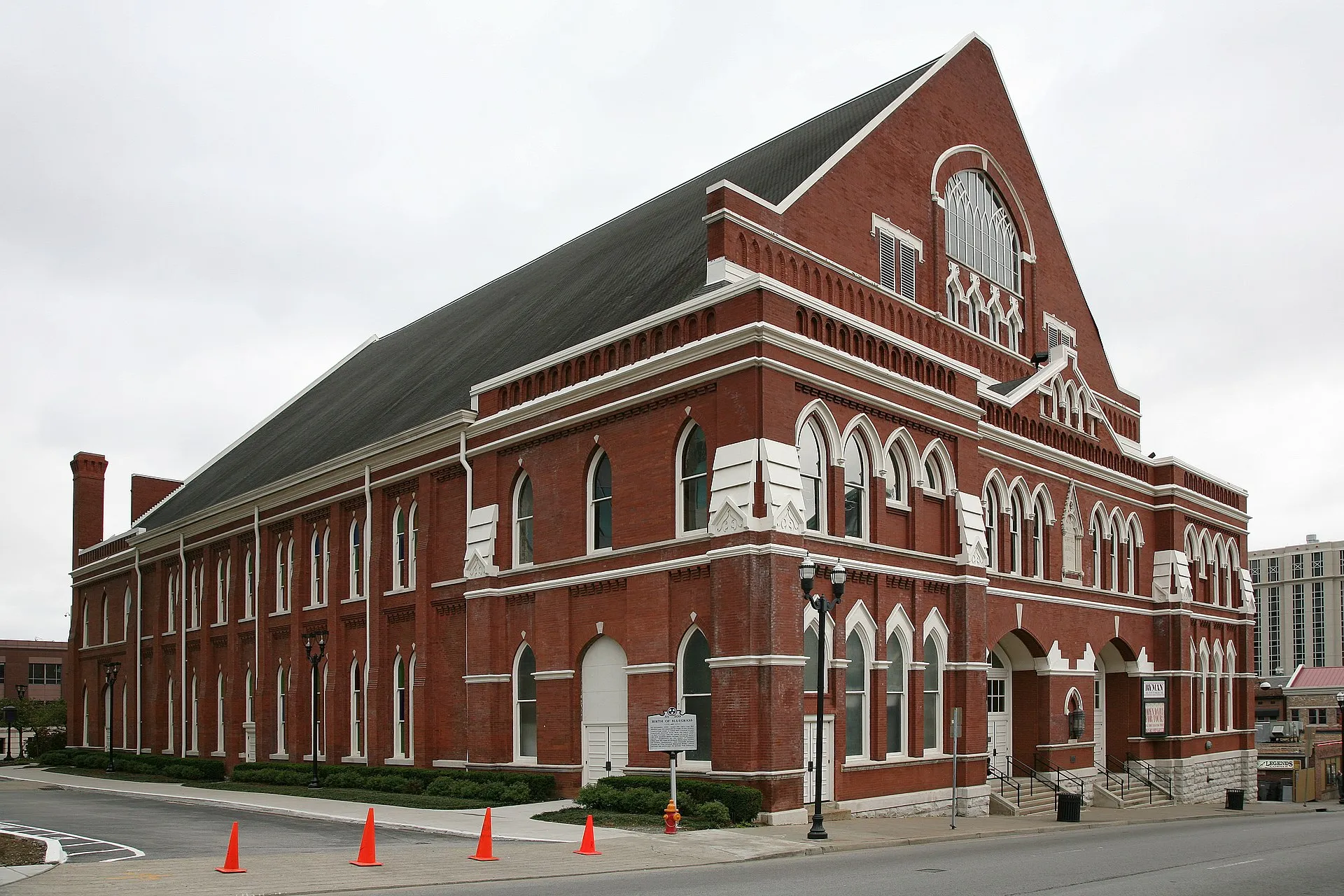
The 5th Avenue facade
The finest exterior shot is from directly across 5th Avenue North, framing the red-brick Gothic Revival front and its arched windows. It is a short walk to the Country Music Hall of Fame one block south for the next stop.
Seating Guide
The main-floor pews offer the most intimate connection to the stage, with the center sections (rows A-M) giving the clearest sight lines. The balcony - the Confederate Gallery, added in 1897 for a United Confederate Veterans reunion - wraps the room in a horseshoe and delivers a broader view of the full stage plus excellent acoustics from the curved ceiling.
The venue seats 2,362 in its original wooden church pews, and for concerts the main-floor center is the most coveted section. The balcony's front rows provide some of the best views in the house with slightly more legroom than the main floor. Note that the original pews have no cushions and limited legroom, so a small seat cushion is welcome for a full-length show.
Events Schedule
The Ryman runs on two overlapping calendars. By day it is a museum and tour venue, open for self-guided and backstage visits year-round; by night it is one of the busiest concert halls in the South, hosting touring artists across country, rock, bluegrass, gospel, and comedy. Two seasonal traditions are worth timing a trip around: from November through January the Grand Ole Opry returns for its winter residency, giving audiences a rare chance to hear the show in its original home, and each summer the long-running Bluegrass Nights series brings pickers and full bands to the same stage. Because the Opry's WSM broadcasts and radio-style breaks shaped how the room is used, shows here often feature multiple acts on a single bill rather than one headliner.
Ryman Auditorium timeline
-
Captain Ryman's conversion
Riverboat magnate Thomas Ryman vowed to build a tabernacle after hearing evangelist Sam Jones preach at a Nashville tent revival.
-
Union Gospel Tabernacle opens
Architect Hugh Cathcart Thompson's church-like brick hall welcomes its first revival crowds on the corner of 5th Avenue North.
-
Confederate Gallery added
A horseshoe balcony built for a United Confederate Veterans reunion raised the room to its present 2,362 seats.
-
Renamed Ryman Auditorium
After Thomas Ryman's death, mourners at his memorial voted to rename the hall; promoter Lula Naff soon began booking its stage.
-
Grand Ole Opry moves in
The WSM radio show settled at the Ryman for 31 years, the era that made it the mecca of country music.
-
The Opry departs
The show left for the suburban Opry House, and the vacant Ryman was soon targeted for demolition.
-
Restoration reopens the hall
An $8.5 million restoration by Gaylord Entertainment revived the Ryman as a year-round concert venue after two decades of decay.
-
National Historic Landmark
The federal designation recognized the Ryman's central place in the story of American music.
-
Lobby and cafe expansion
A major expansion added a new lobby, gift shop, Cafe Lula, and the "Soul of Nashville" orientation film.
When to Visit
Self-guided daytime tours run daily from 9:00 AM to 4:00 PM, with the last entry at 3:30 PM; the guided backstage tour adds the dressing rooms, the Opry-era corridors, and the stage door for a longer visit. Live shows fill most evenings, usually starting at 7:30 PM or 8:00 PM - always check the venue calendar before planning a daytime tour, because tours are often shortened or unavailable on show days while crews load in. For the quietest experience and the most time to absorb the acoustics, arrive in the first tour window (9:00-10:30 AM). The Ryman closes for a handful of major holidays, so confirm hours and buy timed tickets on the official Ryman site if you are visiting around Thanksgiving, Christmas, or New Year's Day.
Admission and Costs
Self-guided daytime tour: around $30 for adults and $15 for children, covering the auditorium floor, the balcony, and the on-stage photo. Backstage experience: roughly $40 for adults, adding the dressing rooms and the alley stage door. Concert tickets range from about $35 to $150+ depending on the artist and seat, and the Ryman's popular shows regularly sell out within hours of going on sale. Money-saving combo tickets pair a Ryman tour with admission to the nearby Country Music Hall of Fame. Prices shift with programming and season, so confirm current rates when you book on the official ticketing pages.
The Case for a Guide
The Ryman's power is invisible without its stories, and a guide is what turns a handsome old hall into the emotional center of American music. Captain Thomas Ryman built this as a tabernacle for revival meetings, never imagining it would one day host Hank Williams, or that its church acoustics - engineered to carry a preacher's voice to the back row - would become the reason recording engineers still study the room. Guides explain that architectural accident, then layer on the human history: the deathbed conversion that inspired the building, manager Lula Naff booking Houdini and Caruso to keep the lights on, the feuds and breakthrough performances of the Grand Ole Opry years, and the 1970s preservation battle that saved the hall from demolition. The backstage tour completes the picture, walking you through the dressing rooms where nervous newcomers waited for their debut and out to the alley stage door that opens toward the honky-tonks of Broadway. Ghost stories cling to these walls as stubbornly as the memories - ask about Hank Williams' restless spirit - and understanding what happened on this stage is essential to understanding Nashville itself.
Tips for Visitors
- Tour before the show. If you hold a concert ticket, take the daytime self-guided tour first - the empty, sunlit auditorium sharpens the impact of hearing it full that night.
- Bring a cushion. The original 1892 pews have no padding and little legroom, and a small seat cushion is allowed for shows.
- Mind the show-day schedule. Daytime tours are frequently shortened or cancelled when a concert loads in, so confirm availability during busy seasons.
- Walk from Broadway. The Ryman sits just behind Lower Broadway on 5th Avenue North, pairing neatly with an afternoon honky-tonk crawl.
- Frame the facade from across 5th Avenue. The best exterior photo captures the red-brick Gothic front and its arched windows from the far sidewalk.
- Book early. The Ryman is the city's most desired venue, and marquee shows sell out within hours of their announcement.
Frequently Asked Questions
Is there a best season to visit the Ryman Auditorium?
The Ryman hosts concerts and tours year-round, but April through October coincides with Nashville's busiest music calendar and the widest selection of performances. November through January brings the special charm of Grand Ole Opry shows returning to the Ryman's original stage, and the smaller winter crowds make daytime self-guided tours especially peaceful for absorbing the legendary acoustics.
When can visitors attend events at Ryman Auditorium?
Self-guided tours: Daily 9:00 AM - 4:00 PM (last entry at 3:30 PM). Backstage tours: Available daily with extended access to dressing rooms and backstage areas. Live shows: Most evenings at 7:30 PM or 8:00 PM (check the calendar for schedule). Tours may be limited on show days.
What do tickets cost at Ryman Auditorium?
Self-guided daytime tour: $30 adults, $15 children. Backstage experience: $40 adults. Concert tickets: $35-150+ depending on artist and seat location. Combo tickets available with the Country Music Hall of Fame. Confirm current rates when booking, as prices vary by programming.
How should visitors prepare for Ryman Auditorium?
If attending an evening concert, do the daytime self-guided tour first. The original wooden pews have no cushions, so consider bringing a small cushion for shows. The Ryman is steps behind Lower Broadway, making it easy to combine with a honky-tonk crawl.