

Overview
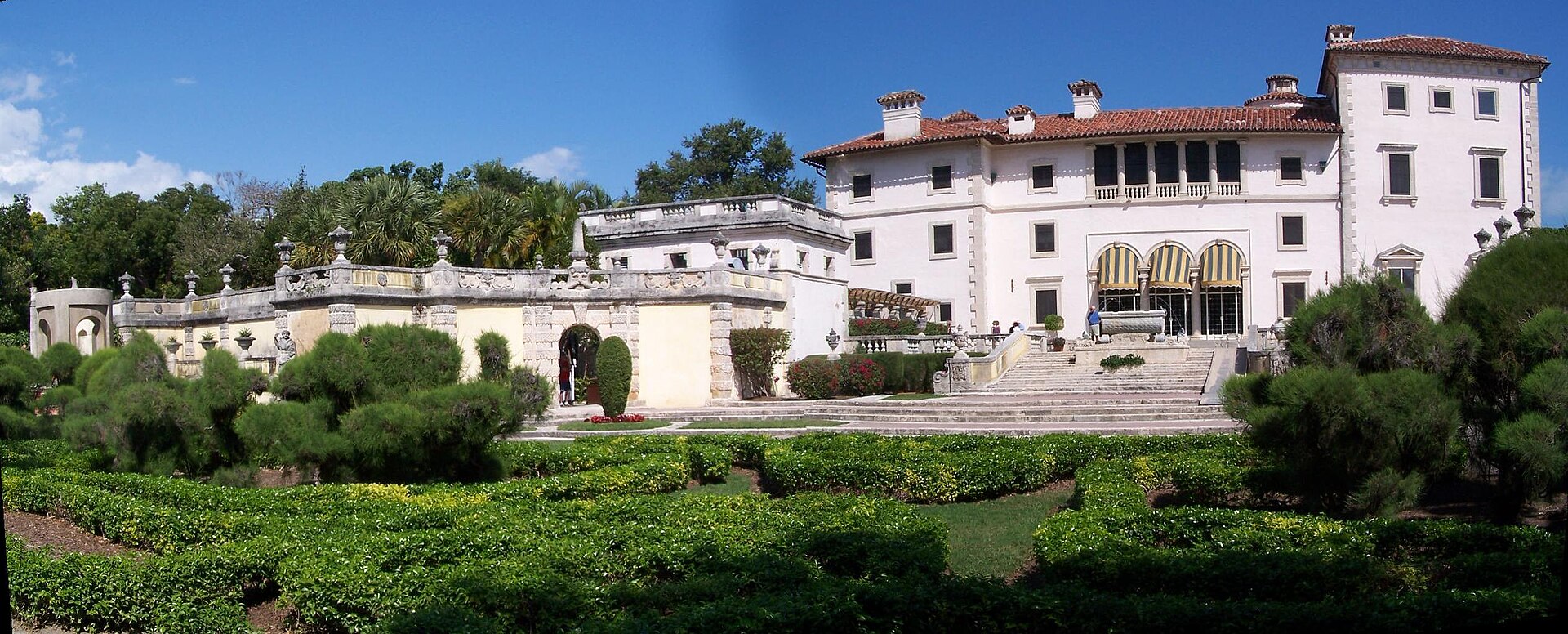
Vizcaya is the most improbable building in Miami. Set on a limestone bluff overlooking Biscayne Bay, this Italian Renaissance-style villa was built between 1914 and 1923 as the winter residence of James Deering, vice president of the International Harvester Company. Deering spent a fortune transporting European antiques, architectural fragments, and decorative arts across the Atlantic to fill 34 rooms that span five centuries of design, from Renaissance to Rococo to Neoclassical. The estate was designed by architect F. Burrall Hoffman Jr. and interior designer Paul Chalfin, who traveled through Italy buying entire ceilings, doorways, and mantelpieces from crumbling European palaces to install in their subtropical creation. The gardens are as extraordinary as the house. Ten acres of formal European gardens extend south and west from the villa, organized along a central axis that draws the eye through fountains, sculptures, and geometrically clipped hedges. Diego Suarez, a Colombian landscape architect trained in Italy, designed the outdoor spaces as a series of garden rooms, each with its own character and purpose. The stone barge anchored in Biscayne Bay just off the estate's eastern terrace may be Vizcaya's most photographed feature, an ornamental breakwater decorated with carved sea creatures that seems to float between the villa and the open water. Together, the house and gardens represent the most ambitious private estate ever built in Florida, and today they serve as Miami's most elegant window into Gilded Age ambition.
Guided Tours
Vizcaya's 34 rooms contain furniture, tapestries, and decorative arts spanning five centuries of European craftsmanship. Walking through without guidance, visitors enjoy beautiful objects but cannot distinguish a genuine 15th-century Italian ceiling from a skillful reproduction created specifically for this house. Expert guides make these distinctions, explaining why James Deering purchased particular pieces, how designer Paul Chalfin created the deliberate impression of a home accumulated over generations, and which elements were transported whole from crumbling European palaces versus which were crafted in Miami workshops to match. The gardens demand equal expertise. Diego Suarez designed these ten acres as a series of outdoor rooms, each with hidden meanings that most visitors walk past without noticing. Mythological statues reference classical stories, plantings follow astronomical alignments, and the stone barge anchored in Biscayne Bay contains carvings whose symbolism only a trained eye can interpret. Guides reveal these layers, transforming a pleasant stroll through hedged pathways into an education in Renaissance garden philosophy adapted to subtropical conditions. Vizcaya also holds a labor history rarely told in the elegant rooms themselves. Over 1,000 workers built this estate at a time when Miami's total population barely exceeded 10,000. Bahamian, African American, and immigrant craftsmen carved the stone, laid the tiles, and planted the gardens that visitors admire today. Guides place Vizcaya within the broader tradition of Gilded Age industrialists building European fantasies, comparing Deering's approach to the Vanderbilts' Biltmore and Hearst Castle while honoring the workers whose skills made these visions possible. After absorbing this history, visitors often seek contrast at Wynwood Walls, where contemporary artists work in public view rather than behind estate walls.
Collections Highlights
The stone barge: Walk down to the east terrace and admire the ornamental breakwater in Biscayne Bay, decorated with carvings of mermaids and sea creatures. The courtyard: The open-air central courtyard, modeled on a Tuscan villa, offers dramatic views through the loggia toward the bay. The swimming pool grotto: A hidden freshwater pool set in a rockwork cave beneath the south terrace, one of the estate's most whimsical features. The secret garden: A walled giardino segreto accessible through a narrow gate, designed as a private retreat within the larger garden complex. The organ room: Contains a massive pipe organ that Deering installed for entertainment, set in a room with a spectacular painted ceiling. Mangrove shoreline: The estate preserves a section of native Biscayne Bay mangrove habitat along its northern boundary, a reminder of what all of coastal Miami once looked like. Bay views from the terrace: Stand on the east terrace at sunset for one of the most romantic views in South Florida
When to Visit
Museum and gardens: Open Wednesday through Monday, 9:30 AM to 4:30 PM (last ticket sold at 4:30 PM, grounds close at 5:30 PM). Closed: Tuesdays, Thanksgiving, and Christmas Day. Best time: Weekday mornings when the house is least crowded and the gardens are bathed in soft light filtering through the tree canopy. Golden hour: Late afternoon visits allow you to experience the gardens as the light softens and the bay glows behind the estate. Avoid: Weekend afternoons during winter season, when the limited indoor spaces become congested with tour groups
Admission and Costs
General admission: $25 adults, $18 seniors (62+), $10 children (6-12), free for children under 6. Audio guide: Included with admission, available in English, Spanish, French, German, and Portuguese. Guided house tour: Included with admission on a first-come, first-served basis, approximately 45 minutes. Private docent tour: $250-400 for a 90-minute in-depth tour of the house and gardens for up to 10 people. Specialty garden tour: Periodic themed tours focusing on horticulture, sculpture, or restoration, $5-15 above admission
Tips for Visitors
Allow at least 2 hours: The house tour takes 45-60 minutes, and the gardens deserve equal time. Rushing Vizcaya means missing its finest details. Wear comfortable shoes: The gardens involve walking on gravel paths, coral rock, and some uneven stone surfaces. Photography: Allowed throughout the gardens and in most interior rooms without flash. The courtyard and bay terrace are the most photogenic spots. Metrorail access: The Vizcaya station on the Metrorail is adjacent to the museum grounds, making this one of the easiest attractions to reach without a car. Pair with nature: Vizcaya sits on the same stretch of Biscayne Bay where the Everglades ecosystem once reached the coast. Visiting both in one trip reveals the full spectrum of South Florida's landscape. Contrast with contemporary art: After Vizcaya's Renaissance elegance, head to Wynwood Walls for a whiplash shift into 21st-century street art. Special events: Vizcaya hosts evening garden parties, concerts, and seasonal events that offer access to the grounds in a completely different atmosphere than daytime visits