

Overview
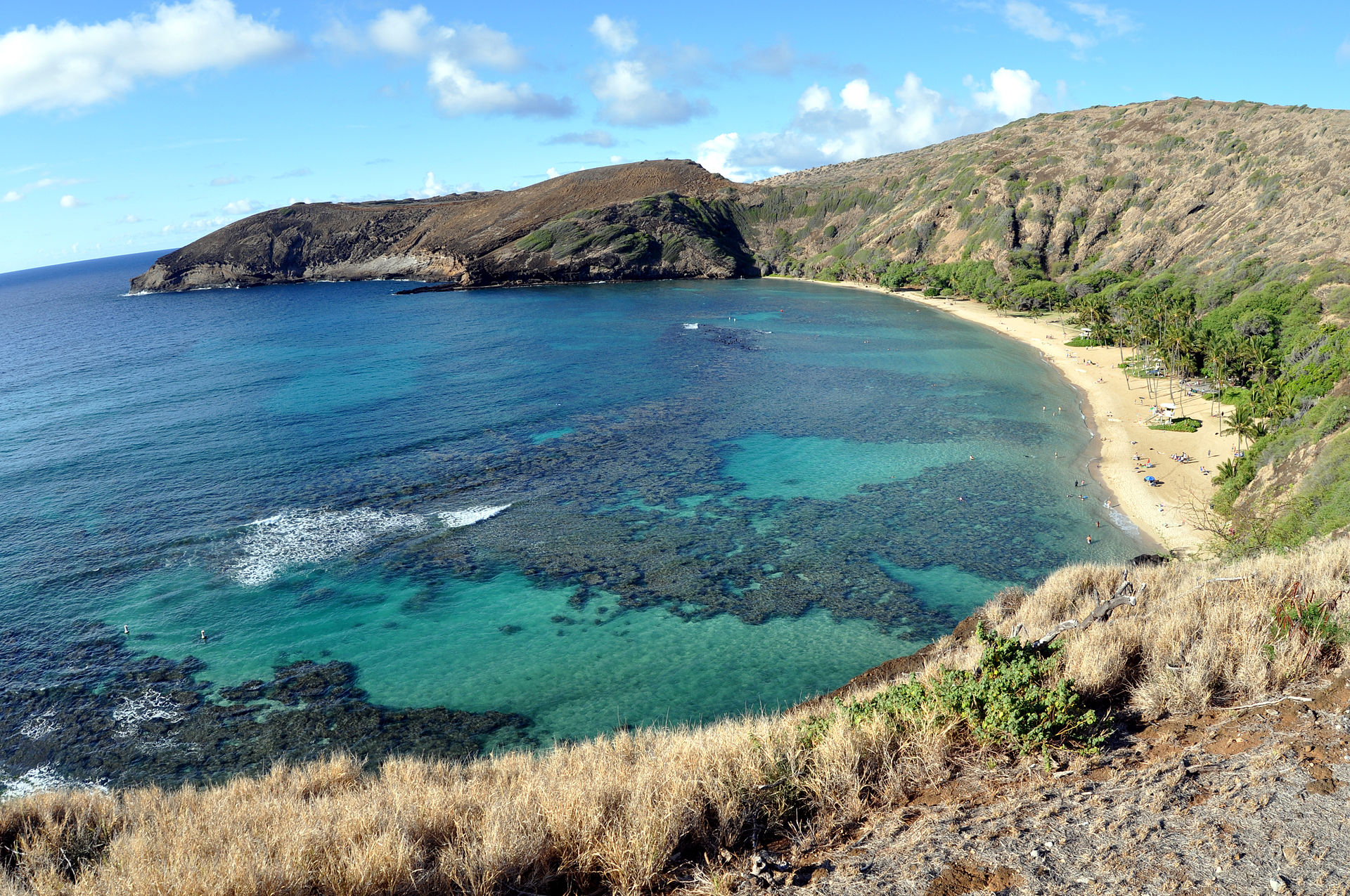
Hanauma Bay is a curved, turquoise cove formed within the remnants of a volcanic tuff cone on Oahu's southeastern coast, about 10 miles east of Waikiki. The bay's crescent shape was created when the ocean breached the crater wall thousands of years ago, flooding the caldera and creating a naturally sheltered lagoon rimmed by a shallow coral reef. The result is one of the most spectacular snorkelling environments in the Pacific: warm, clear water no deeper than 10 feet over most of the inner reef, populated by over 400 species of fish including parrotfish, butterfly fish, wrasses, tangs, and the occasional green sea turtle gliding through the coral heads.
The bay was designated a Marine Life Conservation District in 1967 and a Nature Preserve in 1990, making it the first in Hawaii to limit daily visitors and require environmental education before entry. The conservation measures that distinguish Hanauma Bay from casual beach snorkelling begin before visitors even reach the water. Every visitor must watch a nine-minute educational video about reef ecology, prohibited behaviours (standing on coral, feeding fish, touching turtles), and the bay's geological history. The daily visitor cap, currently around 1,000 people, means the bay never feels as overcrowded as it did in the 1990s when over 10,000 visitors per day were degrading the reef. The combination of warm, calm water, extraordinary fish density, and genuine conservation enforcement makes Hanauma Bay the single best snorkelling experience most visitors to Honolulu will ever have. The bay is also strikingly beautiful from the parking lot overlook at the crater rim, where the entire cove spreads out below in bands of turquoise, teal, and deep blue divided by dark coral formations visible through the surface. Diamond Head is on the way to Hanauma Bay from Waikiki -- hike Diamond Head at sunrise, then continue east for morning snorkelling.
Wildlife
Snorkelling guides identify species in real time, distinguishing Moorish idols from pennant butterflyfish, pointing out octopuses camouflaged in reef crevices, and directing attention to cleaning stations where small wrasses groom parasites from larger fish waiting patiently in line. Over 400 species inhabit these waters, and a guide's trained eyes reveal creatures that untrained visitors swim past without noticing.
The bay itself tells a geological story spanning millennia. Guides explain the volcanic eruption that created this tuff cone, describe how the ocean eventually breached the crater wall and flooded the caldera, and trace the slow colonisation of the basin floor by coral polyps that built the reef structure visible today. Safety in the water improves dramatically with expert guidance: guides ensure proper mask fit, demonstrate efficient fin kicks, identify current patterns within the bay, and teach turtle etiquette, explaining federal protections for green sea turtles (honu) and how to observe them respectfully.
Trails
Inner reef snorkelling: The shallow inner reef (3-10 feet deep) is where the densest fish populations congregate; float motionless over a coral head and watch dozens of species swirl around you within arm's reach. Green sea turtles: Honu frequently graze on algae inside the bay and surface for air near snorkellers; maintain a 10-foot distance and let them approach you rather than chasing them.
Crater rim overlook: Before descending to the beach, pause at the parking lot viewpoint for a panoramic photograph of the entire bay, one of the most iconic vistas in Honolulu. Keyhole channel: The deeper channel (15-25 feet) running through the centre of the bay offers encounters with larger fish and occasional eagle rays for confident swimmers. Toilet Bowl: At the bay's eastern edge, a natural rock formation creates a pool that rises and falls with each wave, though swimming in it is now prohibited due to safety concerns; it remains a fascinating geological feature to observe from the rocks above. Morning light: The eastern-facing bay catches golden morning sun that illuminates the reef through crystal water, creating the best visibility and photography conditions before 9 AM.
When to Visit
Swimming through Hanauma Bay without marine expertise means seeing colorful fish without understanding what makes this ecosystem extraordinary. Snorkelling guides identify species in real time, distinguishing Moorish idols from pennant butterflyfish, pointing out octopuses camouflaged in reef crevices, and directing attention to cleaning stations where small wrasses groom parasites from larger fish waiting patiently in line. Over 400 species inhabit these waters, and a guide's trained eyes reveal creatures that untrained visitors swim past without noticing.
The bay itself tells a geological story spanning millennia. Guides explain the volcanic eruption that created this tuff cone, describe how the ocean eventually breached the crater wall and flooded the caldera, and trace the slow colonisation of the basin floor by coral polyps that built the reef structure visible today. This understanding transforms snorkelling from simple recreation into an encounter with deep time written in rock and living tissue.
Safety in the water improves dramatically with expert guidance. Snorkelling guides ensure proper mask fit to prevent leaks and frustration, demonstrate efficient fin kicks that conserve energy, identify current patterns within the bay that can carry swimmers into deeper water, and keep inexperienced swimmers in the shallow inner reef zone where standing up remains possible at any moment. They also teach turtle etiquette, explaining federal protections for green sea turtles and demonstrating how to observe these ancient creatures respectfully without disrupting their feeding, resting, or breathing patterns.
Admission and Costs
Admission: $25 per person for non-residents; free for Hawaii residents and children under 12; payment at the entrance gate. Parking: $3 per vehicle, but the lot fills early; overflow parking is limited. Snorkel gear rental: $20 for mask, snorkel, and fins from the concession stand near the beach; bringing your own saves money and ensures a good fit.
Shuttle tram: $1.25 each way between the parking lot and beach; the walk down is manageable but the steep uphill return makes the tram worthwhile. Guided snorkel tour: $35-50 per person for a guided in-water tour with a marine naturalist who identifies fish species and points out hidden creatures in the reef.
Tips for Visitors
Bring your own gear: Rental equipment is available but your own well-fitting mask prevents leaks and frustration; anti-fog solution and prescription masks are worth the investment. Reef-safe sunscreen only: Hawaii law prohibits oxybenzone and octinoxate; apply reef-safe sunscreen before arriving, as sand and water make application messy at the beach.
Do not stand on coral: The reef is alive and fragile; standing on it damages decades of growth in seconds. Float or swim, and use sandy channels between coral heads when you need to rest. Getting there: Drive east on Kalanianaole Highway (Route 72) from Waikiki, about 25 minutes; TheBus Route 22 also serves the bay but runs infrequently. Combine with Diamond Head: The crater is on the way to Hanauma Bay; hike Diamond Head at sunrise, then continue east for morning snorkelling. Food and water: The concession stand offers basic snacks and drinks, but bringing your own water and lunch is wise since options are limited and the beach has no shade trees.