

Overview
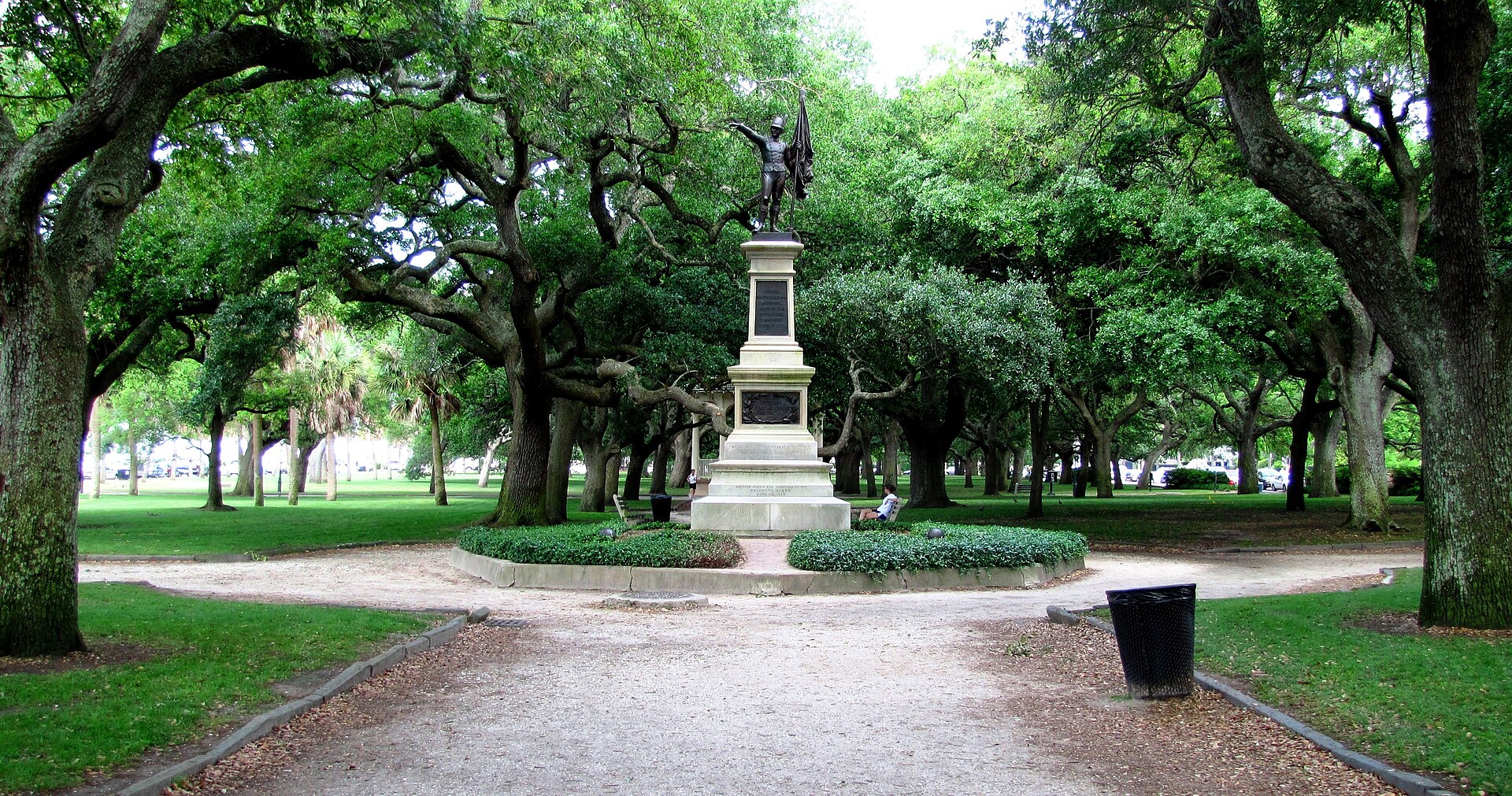
The Battery is the seawall promenade that wraps around the southern tip of Charleston's peninsula, where the Ashley and Cooper rivers converge into the harbour. The name comes from the Confederate artillery batteries that were positioned here during the Civil War to defend the city, and several original cannon and mortar remain on display in White Point Garden, the tree-shaded park that occupies the point. On one side, a concrete seawall offers unobstructed views across the harbour to Fort Sumter and the barrier islands beyond. On the other, some of Charleston's most magnificent antebellum mansions line South Battery and East Battery streets -- three and four stories of Greek Revival columns, double piazzas, and ornamental ironwork representing the peak of pre-Civil War wealth in the American South.
Walking The Battery engages every direction. Look south across the water and you see the harbour that shaped four centuries of history -- the same waters crossed by colonial merchant ships, slave vessels, British warships, Confederate blockade runners, and Union ironclads. Turn inland and the mansions tell individual stories of cotton fortunes, wartime bombardment, earthquake survival, and generations of preservation. White Point Garden itself was the city's original public promenade and the site of pirate hangings in the colonial era, including the crew of the notorious Stede Bonnet in 1718. From sunrise to sunset, locals jog the seawall, tourists photograph the houses, and harbour breezes keep the air moving even in the thick of a Lowcountry summer.
Photo Spots
The mansions along South Battery and East Battery are private residences that visitors cannot enter. Without a guide, they are magnificent facades that reveal nothing of the families, fortunes, and catastrophes behind them. With a guide, each house becomes a narrative: the cotton merchant who built the Italianate villa at 2 Meeting Street, the family that survived the 1886 earthquake only to see their third-floor ballroom crash through to the ground floor, the mansion that served as a Confederate headquarters, the widow who maintained her home for decades by selling portions of the garden.
The military history embedded in White Point Garden adds another layer. Guides explain the strategic significance of the harbour position, the types of artillery on display, and the connections between the cannon here and the bombardment of Fort Sumter visible directly across the water. Pirate history also surfaces -- the garden was the execution ground for Stede Bonnet and his crew in 1718, and guides who know the colonial court records can reconstruct the trial and hanging that took place on this very soil. These overlapping narratives -- colonial, military, architectural, social -- are invisible without interpretation but extraordinarily vivid with it.
Landmarks Along
Antebellum mansions: The homes along South Battery and East Battery represent the pinnacle of pre-Civil War Southern architecture, with Greek Revival, Italianate, and Colonial Revival styles all represented within a few blocks. Civil War artillery: Original cannon and mortar from the Confederate defences remain on display in White Point Garden, positioned to face the harbour they once guarded.
Harbour panorama: Fort Sumter, Fort Moultrie, Castle Pinckney, and the barrier islands are all visible from the seawall, with cargo ships passing through the channel. White Point Garden: Ancient live oaks, palmetto palms, and a Victorian bandstand create a shaded retreat at the peninsula's tip. Pirate history: The site where Stede Bonnet -- the "Gentleman Pirate" -- and 29 of his crew were publicly hanged in 1718 after their capture near the harbour entrance.
When to Visit
Access: The seawall, White Point Garden, and surrounding sidewalks are public and open at all hours, free to visit anytime. Best for walking: Early morning for soft light on the mansions and fewer crowds, or late afternoon for harbour sunset views.
Guided tour times: Most walking tours pass through between 10 AM and 2 PM. For a quieter experience, visit outside these windows. Seasonal note: Spring and fall offer the most comfortable walking weather. Summer afternoons bring thunderstorms that can arrive suddenly off the harbour.
Admission and Costs
Walking the promenade: Completely free at all times. Group walking tour including The Battery: $25-40 per person, typically part of a 2-hour route that also covers Rainbow Row and the Historic District.
Private mansion and architecture tour: $200-375 for up to 6 people, with detailed architectural analysis of the Battery-facing homes. Carriage tour passing The Battery: $35-55 per person; route depends on the random zone lottery, so The Battery is not guaranteed on every ride.
Tips for Visitors
Start at Rainbow Row: Walk south along East Bay Street from Rainbow Row to The Battery for a continuous architectural tour, covering about half a mile of Charleston's finest streetscape. Sunrise photographers: The east-facing seawall catches the first light of day directly on the harbour and fort. Arrive before 7 AM for golden tones and empty paths.
Respect the residences: The Battery mansions are occupied homes. Admire and photograph from the sidewalk, but do not enter gardens or approach porches. Metered parking: Street parking along Murray Boulevard (the west side of the peninsula) is slightly easier to find than East Battery. A 10-minute walk brings you to the point. Combine with the fort: The Fort Sumter ferry departs from Liberty Square, a 15-minute walk north along the waterfront from The Battery, making a natural full-morning itinerary. Bench breaks: White Point Garden has plenty of benches beneath the live oaks -- pack a water bottle and take your time absorbing the view.