
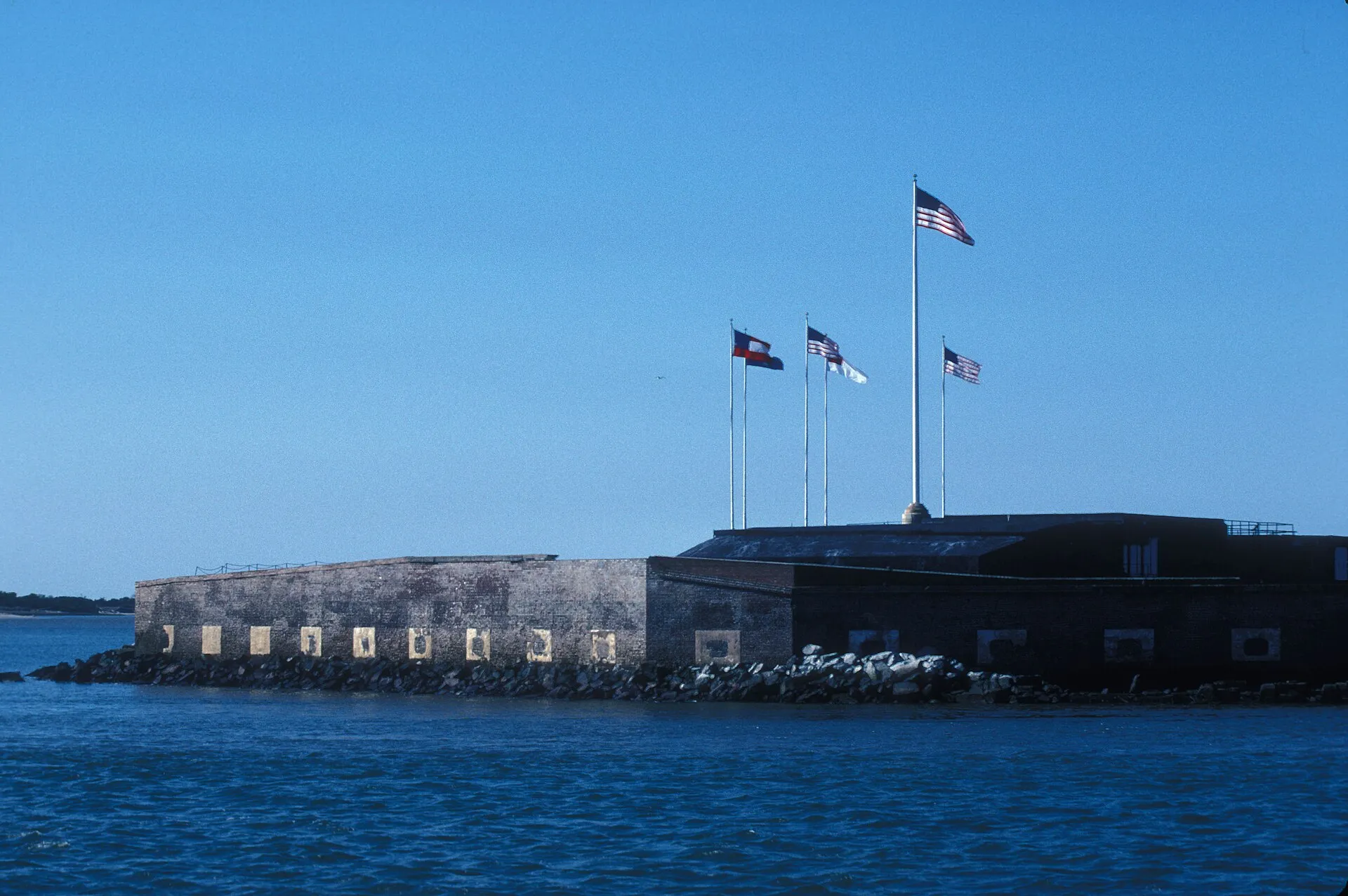
Fortification History
Fort Sumter was one of a chain of coastal defences authorised after the War of 1812, its construction begun in 1829 on a shoal at the harbour mouth built up from 70,000 tons of granite shipped down from New England. Designed as a three-story brick pentagon with tiered casemates meant to mount 135 guns and garrison 650 men, it was still unfinished when Major Robert Anderson quietly moved his small United States garrison there from Fort Moultrie the night after South Carolina seceded in December 1860.
The fort's defining event was the bombardment of April 12-13, 1861, when Confederate batteries encircling the harbour opened fire and forced Anderson's surrender after 34 hours, igniting the American Civil War. Confederate forces then held Sumter for nearly four years against one of the longest sieges in American military history. The 1863 Union naval and land bombardment hurled tens of thousands of shells at the fort, collapsing its brick walls into a low, rubble-and-sandbag earthwork that paradoxically proved far harder to breach. The Confederates finally abandoned it in February 1865, and Anderson returned to raise the same flag over the ruins.
Notable Rooms
Original flagpole site: The spot on the parade ground where the garrison flag flew during the bombardment is marked -- Anderson carried this 33-star flag north, where it became a powerful Union rallying symbol, and returned to raise it here in 1865. Ramparts and gorge wall: Climbing to the top level rewards visitors with a 360-degree panorama taking in Charleston's skyline, Fort Moultrie across the water, the harbour islands, and the open Atlantic -- the same field of fire the defenders commanded.
Casemates and gun rooms: Several vaulted brick casemates survive along the walls, their artillery positions still in place, illustrating how coastal-defence technology evolved from the fort's 1829 design through the Civil War's ironclad era. Reduced walls: One section preserves the original three-story height for contrast with the rubble-height walls the 1863 siege created, a visceral measure of the bombardment's intensity. Museum room: The on-site Battery Huger museum, built into the fort in 1899, displays the original garrison flag and artefacts recovered from the siege.
When to Visit
Ferry departures: Typically 3-4 departures daily from Liberty Square (downtown Charleston). First ferry usually at 9:30 AM, last return around 4:00 PM. Schedule varies by season. Time on the island: The ferry allows approximately 1 hour at Fort Sumter, which includes a ranger talk and self-guided exploration.
Peak season: April through October offers the most daily departures. Summer ferries may add evening runs. Winter schedule: November through March typically has fewer departures, sometimes only 2 per day. Check schedules and book in advance. Weather cancellations: High winds or storms can cancel ferries with short notice -- the harbour crossing can be rough in bad weather.
Admission and Costs
Ferry + fort admission: $26 adults, $18 children ages 4-11. This covers the round-trip boat ride and access to the fort and museum. Children under 4: Free with a ticketed adult. National Park passport stamps: Available free at the fort's visitor contact station.
Private guided tours: $250-450 for groups, typically combining the Fort Sumter ferry with a pre-departure walking tour of Charleston's Civil War sites on the peninsula. Fort Moultrie alternative: Fort Moultrie on Sullivan's Island ($10 adult admission) is accessible by car and covers 171 years of coastal defence history, from the Revolution through World War II.
Tips for Visitors
Arrive 30 minutes early: Check in at the Liberty Square education centre, which has excellent exhibits on the fort's history. The boarding process begins 15 minutes before departure. Bring sun protection: The fort is fully exposed with no shade. Sunscreen, a hat, and water are essential, especially in summer months.
Comfortable shoes: The fort's walkways are uneven brick and compacted rubble -- sandals and dress shoes are poor choices. Seasickness consideration: The harbour ferry crosses open water and can rock in windy conditions. If you are sensitive to motion, take precautions before boarding. Photography: The ferry approach offers the best overall views of the fort. From the ramparts, shoot back toward the city for dramatic skyline compositions. Combine with The Battery: After returning from Fort Sumter, walk along The Battery promenade where Confederate artillery once fired at the fort -- seeing both sides of the harbour conflict completes the story. From there it is a short stroll up East Bay Street to the pastel facades of Rainbow Row for an easy architectural coda to the morning.
Frequently Asked Questions
What is the best season to visit Fort Sumter?
April and October are the peak months, combining comfortable Charleston temperatures with historically meaningful dates, as the first shots of the Civil War were fired on April 12, 1861. The 30-minute ferry ride across Charleston Harbor is most enjoyable in spring and autumn when harbour breezes are pleasant rather than the sticky humidity of July and August. Winter visits are viable with fewer crowds, but ferry schedules are reduced and the exposed island fort can feel windswept and cold.
When can visitors tour Fort Sumter?
Ferry departures: Typically 3-4 departures daily from Liberty Square (downtown Charleston). First ferry usually at 9:30 AM, last return around 4:00 PM. Schedule varies by season.
How much is the entrance fee for Fort Sumter?
Ferry + fort admission: $26 adults, $18 children ages 4-11. This covers the round-trip boat ride and access to the fort and museum. Children under 4: Free with a ticketed adult.
What should visitors know before visiting Fort Sumter?
Arrive 30 minutes early: Check in at the Liberty Square education center, which has excellent exhibits on the fort's history. The boarding process begins 15 minutes before departure. Bring sun protection: The fort is fully exposed with no shade.