

Overview
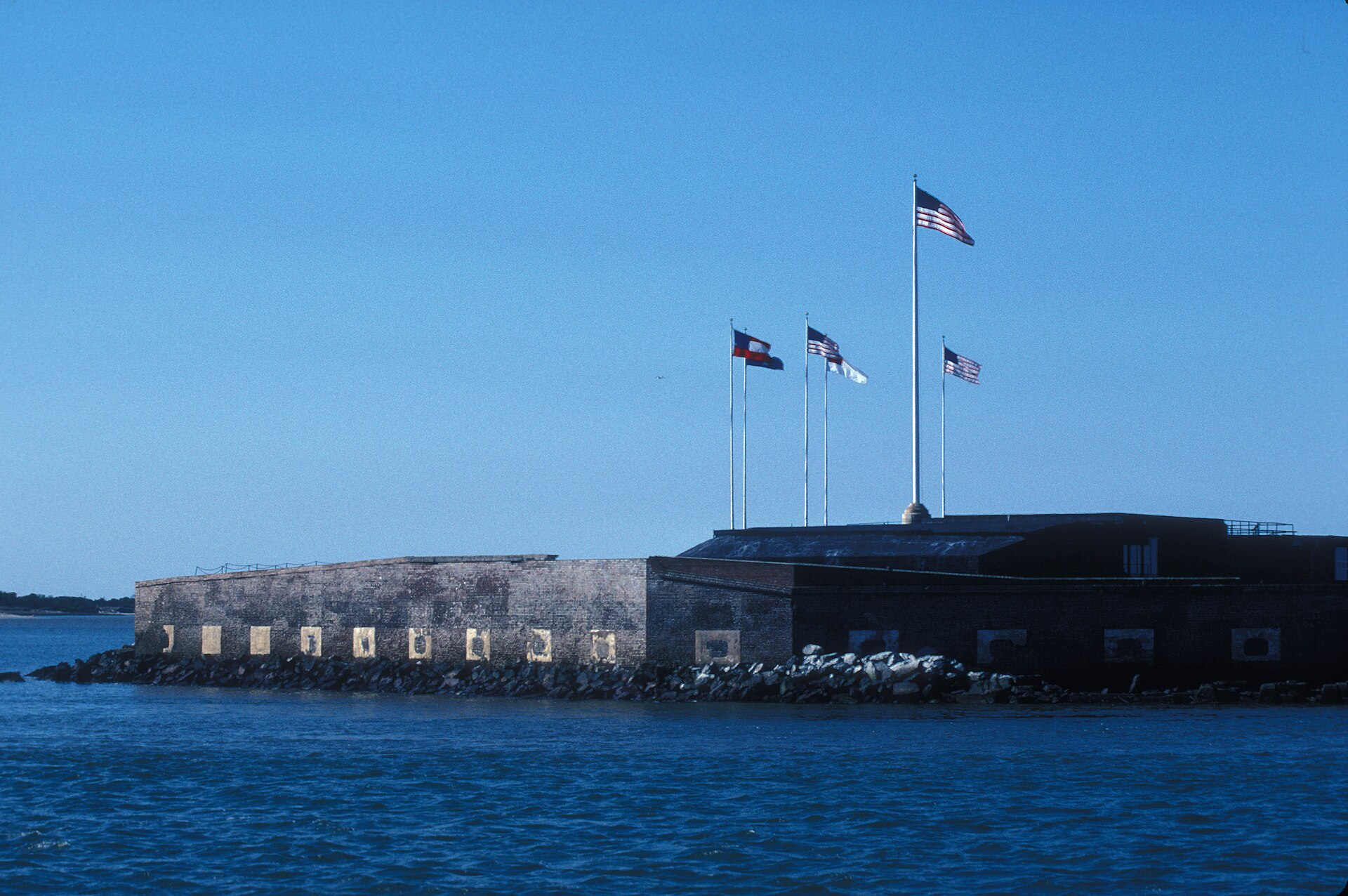
Fort Sumter sits on a man-made island at the mouth of Charleston Harbor, a brick pentagonal fortification that became the flashpoint of the American Civil War. On April 12, 1861, Confederate batteries ringing the harbour opened fire on the federal garrison inside, and after 34 hours of bombardment, Major Robert Anderson surrendered the fort -- the opening act of a conflict that would kill over 600,000 Americans. The fort remained in Confederate hands for nearly four years, enduring relentless Union bombardment that reduced its original three-story walls to a single story of rubble reinforced with sandbags and palmetto logs. Today the ruins stand as a National Monument managed by the National Park Service, accessible only by ferry from Charleston's waterfront.
Visiting Fort Sumter is as much about the journey as the destination. The 30-minute ferry ride from Liberty Square crosses the same waters that Union ironclads navigated under fire, passing Fort Moultrie on Sullivan's Island where the Patriot garrison repelled a British fleet in 1776 and Castle Pinckney, another island fortification with its own layered history. On the island, National Park Service rangers lead interpretive programmes covering the fort's construction, the secession crisis, the bombardment, and the long siege that followed. The ruins themselves are remarkably evocative -- cannon emplacements, officers' quarters, and magazine rooms remain visible, and the original flagpole site where Anderson's garrison flew the Stars and Stripes marks the spot that became a symbol for both sides of the conflict. The views back to Charleston's skyline and The Battery are stunning.
Historical Significance
The ruins of Fort Sumter are visually striking but historically dense. Without interpretation, the crumbled brick walls and scattered cannon tell only the vaguest story. Rangers on the island provide excellent free talks, but their programmes are necessarily brief given the 1-hour visit window. Private guides who accompany groups on the ferry ride use that 30-minute crossing to build the narrative framework -- the political tensions between North and South, the strategic importance of Charleston Harbor, the personal stories of the soldiers on both sides -- so that by the time visitors step onto the island, every cannon position and wall fragment carries meaning.
The most knowledgeable guides connect Fort Sumter to the broader Charleston story. They explain why the city was the epicentre of secession, how its port economy depended on enslaved labour, and how the Civil War's beginning and its long aftermath shaped the city that visitors walk through today. Some guides also incorporate Fort Moultrie across the harbour, where the Sullivan's Island history spans from the Revolution through the point of entry for an estimated 40% of all enslaved Africans brought to North America -- a connection now interpreted at the fort and at the International African American Museum back in Charleston.
Architecture
The original flagpole site: The exact location where the garrison flag flew during the bombardment is marked on the parade ground -- Anderson carried this flag north and it became a powerful Union symbol throughout the war. Reduced walls: Compare the original three-story height (visible in one section) with the rubble-height walls that four years of Union bombardment created, a visceral testament to the siege's intensity.
Cannon emplacements: Several artillery positions remain in place, and interpreters explain the evolution of coastal defence technology from the fort's 1829 design through the Civil War's ironclad era. Museum exhibits: The small on-site museum displays the original 33-star garrison flag and artefacts recovered from the bombardment. Harbour panorama: From the ramparts, the 360-degree view encompasses Charleston's skyline, Fort Moultrie, the harbour islands, and the open Atlantic -- the same vista that both defenders and attackers saw.
When to Visit
Ferry departures: Typically 3-4 departures daily from Liberty Square (downtown Charleston). First ferry usually at 9:30 AM, last return around 4:00 PM. Schedule varies by season. Time on the island: The ferry allows approximately 1 hour at Fort Sumter, which includes a ranger talk and self-guided exploration.
Peak season: April through October offers the most daily departures. Summer ferries may add evening runs. Winter schedule: November through March typically has fewer departures, sometimes only 2 per day. Check schedules and book in advance. Weather cancellations: High winds or storms can cancel ferries with short notice -- the harbour crossing can be rough in bad weather.
Admission and Costs
Ferry + fort admission: $26 adults, $18 children ages 4-11. This covers the round-trip boat ride and access to the fort and museum. Children under 4: Free with a ticketed adult. National Park passport stamps: Available free at the fort's visitor contact station.
Private guided tours: $250-450 for groups, typically combining the Fort Sumter ferry with a pre-departure walking tour of Charleston's Civil War sites on the peninsula. Fort Moultrie alternative: Fort Moultrie on Sullivan's Island ($10 adult admission) is accessible by car and covers 171 years of coastal defence history, from the Revolution through World War II.
Tips for Visitors
Arrive 30 minutes early: Check in at the Liberty Square education centre, which has excellent exhibits on the fort's history. The boarding process begins 15 minutes before departure. Bring sun protection: The fort is fully exposed with no shade. Sunscreen, a hat, and water are essential, especially in summer months.
Comfortable shoes: The fort's walkways are uneven brick and compacted rubble -- sandals and dress shoes are poor choices. Seasickness consideration: The harbour ferry crosses open water and can rock in windy conditions. If you are sensitive to motion, take precautions before boarding. Photography: The ferry approach offers the best overall views of the fort. From the ramparts, shoot back toward the city for dramatic skyline compositions. Combine with The Battery: After returning from Fort Sumter, walk along The Battery promenade where Confederate artillery once fired at the fort -- seeing both sides of the harbour conflict completes the story.