

Overview
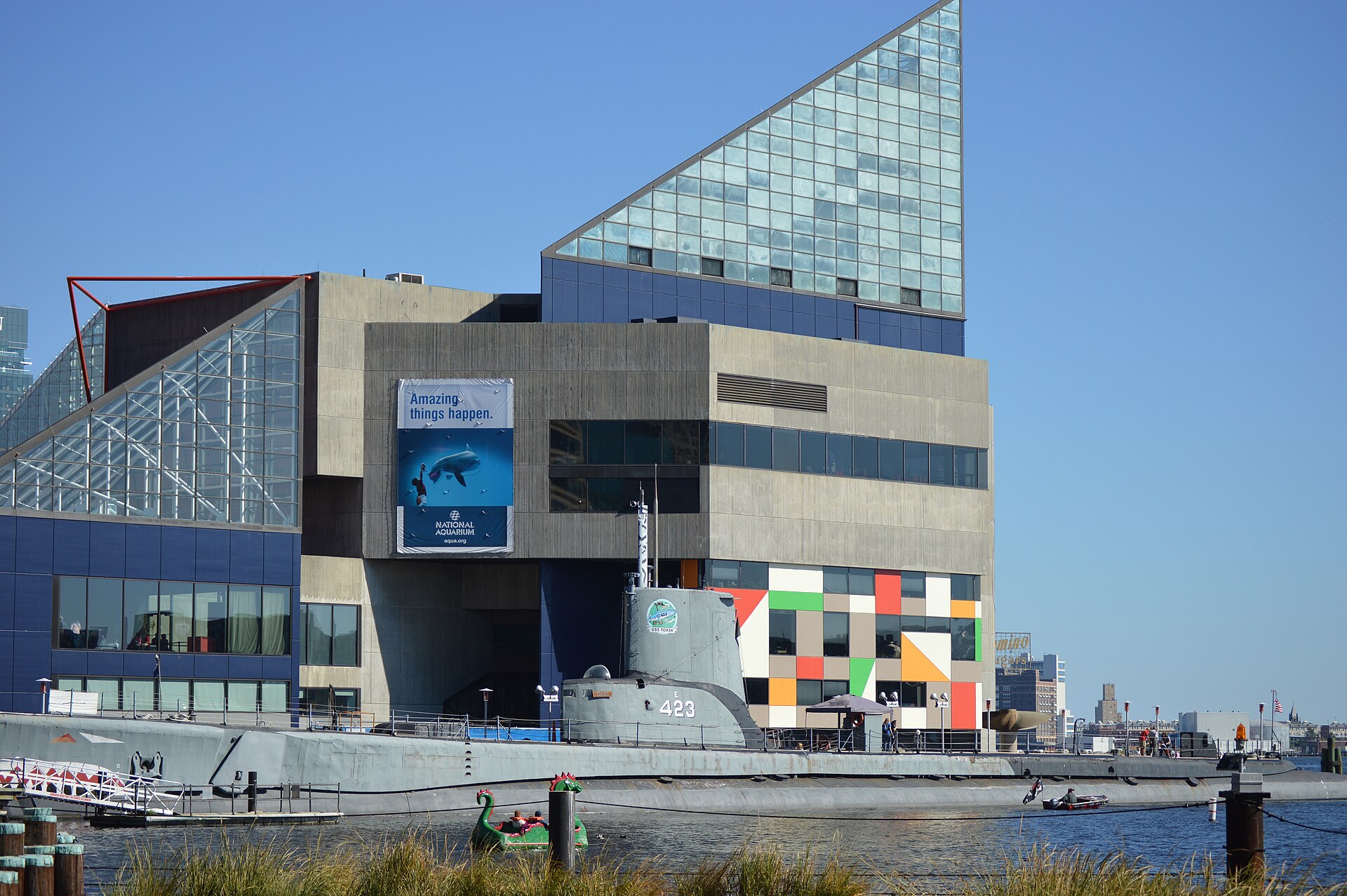
Rising from the eastern edge of the Inner Harbor like a modernist glass pyramid, the National Aquarium in Baltimore is among the finest marine institutions in the Western Hemisphere. Since opening in 1981, it has anchored the harbour's transformation and drawn over 50 million visitors. The facility houses more than 20,000 animals representing 800 species across seven distinct levels, each designed to immerse visitors in a different aquatic or tropical environment.
From a four-story Atlantic coral reef teeming with sharks and rays to an indoor Australian rainforest complete with free-flying birds and a cascading waterfall, the Aquarium achieves something rare: it genuinely transports you. What distinguishes the National Aquarium from other major aquariums is its commitment to conservation storytelling. Every exhibit connects visitors to real-world environmental challenges. The Chesapeake Bay exhibit traces the ecological health of Baltimore's own watershed. The dolphin habitat at Dolphin Discovery shifted from performance-based shows to research-focused encounters that let visitors observe Atlantic bottlenose dolphins behaving naturally. Guides and educators throughout the building do not just identify fish; they explain why coral bleaching threatens reef ecosystems and what the Chesapeake Bay's recovery tells us about human impact on oceans. A visit with a knowledgeable guide elevates the experience from spectacle to understanding.
Collections Highlights
Blacktip Reef is the centrepiece: a four-story Atlantic coral reef tank home to blacktip reef sharks, green sea turtles, and hundreds of vibrantly coloured reef fish circling a living coral structure. Dolphin Discovery lets visitors watch Atlantic bottlenose dolphins interact, play, and communicate in a naturalistic habitat designed around research rather than performance.
The Upland Tropical Rainforest fills the rooftop glass pyramid with an indoor Australian forest featuring free-flying birds, a waterfall, and tropical vegetation maintained at constant humidity. The Jellies Invasion gallery displays bioluminescent jellyfish pulsing through illuminated tanks -- one of the most photographed exhibits in the entire building. The Living Seashore is a hands-on touch pool where visitors can gently handle horseshoe crabs, sea stars, and stingrays under staff supervision. Australia: Wild Extremes ventures through a recreation of an Australian river gorge featuring crocodiles, turtles, and colorful lorikeets. The Chesapeake Bay exhibit recreates Maryland's defining estuary indoors, with blue crabs, diamondback terrapins, and underwater grasses telling the story of the Bay's ongoing ecological recovery and the restoration efforts that sustain it.
Guided Tours
Marine biology reveals its complexity through expert narration that plaques cannot provide. Aquarium educators explain why certain shark species circle peacefully together while others must be housed separately, how the coral reef maintains its delicate chemical balance, and what behaviours indicate dolphins are communicating versus simply playing.
Conservation stories connect every exhibit to challenges facing real-world oceans. The Chesapeake Bay display relates directly to the waterway visible from the Inner Harbor steps away, and guides explain how the Aquarium's research programmes have influenced policy on water quality, oyster restoration, and fishery management. Hidden details reward knowledgeable exploration: the rooftop rainforest contains poison dart frogs most visitors walk past, two-toed sloths concealed in the canopy who move too slowly for casual observation, and birds that interact with familiar staff in ways they never replicate for strangers. Behind-the-scenes tours reveal massive filtration systems, species-specific food preparation kitchens, and veterinary facilities monitoring every creature.
When to Visit
General hours are 9:00 AM to 5:00 PM daily, with extended hours to 8:00 PM on Fridays during summer months. The best time to visit is weekday mornings at opening, when galleries are quiet and animals are most active during feeding routines.
Friday evening late openings are popular with adults and significantly less crowded than weekend afternoons. Avoid Saturday and Sunday between 11 AM and 3 PM, when families fill the galleries and wait times for Dolphin Discovery peak. The Aquarium hosts seasonal after-hours programmes for adults, including evening cocktail events among the exhibits.
Admission and Costs
Marine biology reveals its complexity through expert narration that plaques cannot provide. Aquarium educators explain why certain shark species circle peacefully together while others must be housed separately due to aggression patterns, how the coral reef maintains its delicate chemical balance, and what behaviours indicate that dolphins are communicating versus simply playing. This scientific depth transforms passive observation into genuine understanding of the creatures gliding past the glass. Conservation stories connect every exhibit to challenges facing real-world oceans and watersheds. The Chesapeake Bay display relates directly to the waterway visible from the Inner Harbor steps away, and guides explain how the Aquarium's research programmes have influenced policy decisions affecting water quality, oyster restoration, and fishery management throughout the region. These connections give the institution purpose beyond entertainment, positioning it as an active participant in environmental science rather than a mere display of marine curiosities. Hidden details reward visitors who explore with knowledgeable guides. The rooftop rainforest contains poison dart frogs that most visitors walk past without noticing, two-toed sloths concealed in the canopy who move too slowly for casual observation, and birds that have learned to interact with familiar staff members in ways they never replicate for strangers. Behind-the-scenes tours reveal the infrastructure keeping 20,000 animals healthy: massive filtration systems, food preparation kitchens where diet is calibrated for each species, and veterinary facilities where staff monitor every creature in the collection.
General admission: $45 for adults, $36 for children (ages 3-11), free for children under 3. Dolphin Discovery: Included with general admission. Behind-the-scenes tours: $75-125 per person for exclusive access to animal care areas, feeding stations, and research labs. Private group guide: $250-400 for a 2-3 hour expert-led tour focusing on specific interests (marine biology, conservation, family-friendly). Annual membership: $120 individual, $175 family, includes unlimited visits and guest passes. Discount tip: Reduced admission on select weekday afternoons during the off-season (January-March).
Tips for Visitors
Allow 2.5-3 hours -- the Aquarium is large and multi-levelled, and rushing through in under two hours means missing the rainforest, dolphin habitat, and most interactive exhibits. The recommended path begins on the upper levels and spirals downward; an elevator takes you up and you descend through increasingly dramatic exhibits.
Book timed tickets online -- walk-up availability is limited on weekends and holidays. The Aquarium sits right on the Inner Harbor promenade; after your visit, walk west toward the historic ships or take the water taxi to Fells Point for lunch. Flash photography is prohibited throughout to protect animal welfare. The cafe inside is small, so many visitors prefer nearby Harborplace or Fells Point restaurants afterward. Strollers are accommodated, though narrow corridors on busy days can make manoeuvring challenging.