
Landmarks Along
🎸 Continental Club: A legendary venue on South Congress that has hosted live music nightly since 1955 and remains the gold standard for Austin honky-tonk. 🍻 Driskill Hotel bar: Sip a bourbon in the ornate Victorian lobby bar where Lyndon Johnson watched election returns and ghost hunters claim to see a spectral bride on the upper floors. 🎶 Stubb's BBQ amphitheater: Just north of Sixth on Red River, this outdoor stage combines world-class live music with some of the best barbecue sauce in Texas. 🎧 Waterloo Records: Austin's beloved independent record store on Sixth Street where staff picks and in-store performances make every visit an education in Texas music. 🌈 Neon at night: The stretch between Brazos and Trinity after 10 PM is a kaleidoscope of vintage and modern neon that photographers love. 🍴 Late-night tacos: Food trucks line the cross streets after midnight, and a post-music taco from Veracruz All Natural or Pueblo Viejo is an essential Sixth Street ritual. 📸 Daytime architecture walk: Before the bars open, walk the south side of the street and look up to see original cast-iron columns, pressed-tin details, and dates carved into limestone lintels
Photo Spots
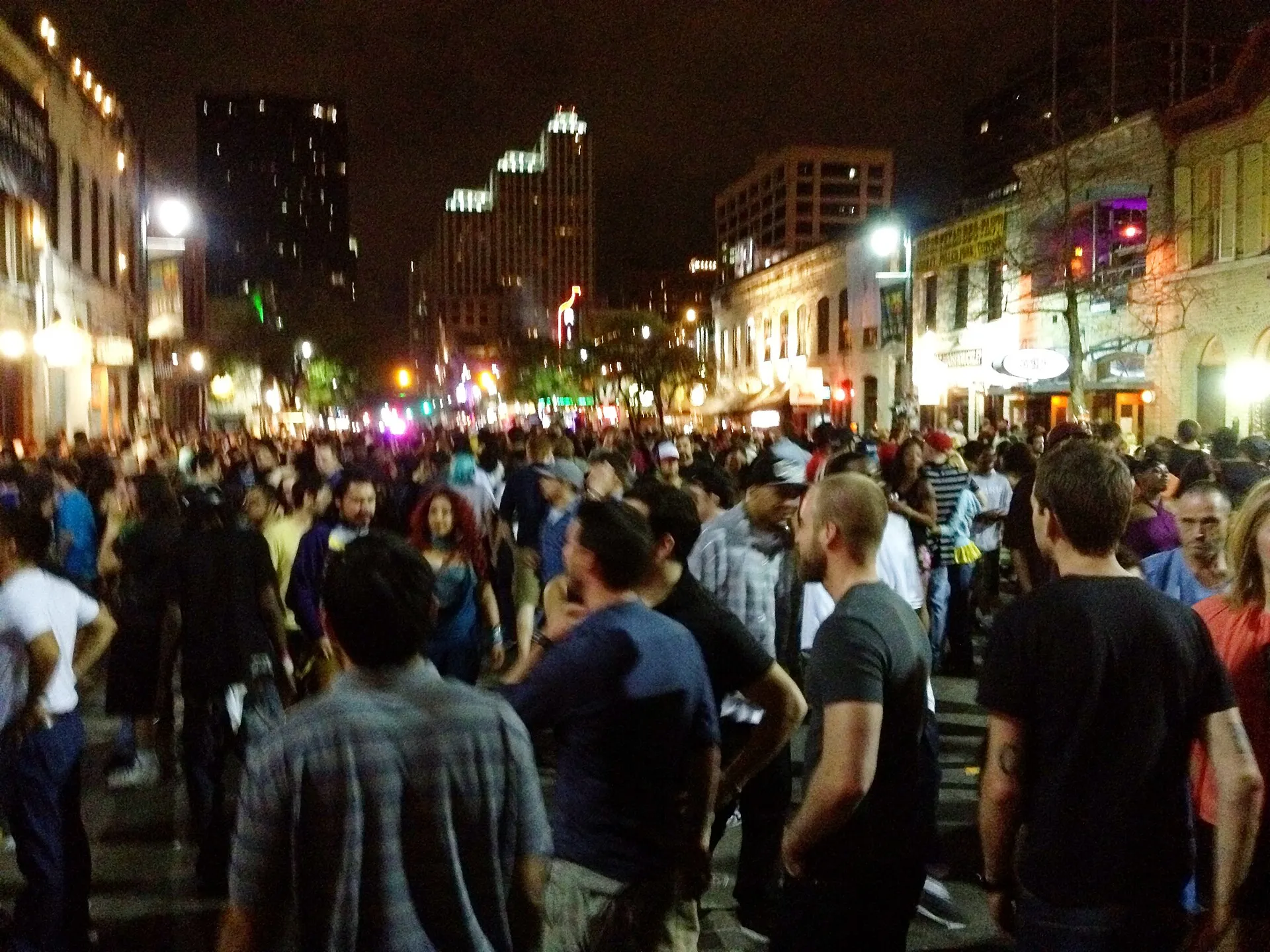
The stretch between Brazos and Trinity after 10 PM is a kaleidoscope of vintage and modern neon that photographers love -- shoot from the south sidewalk looking east for the best layered neon depth. Before the bars open, walk the south side of the street and look up to notice original cast-iron columns, pressed-tin details, and dates carved into limestone lintels from the 1870s and 1880s.
The Driskill Hotel entrance at 604 Brazos Street is one of the most photogenic doorways in Texas, particularly under the warm glow of its gas lamps. From the Congress Avenue end of Sixth Street, you can frame the Texas State Capitol dome looking north. During SXSW, the density of buskers, performers, and crowds creates street photography opportunities unlike anywhere else in the country.
When to Visit
Public sidewalks are accessible 24 hours; most venues open their doors between 4 PM and 8 PM. Bands typically start between 9 PM and 10 PM and play until the 2 AM closing time. Vehicle traffic is blocked on weekend nights (typically Friday and Saturday from 10 PM to 2:30 AM), turning the road into a pedestrian festival.
Thursday nights draw serious music fans without the weekend crush, and many venues waive cover charges on weeknights. Daytime exploration is best for appreciating the historic architecture, the Driskill Hotel lobby, and vintage record shops before the neon takes over. During SXSW in March, hundreds of free unofficial showcases happen along Sixth Street alongside the official festival.
Admission and Costs
Pace yourself: The bars are dense and the drinks are strong; Sixth Street is a marathon, not a sprint, and Austin's live music rewards patience over volume. Wear comfortable shoes: You will walk miles between venues, often on uneven sidewalks, and standing through sets adds up quickly. Rideshare home: Parking near Sixth Street on weekend nights is nearly impossible and driving afterward is unwise; Uber and Lyft pickup zones are marked at Congress and I-35. East Sixth for food: Cross I-35 to find better restaurants, more creative cocktails, and a less chaotic atmosphere than the Dirty Sixth bar strip. Combine with the Capitol: The Texas State Capitol is just four blocks north, making a daytime Capitol tour a natural pairing with an evening Sixth Street outing. SXSW strategy: During the March festival, free unofficial showcases offer just as much talent as the paid events; line up early at venues along Red River and Sixth for the best acts. Stay hydrated: Texas heat plus alcohol is a dangerous combination; alternate drinks with water, especially during the warm months from May through October
Tips for Visitors
Standing in a Sixth Street doorway without context, you hear only noise. With a guide tracing the evolution from the cosmic cowboy movement of the 1970s through punk, grunge, and the SXSW explosion, you hear history. These are the rooms where Stevie Ray Vaughan developed his tone, where unknown bands played sets that would later be remembered as pivotal moments in American music. The competing sounds from a dozen open doors become a living archive rather than a cacophony when someone can point to specific venues and explain what happened there, who played there, and why it mattered. Victorian-era commercial buildings line these blocks, their 1870s and 1880s facades hidden in plain sight above the neon signs. Most visitors never look up to notice the original cast-iron columns, pressed-tin details, and dates carved into limestone lintels that make Sixth Street one of the best-preserved historic commercial districts in Texas. Guides draw your attention to these architectural details while simultaneously steering you toward the best music on any given night. The Driskill Hotel, anchoring the western end of the strip, contains enough ghost stories, political intrigue, and cattle baron excess to fill an entire evening of storytelling. East of Interstate 35, a different Sixth Street emerges entirely. Here, beyond the reach of the tourist crowds, Austin's most adventurous chefs, mixologists, and musicians are building something new. Craft cocktail bars occupy converted warehouses, taco joints serve food that rivals anything in the city, and intimate venues host the songwriters and experimentalists who will define the next chapter of Austin music. Guides who know both sides of the highway can design an evening that spans the full spectrum, connecting the Capitol four blocks north with the creative frontier pressing eastward.
Frequently Asked Questions
When is the best time to walk through Sixth Street?
The street itself: Public sidewalks are accessible 24 hours; most venues open their doors between 4 PM and 8 PM. Peak live music hours: Bands typically start between 9 PM and 10 PM and play until 2 AM closing time.
Is Sixth Street free to visit?
Walking the street: Completely free at all times. Cover charges: Most Dirty Sixth venues charge $0-10 on weeknights, $5-20 on weekends; many have no cover before 10 PM.
What are the highlights along Sixth Street?
The Driskill Hotel, built in 1886, anchors the western end. Stubb's BBQ amphitheater hosts world-class live music just north on Red River. The Continental Club on South Congress has been running since 1955.