
Formation
Unlike the spring-fed swimming holes elsewhere in the city, Lady Bird Lake is an entirely engineered body of water — a constant-level reservoir created in 1960 when the City of Austin completed Longhorn Dam across the Colorado River, originally to supply cooling water for the riverside Holly Street Power Plant. Water enters from the west, released downstream through Tom Miller Dam, and spills over Longhorn Dam at the eastern end, holding the surface almost perfectly level year-round rather than rising and falling like the Highland Lakes upstream.
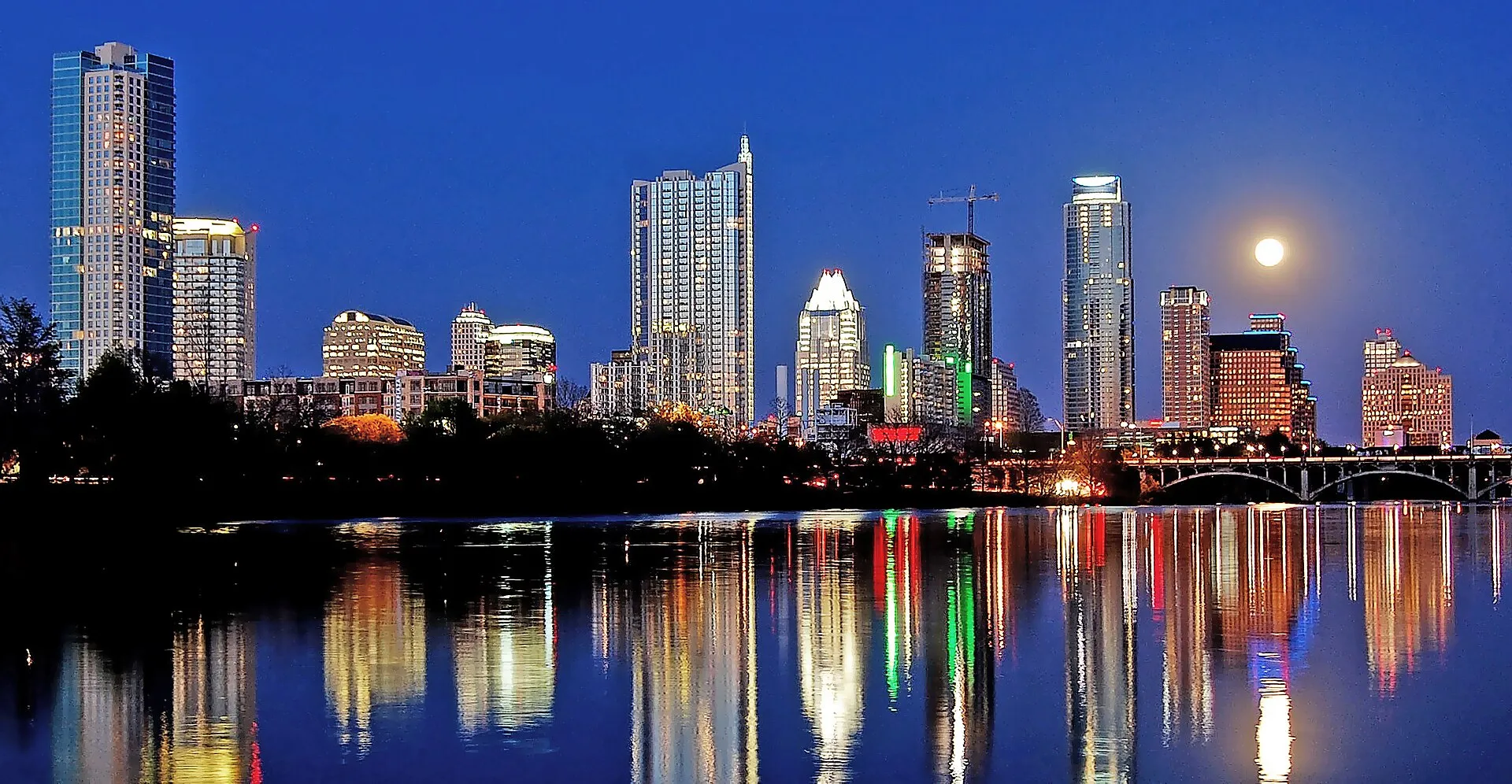
The reservoir is shallow — rarely more than 14 feet deep — and narrow, tracing the original river channel for close to five miles between the two dams. Barton Creek joins from the south near Barton Springs, feeding cool spring water into the lake. To protect this urban waterway, the city bans gas-powered motorboats entirely; only kayaks, canoes, stand-up paddleboards, rowing shells, and small electric craft are allowed, which is why the water stays glassy and quiet enough for a sunrise paddle beneath the skyline.
Wildlife
Witnessing 1.5 million Mexican free-tailed bats spiral from beneath the Congress Avenue Bridge is one of Austin's defining experiences. The colony chooses this bridge for its expansion joint crevices, which provide ideal roosting conditions. The population swells each August when pups join the nightly hunt, and the bats consume an estimated 10,000-30,000 pounds of insects every evening.
Beyond the famous bat spectacle, the lake harbours an ecosystem that most joggers never notice. Great blue herons stand motionless in the shallows, painted turtles stack themselves on fallen logs, and kingfishers patrol the quieter inlets. River otters occasionally surface along the less-trafficked western stretches. Native plants that Lady Bird Johnson championed along these shores have regenerated habitat corridors connecting the urban lake to surrounding Hill Country ecosystems. Her environmental legacy, which includes the Lady Bird Johnson Wildflower Center she founded south of the city, receives its most fitting tribute here on the lake that bears her name.
Trails
🦇 Bat emergence at Congress Avenue Bridge: Watch from the bridge rail or the TGI Friday's patio below as 1.5 million bats spiral into the dusk sky in a twisting column. 🚣 Sunrise paddle: Launch a kayak from the Rowing Dock before 7 AM and glide through mist as the downtown towers catch the first light. 🚶 Boardwalk section: The 1.3-mile boardwalk along the south shore floats over the water and provides the best unobstructed views of the skyline. 🌳 Pfluger Pedestrian Bridge: This graceful footbridge arcs across the lake near Lamar Boulevard, offering a mid-trail viewpoint where you can see both directions of the waterway. 🐢 Turtle spotting at Red Bud Isle: The small island at the western end of the lake is a designated off-leash dog park surrounded by turtle-covered logs and wading herons. 🌝 Moonlight trail run: The lit sections of the trail make evening runs popular year-round, and full-moon nights bring a festive atmosphere to the path. 🌱 Zilker Park trailhead: Start at the western end where the trail connects to Zilker Park and Barton Springs, allowing a full day of outdoor activities along the same corridor
When to Visit
Trail access: The hike-and-bike trail is open 24 hours, with most sections lit at night. Kayak and paddleboard rentals: Typically available from 7 AM to sunset, with multiple vendors along the south shore. Best time for paddling: Early morning before 9 AM when the water is glassy and the heat has not yet arrived. Bat viewing season: March through October, with bats emerging 20 to 30 minutes before sunset nightly; August is peak season when young bats join the colony. Avoid running midday: From May through September, temperatures along the trail can exceed 100°F by noon; dawn and dusk are far more comfortable
Admission and Costs
Trail access: Completely free at all times. Single kayak rental: $15-20 per hour from lakeside vendors along the south shore. Stand-up paddleboard rental: $15-25 per hour. Guided naturalist kayak tour: $60-90 per person for a 2-hour paddle with an expert covering the bat colony, wildlife, and Lady Bird Johnson's conservation legacy. Private guided tour (walking or paddle): $120-200 for groups up to 6 people. Bat emergence viewing from shore: Free from the Congress Avenue Bridge or either bank.
The Case for a Guide
Witnessing 1.5 million Mexican free-tailed bats spiral from beneath the Congress Avenue Bridge demands more than showing up at sunset. Naturalist guides understand the colony's biology intimately and know exactly where to position you for the most spectacular view.
- Bat colony biology and timing: Guides explain why these bats chose this particular bridge, how the population swells each August when pups join the nightly hunt, and what the presence of North America's largest urban bat colony reveals about Austin's relationship with its wild neighbours.
- Hidden lake ecosystem: Most joggers and cyclists never notice great blue herons standing motionless in the shallows, painted turtles stacking on fallen logs, or kingfishers in the quieter inlets. Guides lead kayaks to the stretches where river otters occasionally surface and point out the native plants that Lady Bird Johnson championed along these shores.
- Lady Bird Johnson's conservation legacy: Her environmental work, which includes the Wildflower Center she founded south of the city, receives its most fitting tribute here on the lake that bears her name — guides articulate that legacy and connect it to the visible restoration of the shoreline habitat.
- Positioning for photographers: Guides have scouted the angles where the downtown skyline reflects most dramatically, where the bat emergence creates the most striking silhouettes against the sunset, and where wildlife encounters happen reliably enough to have your camera ready.
- Connections to the wider outdoor corridor: A guided paddle can become the centrepiece of a full day exploring Austin outdoors, with guides linking the lake to Barton Springs, Zilker Park, and the South Congress neighbourhood at the western end of the trail.
Tips for Visitors
No swimming allowed: Lady Bird Lake has a strict no-swimming policy due to underwater hazards and bacterial levels; use Barton Springs for that instead. Bring water and shade: The trail has limited water fountains and sparse shade on some stretches; carry a bottle and wear a hat during warm months. Rent near the Boardwalk: The south shore between South First Street and I-35 has the most rental options and the easiest lake access for beginners. Combine with South Congress: The South Congress (SoCo) district is a short walk south from the trail, making it an ideal post-exercise reward stop for tacos and shopping. Dog-friendly: Dogs are welcome on leash along the entire trail, and Red Bud Isle at the western end offers off-leash freedom with water access. Bat timing is everything: Arrive at the Congress Avenue Bridge at least 30 minutes before sunset to claim a viewing spot; the emergence lasts only about 20 minutes. Weekend crowds: Saturday and Sunday mornings draw heavy foot and bike traffic on the trail; weekday early mornings offer a more peaceful experience
Frequently Asked Questions
What are the access hours and rental options at Lady Bird Lake?
Trail access: The hike-and-bike trail is open 24 hours, with most sections lit at night. Kayak and paddleboard rentals: Typically available from 7 AM to sunset, with multiple vendors along the south shore.
How much does it cost to access Lady Bird Lake?
Trail access: Completely free at all times. Kayak rental: $15-20 per hour for a single kayak. Stand-up paddleboard rental: $15-25 per hour from lakeside vendors.
Can visitors swim in Lady Bird Lake?
No swimming allowed: Lady Bird Lake has a strict no-swimming policy due to underwater hazards and bacterial levels; use Barton Springs for that instead.