
.jpg)
Overview
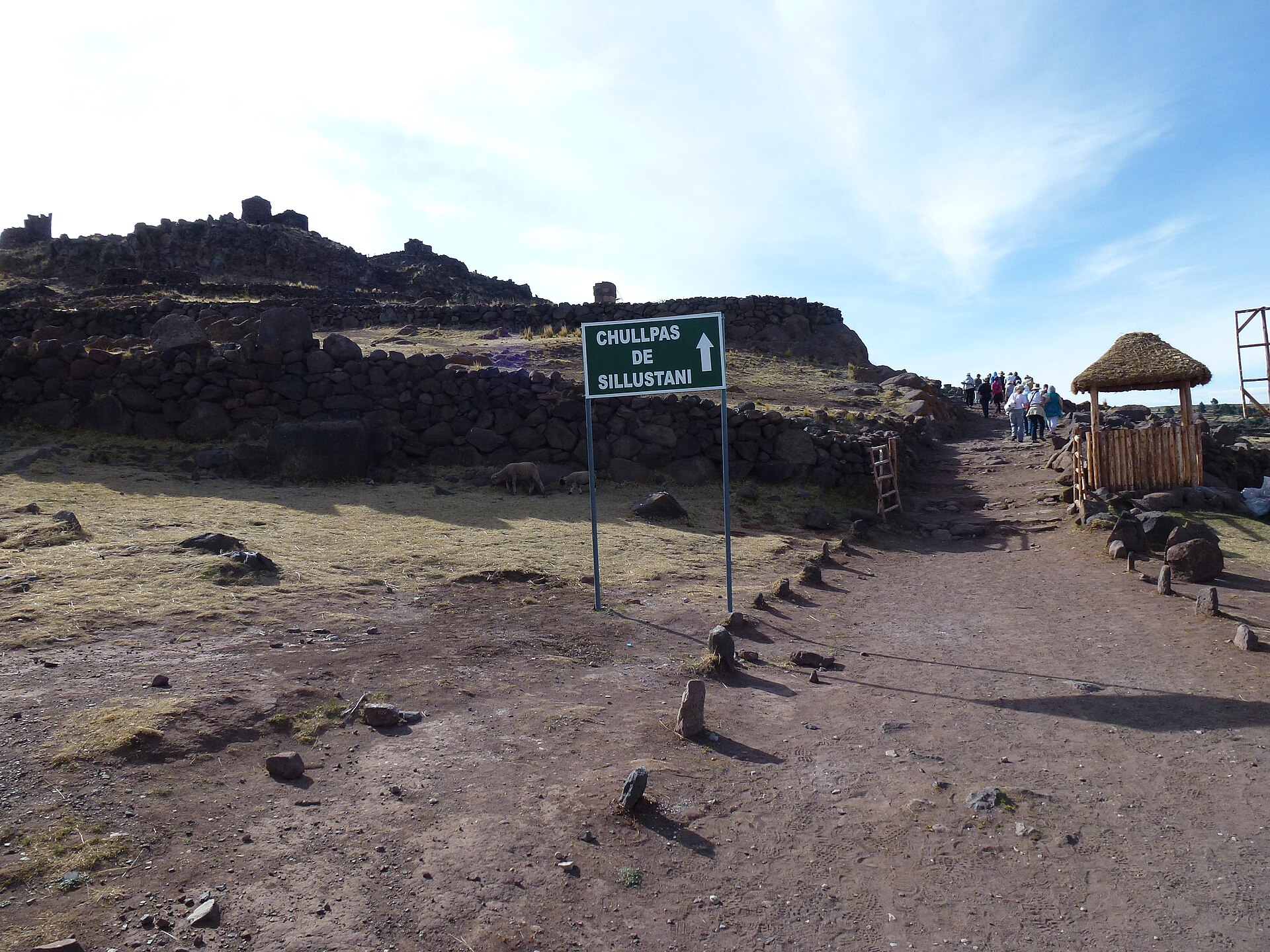
Sillustani is a pre-Inca and Inca funerary complex on a windswept peninsula jutting into Lake Umayo, about 30 kilometres northwest of Puno. The site's most striking features are its chullpas — cylindrical stone burial towers, some reaching 12 meters in height, built by the Colla people (an Aymara-speaking civilization) before the Inca conquered the region in the 15th century. The Colla buried their elite dead in fetal position inside these towers, facing east toward the rising sun, along with food, textiles, and personal possessions for the afterlife. What gives Sillustani its atmospheric power is the setting: the towers stand on a promontory surrounded on three sides by the still waters of Lake Umayo, with the vast altiplano stretching to the horizon in every direction. The stonework ranges from rough-hewn Colla construction to precisely fitted Inca masonry — evidence that the Inca continued to use and modify the site after conquering the Colla. Several towers remain intact, while others have partially collapsed, revealing the burial chambers within. The site is rarely crowded, and in the late afternoon the towers cast long shadows across the grass as the sun sinks toward the lake. A guide transforms what might seem like a collection of old stone cylinders into a vivid narrative of pre-Inca civilizations, ancestor worship, and the clash between Colla and Inca cultures that shaped the Lake Titicaca region.
Excavation History
Chullpa towers: Cylindrical burial towers up to 12 meters tall, built without mortar — some Colla, some Inca, each with distinct masonry styles that a guide explains. Golden hour photography: The towers against the altiplano sunset, reflected in Lake Umayo, produce some of the most dramatic images in the Puno region. Altiplano panorama: The peninsula offers 360-degree views across Lake Umayo and the surrounding grasslands, often with alpacas grazing among the ruins. Burial chambers: Collapsed towers reveal the interior chambers where Colla nobles were interred in fetal position with their possessions. Colla vs. Inca stonework: The contrast between rough-hewn Colla construction and precisely fitted Inca additions tells the story of conquest on a single site. Alpacas and wildlife: Herds of alpacas often graze around the ruins, and Andean lapwings and other highland birds circle the peninsula.
When to Visit
Daily: 8 AM - 5 PM. Best: Late afternoon (3-5 PM) for golden light on the towers and dramatic shadows — this is a photographer's site. Duration: 1-1.5 hours for the main circuit, plus 30 minutes each way from Puno. Combine with Puno arrival: Many visitors stop at Sillustani on the afternoon they arrive in Puno from Cusco.
Admission and Costs
Site entry: S/15 ($4). Group afternoon tour from Puno: S/30-60 ($8-16) per person including transport. Private tour + guide: S/100-200 (~$27-54) with flexible timing.
Tips for Visitors
Afternoon visit: The late-afternoon light is far superior to morning — plan Sillustani for 3-5 PM. Windy and cold: The exposed peninsula catches full altiplano winds — bring a warm windproof jacket regardless of the forecast. Less visited: Sillustani sees a fraction of the visitors that Uros and Taquile receive — you may have the site to yourself, especially late in the day. Arrival day activity: If arriving in Puno from Cusco by bus, Sillustani makes a perfect afternoon stop en route — many tour operators offer this combination. A guide matters: Without context, the towers are mysterious but opaque — a guide explains the Colla civilization, burial practices, and the Inca conquest that changed everything. Sun protection: Despite the cold wind, UV exposure at this altitude is intense — wear sunscreen and a hat.