
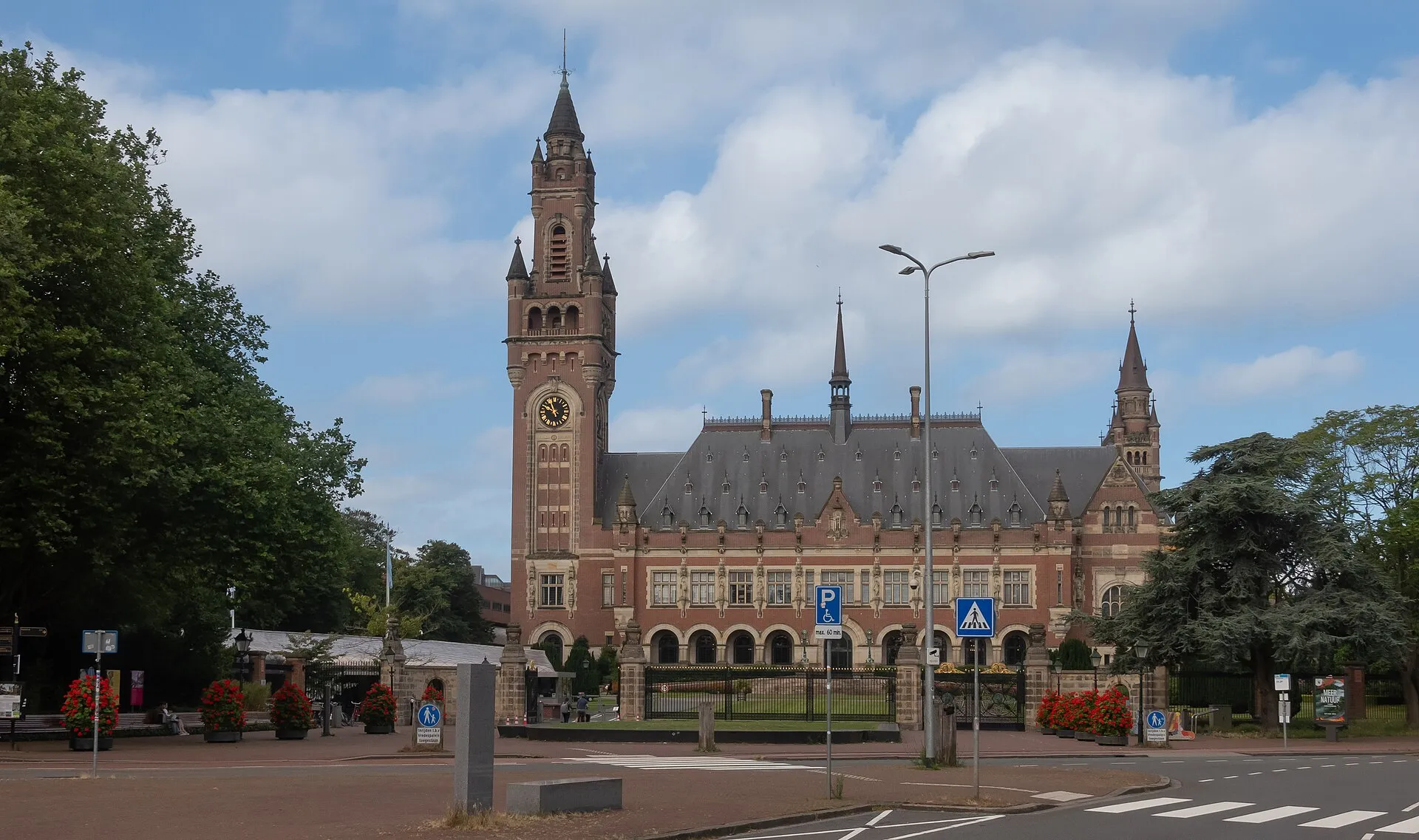
Architecture
Great Hall of Justice: The courtroom where ICJ judges hear cases — 15 judges representing the world's major legal systems sit beneath stained glass windows donated by Britain depicting allegorical scenes of justice. International Donations: Every room contains gifts from nations worldwide — a Japanese room with silk panels, marble from Italy, a Swiss clock that has kept time for over a century, iron gates from Germany. Peace Palace Library: One of the world's most important international law collections, housed in an ornate reading room. Scholars come from around the world to research here. Visitor Center: Interactive exhibits trace the history of international dispute resolution from The Hague Peace Conferences of 1899 and 1907 through the establishment of the UN system. Eternal Flame of Peace: A monument in the palace gardens, visible from outside the fence, commemorating the ongoing pursuit of international peace and justice.
Historical Significance
The Peace Palace embodies over a century of the international community's attempt to replace warfare with law. Carnegie's 1903 donation was inspired by the First Hague Peace Conference of 1899, which established the Permanent Court of Arbitration — the first global institution for peaceful dispute resolution. The building's 1913 opening, one year before the catastrophe of World War I, marked both the high point and the first crisis of the ideal. Yet the institution survived: the Permanent Court of International Justice operated here between the wars, and its successor — the International Court of Justice — continues to adjudicate disputes between nations. The Hague's concentration of international legal institutions (ICJ, ICC, ICTY, OPCW) traces directly back to the Peace Palace's founding vision. Combine with the Binnenhof for a day exploring both Dutch national governance and international justice, or visit Madurodam to see a miniature replica of the Peace Palace alongside other Dutch landmarks.
When to Visit
Visitor Center: Tuesday-Sunday 10:00-17:00 (closed Mondays). Guided palace tours: Available on select days — advance booking required through the visitor center website. Gardens: Visible from the perimeter fence; the Flame of Peace monument is always visible. Best: Weekday mornings for the visitor center; book palace tours as far ahead as possible.
Admission and Costs
Visitor center: €11 adults; €6 children 6-12; free under 6. Guided palace tours: Additional cost; check availability and pricing on the visitor center website. External viewing and gardens: Free — the building is visible from the surrounding streets and park.
Tips for Visitors
Book palace tours early: Interior tours are limited and popular. Book online through the visitor center website as soon as your travel dates are confirmed. Visitor center first: Even without an interior tour, the visitor center provides essential context about international law that makes the exterior architecture more meaningful. Photo opportunities: The palace is best photographed from Carnegieplein, the square in front of the main entrance. The rose garden along the side provides additional angles. Carnegie connection: Visitors interested in Carnegie's philanthropic legacy can see how his vision materialized — the building embodies his belief that institutions, not weapons, should resolve disputes. Combine with city center: The Peace Palace is a 20-minute walk from the Binnenhof — combine both for a day exploring Dutch and international governance.
Frequently Asked Questions
Does the time of year affect a visit to the Peace Palace?
The visitor center and guided palace tours operate year-round with consistent quality, making seasonal timing less critical than at outdoor attractions. However, April through October offers the most pleasant weather for appreciating the manicured grounds and rose gardens surrounding Andrew Carnegie's gift to international law. Interior tours may be restricted during active ICJ hearings, which can occur any time of year, so always book ahead.
When can visitors tour Peace Palace?
Visitor Center: Tuesday-Sunday 10:00-17:00 (closed Mondays). Guided palace tours: Available on select days — advance booking required through the visitor center website.
How much is the entrance fee for Peace Palace?
Visitor center: €11 adults; €6 children 6-12; free under 6. Guided palace tours: Additional cost; check availability and pricing on the visitor center website.
What should visitors know before visiting Peace Palace?
Book palace tours early: Interior tours are limited and popular. Book online through the visitor center website as soon as your travel dates are confirmed.