
Architecture
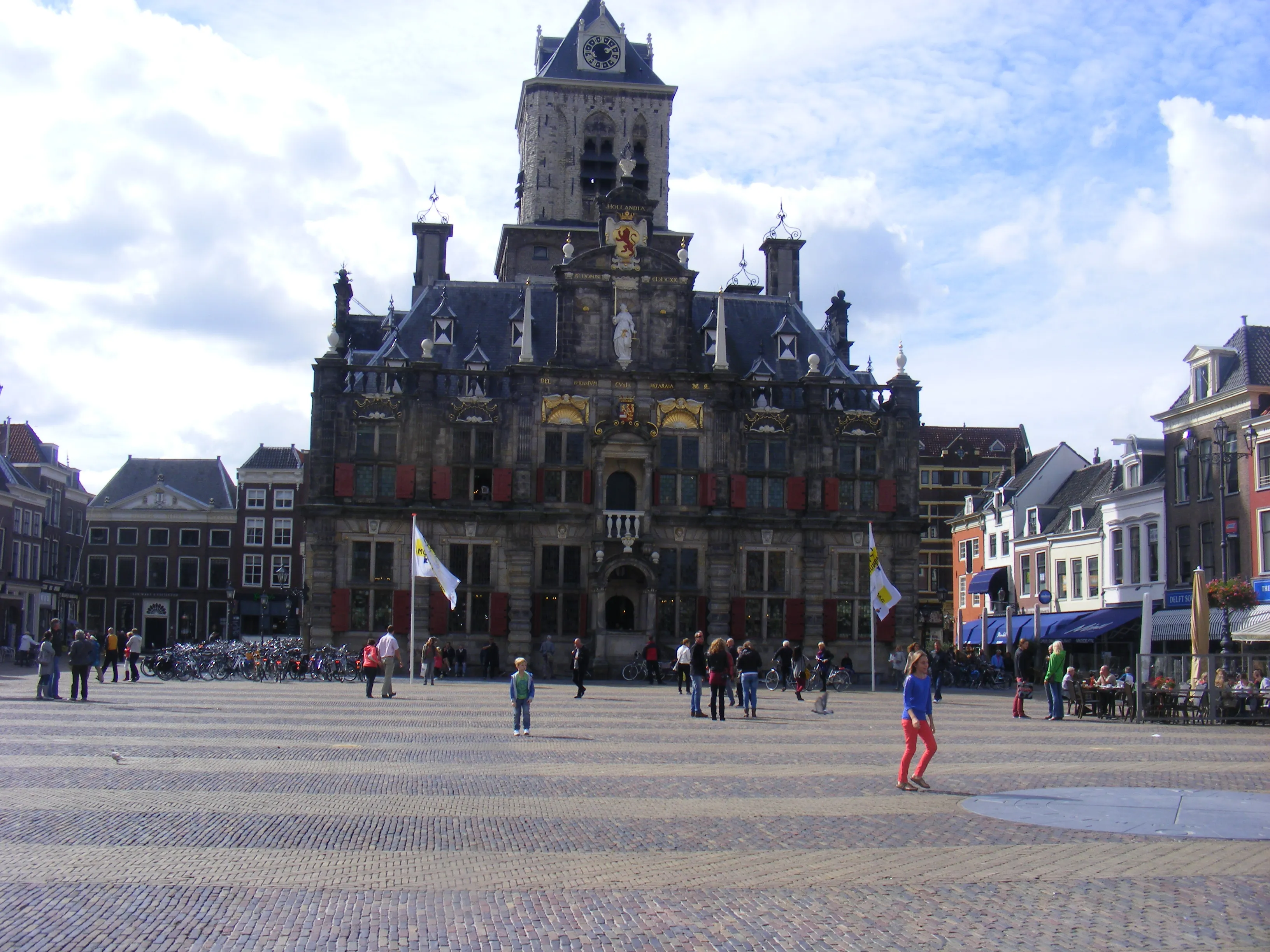
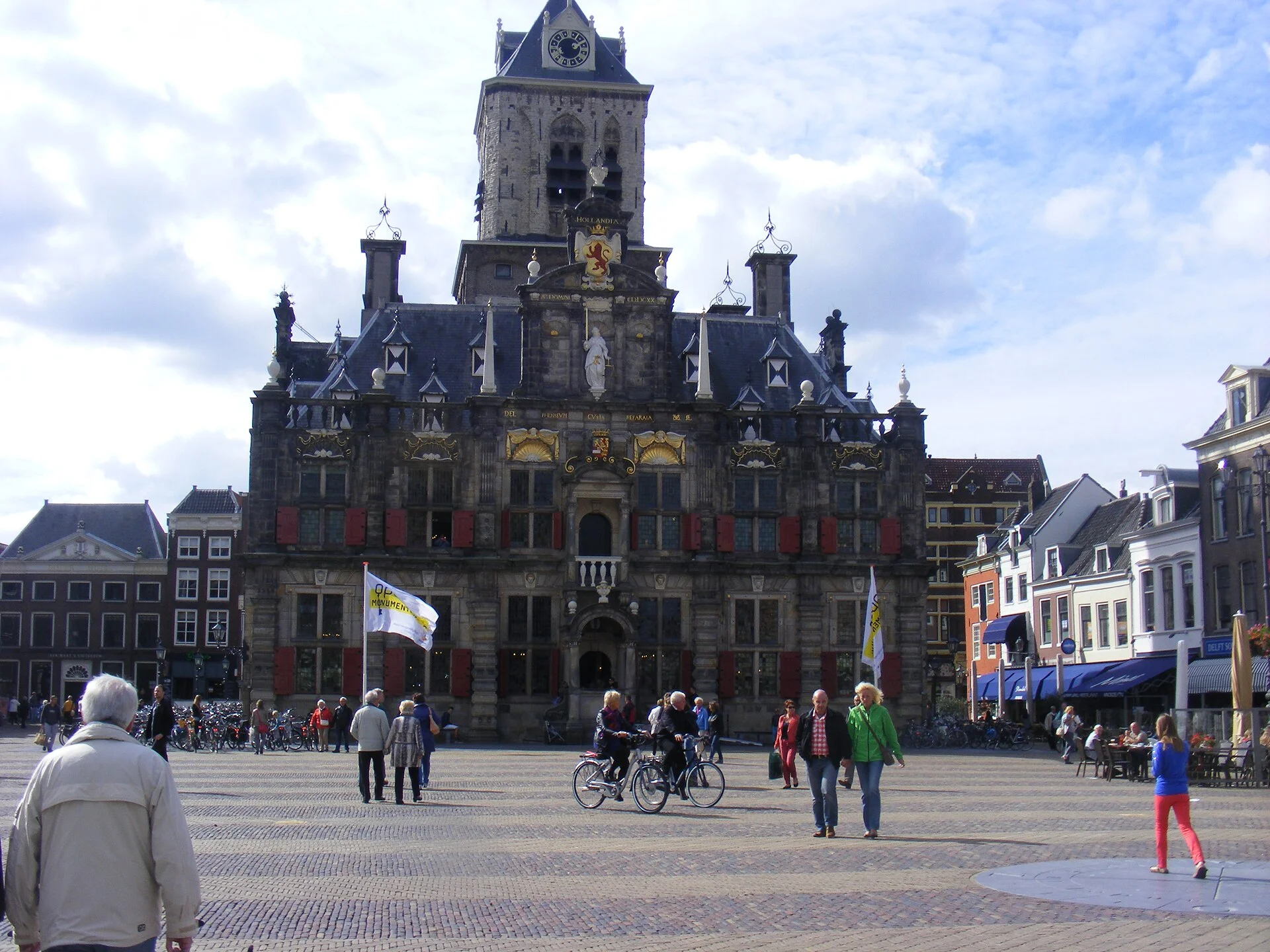
De Keyser's Renaissance facade: A symmetrical sandstone-and-brick front of about 1618-1620 by Hendrick de Keyser, alive with red-and-white shutters, pilasters, and gilded heraldry. Medieval Het Steen tower: The 13th-century stone tower embedded in the building — the oldest element, far plainer than the festive front grafted around it. A building of two eras: The contrast of dour medieval prison-tower and exuberant Renaissance facade tells the structure's whole history in a single elevation. The vierschaar: Inside, the historic tribunal room where justice was once dispensed survives as part of the ceremonial interior. Civic symbolism: Coats of arms, the city's patron imagery, and the prominent clock announce the building's role as the seat of Delft's government. Squared to the church: The facade was composed to converse with the Nieuwe Kerk tower opposite, framing the Markt as a unified civic stage.
Historical Significance
Seat of city government: The Stadhuis has been the ceremonial heart of Delft's administration for centuries and remains the venue for the city's civil weddings. The assassin's prison: Het Steen held Balthasar Gérard after he shot William of Orange in 1584; he was interrogated and tortured here before execution — binding the City Hall directly to the nation-defining murder at the Prinsenhof. One architect, two monuments: Hendrick de Keyser designed both this facade and William's tomb in the Nieuwe Kerk, making the Markt a De Keyser ensemble. Justice on the square: Public punishments were carried out on the Markt before the Stadhuis, the medieval theatre of civic justice. Continuity: From medieval prison to Renaissance town hall to today's wedding venue, the building shows seven centuries of unbroken civic use at the city's centre.
Stadhuis in Pictures
When to Visit
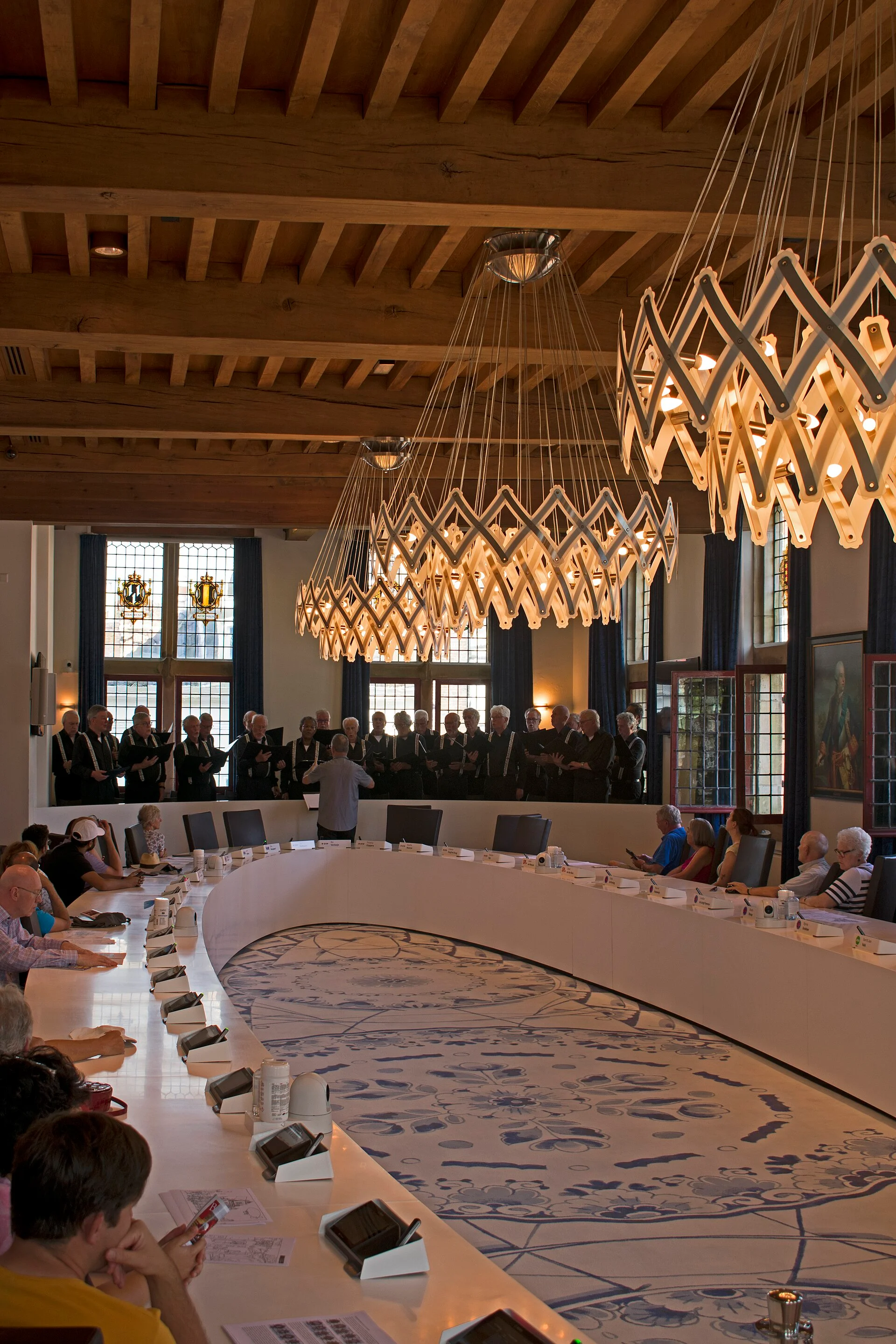
Open: The exterior can be admired from the Markt at any time, free of charge. Interior access: Limited — the building is used for civil weddings and official functions, opening to visitors mainly for occasional guided tours and heritage days such as Open Monument Day. Best: Late-afternoon light brings out the red shutters and gilding; weekday mornings are quietest on the square. Allow: 10-15 minutes to study the facade and circle the building; more if you catch a scheduled interior tour. Ask the Delft tourist office whether any open days are planned during your visit.
Admission and Costs
Viewing the facade from the Markt is free. There is no permanent paid admission, since the Stadhuis is a working civic building rather than a museum; when interior tours or heritage-day openings are offered they are usually free or low-cost (a few euros). If you are combining the City Hall with paid sights, budget for the Nieuwe Kerk opposite (about €9 / $10 with the tower) and Royal Delft a short walk away. Group walking tours of the historic centre that pause at the Stadhuis cost roughly €0-12 ($0-13).
The Case for a Guide
The Stadhuis is the perfect demonstration of why a guide changes a Delft visit: the cheerful red-shuttered facade gives no hint of the medieval prison tower inside or the grim history attached to it. A guide reveals Het Steen, explains that William of Orange's assassin was tortured within it, and walks you across the square to the Prinsenhof where the murder happened and the Nieuwe Kerk where the victim lies — completing a story scattered across three buildings. Guides also unpack the architecture, pointing out how Hendrick de Keyser unified the Markt by designing both the City Hall and the royal tomb opposite. Because interior access is limited, that narration is the main way to appreciate the building's depth — making the Stadhuis one of the stops on the Markt where a knowledgeable guide adds the most.
Tips for Visitors
Read it against the church: Stand in the middle of the Markt and take in the Stadhuis and the Nieuwe Kerk together — both shaped by Hendrick de Keyser, facing off across the square. Spot Het Steen: Look for the older stone tower rising behind the Renaissance front; that medieval core is the former prison. Time it for a wedding day: On wedding days you may glimpse ceremonies and decorated cars at the entrance, adding life to the facade. Catch an open day: Interior visits are rare — if Open Monument Day or a guided tour coincides with your trip, take it. Best light: Photograph the shutters and gilding in warm late-afternoon sun. The Stadhuis is the western anchor of the one-day Delft itinerary.
Frequently Asked Questions
Can you go inside Delft City Hall?
Access to the interior is limited. The Stadhuis is mainly used for the city's civil wedding ceremonies and official functions, and is not a standard museum, but it opens for weddings, occasional guided tours, and special events such as Open Monument Day. Most visitors admire the Renaissance facade from the Markt; ask the Delft tourist office whether any tours or open days are scheduled.
What is Het Steen in Delft City Hall?
Het Steen ("The Stone") is the medieval tower at the heart of the City Hall, dating from the 13th century and the oldest part of the building. It once served as the city prison. Balthasar Gérard, the assassin of William of Orange, was held and tortured in Het Steen in 1584 before his public execution nearby.
Who designed Delft City Hall?
The Renaissance facade and much of the building were designed by the Dutch architect and sculptor Hendrick de Keyser, who rebuilt the City Hall around 1618-1620 after a fire, incorporating the surviving medieval Het Steen tower. De Keyser also created the marble tomb of William of Orange in the nearby Nieuwe Kerk, so his work bookends the Markt.
Where is Delft City Hall located?
The Stadhuis stands at the west end of the Markt, directly facing the Nieuwe Kerk across the square. It is in the very centre of the historic city, a minute's walk from the Delftware shops, the canals, and the café terraces, and is a natural anchor point for any walking tour of Delft.