
Collections Highlights
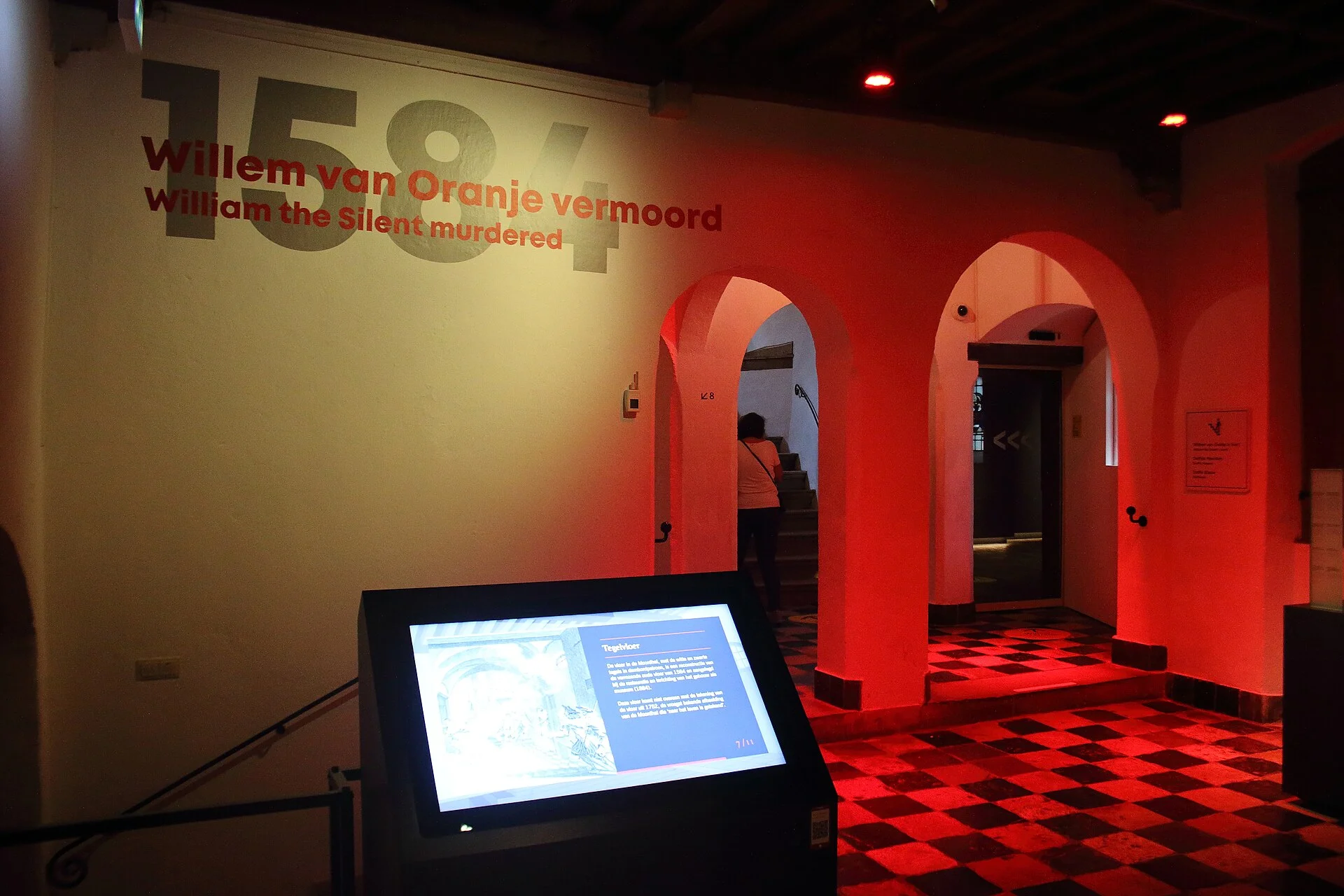
The assassination wall: The two bullet holes from Balthasar Gérard's shot on 10 July 1584, preserved behind glass on the stairwell — the emotional heart of the museum (viewable again once the renovation is complete). William of Orange portraits and tapestries: Images and woven hangings tracing the life of the rebellion's leader, the "Father of the Fatherland." Delftware collection: Tin-glazed blue-and-white earthenware that connects the museum directly to Royal Delft across town. Dutch Golden Age paintings: Works from the era that produced Vermeer and Van Leeuwenhoek, both buried nearby in the Oude Kerk. Civic silver and Revolt artefacts: Objects from Delft's role as the headquarters of the Dutch Revolt against Spain. (Galleries are closed during the 2025-2027 renovation; this is what the reopened collection covers.)
Guided Tours
Even with the galleries closed, the Prinsenhof is one of the most rewarding stops on a guided walk through Delft, because the story is inseparable from the place. A guide standing in the courtyard can recount the day William of Orange was shot — where he had dined, where Gérard waited, how the assassin was caught and executed at the Stadhuis on the Markt — far more vividly than any label. History-focused guides set the Prinsenhof inside the wider Dutch Revolt: why Delft became the rebellion's capital, how William's death galvanised the new Republic, and how that Republic bankrolled the Golden Age of Delftware, science, and painting. Combine the Prinsenhof with the Oude Kerk, the Nieuwe Kerk where William is entombed, and Royal Delft for a day that runs from the assassination to the royal tomb to the city's signature craft.
Museum Prinsenhof Delft in Pictures
When to Visit
Status: Closed for renovation since January 2025, with reopening expected in 2027 — confirm on the museum's official website before visiting. While closed: The exterior, the courtyard, and the surrounding lanes behind the Oude Kerk remain freely accessible and are a fixed point on Delft walking tours. When open (historic pattern): Generally Tuesday-Sunday from late morning to late afternoon, closed Mondays. Best: Allow 1.5-2 hours for the galleries and the assassination room once the museum reopens; for now, 15-20 minutes in the courtyard is enough to absorb the setting with a guide.
Admission and Costs
While closed: Standing in the courtyard and viewing the exterior is free, and most guided Delft walking tours include the Prinsenhof at no extra cost as part of the William of Orange story. When open (historic pricing): General admission was around €14 (about $15) for adults, with reductions for children and free entry on the Museumkaart. Reopening prices for 2027 had not been published at the time of writing — check the official website. Combine a Prinsenhof stop with paid visits to Royal Delft and the Nieuwe Kerk to build a full day even while the galleries are shut.
The Case for a Guide
The Prinsenhof rewards a guide more than almost any site in Delft, precisely because — during the renovation — there is no exhibition to read the story off the walls. The bullet holes are the kind of relic that means little without context and everything with it: a guide explains who William of Orange was, why a Catholic fanatic murdered him, and why a hole in a wall became a founding symbol of the Dutch nation. Guides also close the loop across the city — pointing out that the assassin was held and executed at the Stadhuis, that William lies in state in the Nieuwe Kerk, and that the same revolt and trade that flowed from it paid for the canal houses you walk past. It is the connective tissue of a Delft tour, turning scattered monuments into a single, coherent national story.
Tips for Visitors
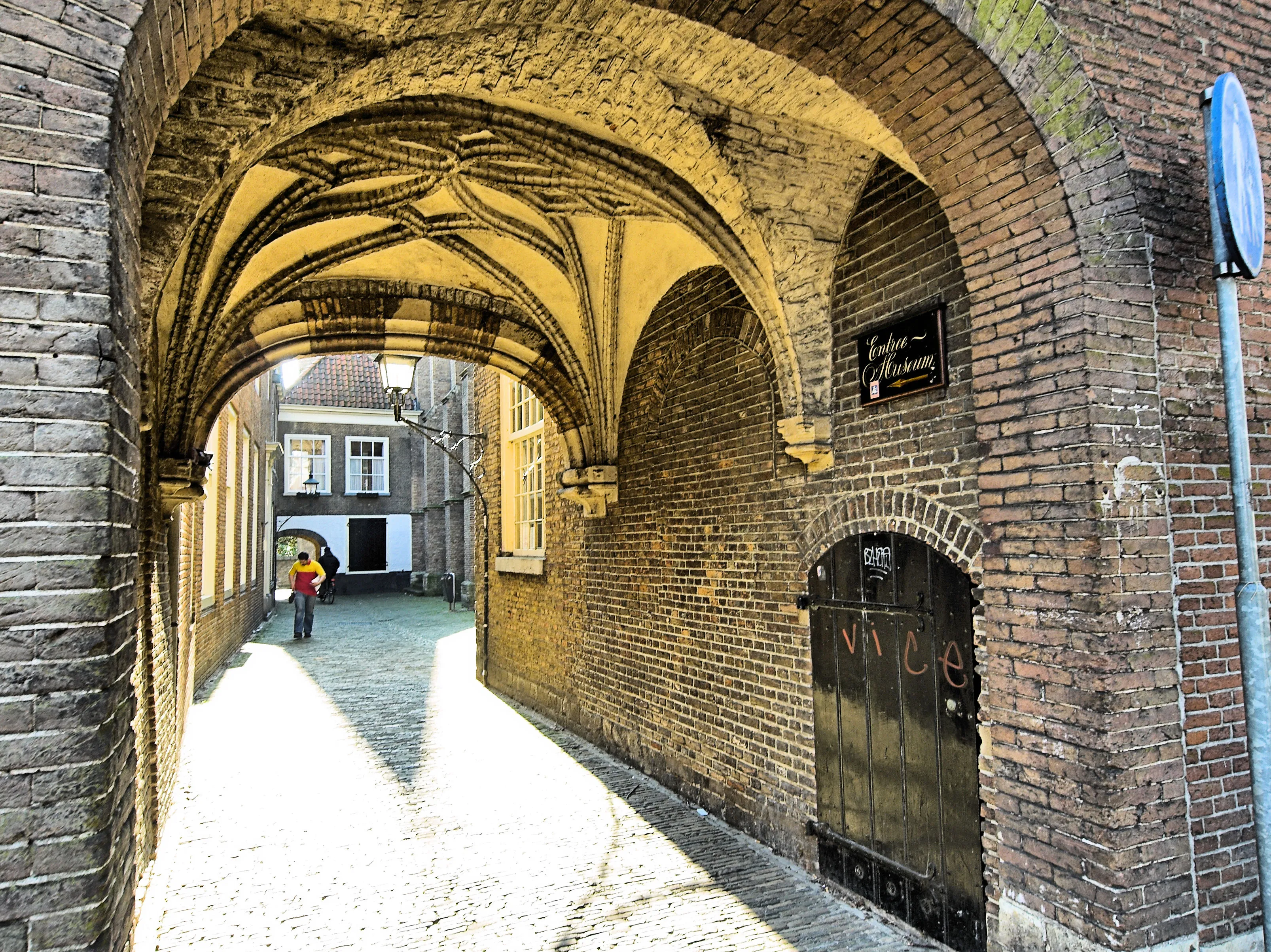
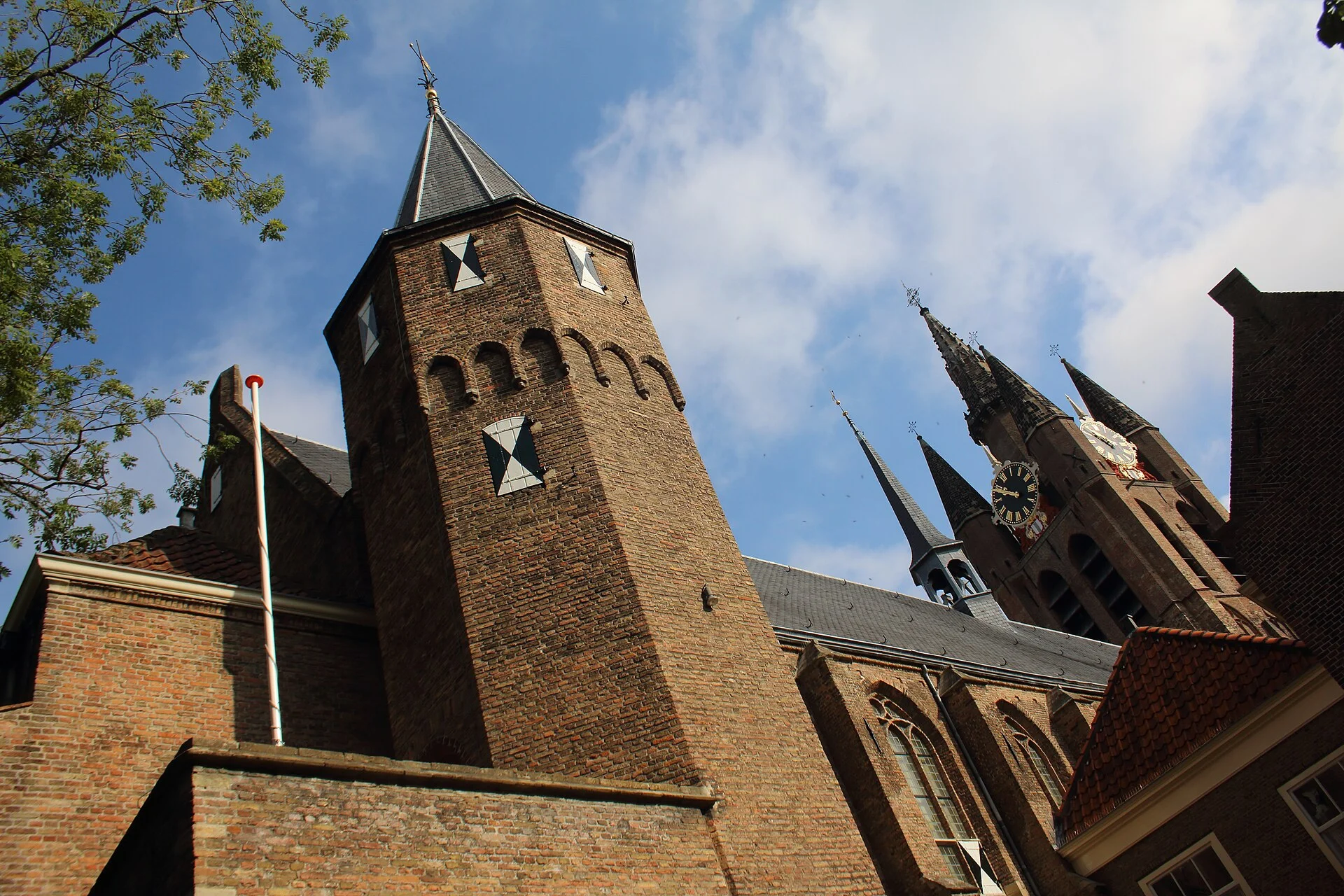
Check before you go: Because the museum is closed until roughly 2027, confirm the status on the official website so you are not expecting to see the bullet holes inside — during the renovation they are not viewable. See the courtyard anyway: The peaceful inner court, entered from Sint Agathaplein, is open and atmospheric, and it is where guides tell the assassination story. Pair with the Oude Kerk: The Oude Kerk is steps away, so the two combine naturally — see the one-day Delft itinerary for the route. Watch for pop-up displays: During the renovation, parts of the Prinsenhof collection sometimes travel to other Delft venues; ask your guide or the tourist office what is currently on view in town. Photograph the facade: The stepped brick gables and the courtyard well make strong photos regardless of whether the galleries are open.
Frequently Asked Questions
Is Museum Prinsenhof Delft open in 2026?
No. The museum closed in January 2025 for a major renovation and is expected to reopen in 2027. While the galleries are shut, the building and its courtyard remain a key stop on Delft walking tours for the story of William of Orange, and guides cover the assassination site from outside. Check the museum's official website for the latest reopening date before planning a visit inside.
Where was William of Orange assassinated?
William of Orange — William the Silent — was shot on 10 July 1584 in the Prinsenhof in Delft, then his residence, by Balthasar Gérard. He was hit on the stairwell as he came down from dinner. The two bullet holes are preserved in the wall behind protective glass and are among the most visited historical relics in the Netherlands.
What is in the Prinsenhof museum collection?
When open, the museum displays Dutch Golden Age paintings, antique Delftware, William of Orange tapestries and portraits, Delft city silver, and contemporary art, set inside a former convent. Its core narrative covers the Dutch Revolt against Spain and the founding of the Dutch Republic, with the assassination room as the emotional centre.
Why is the Prinsenhof important to Dutch history?
The Prinsenhof was the court of William of Orange during the revolt against Spanish rule, making Delft the de facto capital of the rebellion. His murder here in 1584 turned the building into a national memorial — the place where the leader often called the "Father of the Fatherland" died, and where the modern Dutch state traces part of its origins.