

Overview
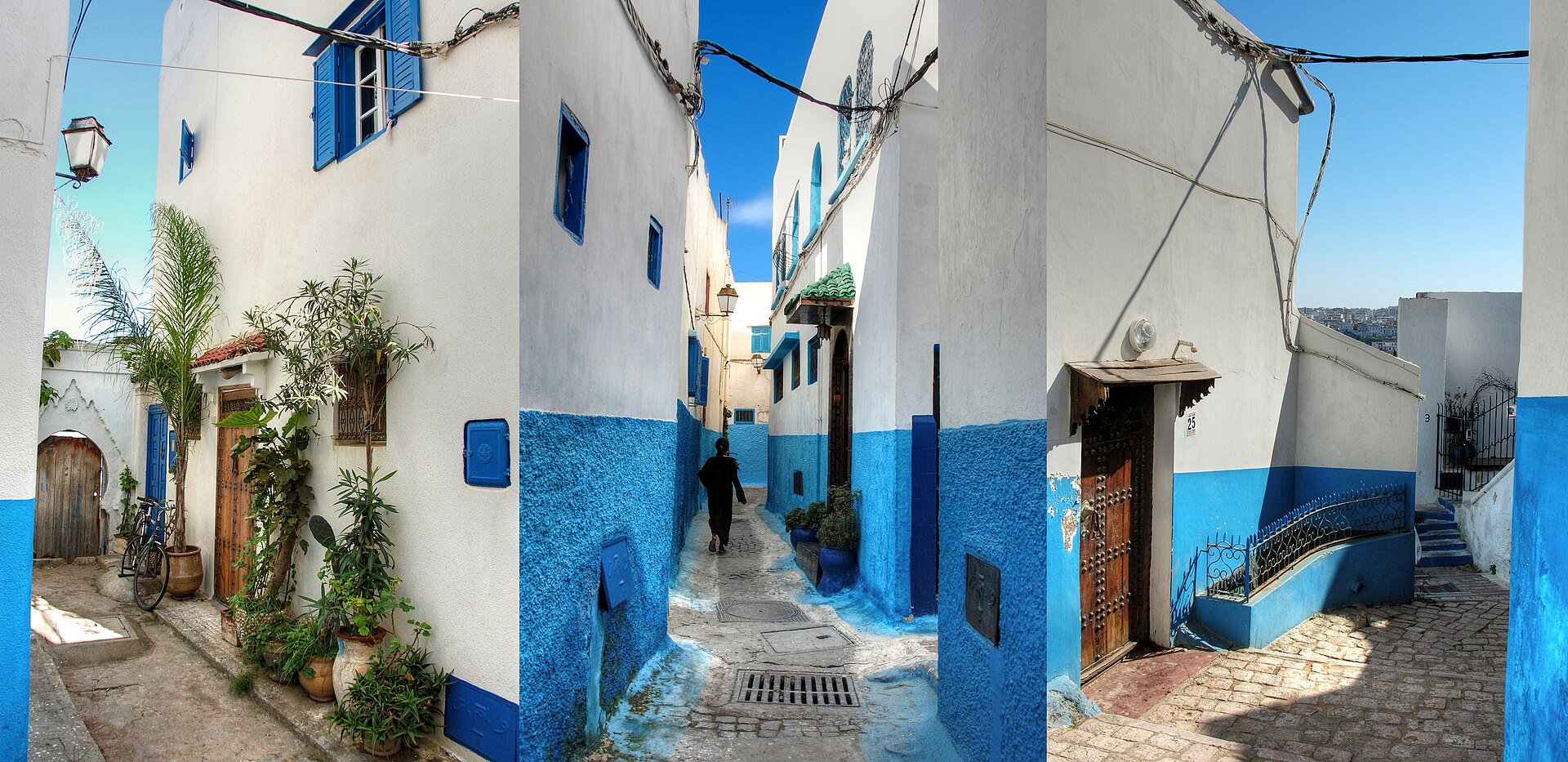
Perched on a rocky cliff at the mouth of the Bou Regreg river, the Kasbah of the Udayas has guarded Rabat's northern flank since the Almohad dynasty fortified the site in the 12th century. Named after the Udaya tribe, a warrior Arab clan stationed here by Sultan Moulay Ismail in the 17th century to defend against European naval attacks, the kasbah today is a tranquil residential quarter of narrow blue-and-white painted lanes that recall Chefchaouen on a smaller scale. Its crowning feature is the Andalusian Garden, created during the French Protectorate in a traditional Islamic garden style with citrus trees, fountains, and flowering hedges.
From the ramparts, views span the Atlantic Ocean, the river, and the city of Salé opposite. A guide recounts the kasbah's role defending against Portuguese, Spanish, and pirate attacks across five centuries, and explains the Islamic paradise garden principles behind the Andalusian Garden. Combine with Hassan Tower (15-minute walk along the river) and Chellah for a full Rabat day.
Historical Significance
The monumental Bab Oudaia gateway is a masterpiece of 12th-century Almohad Islamic military architecture — a guide decodes the horseshoe arch, carved arabesques, and Kufic inscriptions that mark it as one of the finest monumental doors in Morocco. In the 17th century, the kasbah sheltered the Republic of Salé's corsairs — the Barbary pirates who raided European shipping from this clifftop fortress. Guides tell the tales of this pirate republic that operated semi-independently from the Moroccan sultan. The Andalusian Garden follows Islamic paradise garden principles — four quadrants representing the four rivers of paradise — that a guide explains in both botanical and spiritual terms. Families still live inside the kasbah, and a guide shares neighborhood lore and history without intruding on residents' privacy. The Musee des Udayas, housed in a 17th-century palace, displays Moroccan jewelry, carpets, and traditional instruments.
Architecture
Bab Oudaia — the grand Almohad gateway with carved stone arabesques — is one of Morocco's finest monumental doors, a 12th-century masterwork that sets the tone for the entire kasbah. The narrow blue-and-white painted lanes evoke the same tradition as Chefchaouen, but with fewer tourists and a quieter atmosphere. The Andalusian Garden features citrus trees, rose bushes, bougainvillea, and fountains in a walled Islamic garden that provides one of the most tranquil spaces in Rabat. The north-facing ocean platform on the ramparts offers sweeping views where the Bou Regreg river meets the Atlantic — one of the most dramatic viewpoints in the city. Cafe Maure, a terrace cafe overlooking the river, serves traditional Moroccan pastries and mint tea in a setting that has barely changed in decades. The Musee des Udayas, housed in a 17th-century palace within the walls, displays Moroccan jewelry, carpets, musical instruments, and traditional dress.
When to Visit
Kasbah streets: Always accessible (residential neighborhood). Andalusian Garden: Daily 8:00 AM - 6:30 PM (closes 5:30 PM in winter). Musee des Udayas: Wednesday-Monday 9:00 AM - 4:00 PM (closed Tuesdays). Best time: Late afternoon (4-6 PM) when golden light illuminates the blue walls and the Atlantic catches the sunset. Allow: 1-1.5 hours for the kasbah streets, garden, and viewpoints.
Admission and Costs
Entering the kasbah: Free. Andalusian Garden: Free. Musee des Udayas: 10 MAD (less than €1). Private guide for kasbah: 200-400 MAD (€18-37) for a focused 1-hour tour. Combined Rabat tour including kasbah: 500-900 MAD (€46-83) for a half-day.
Tips for Visitors
Enter through Bab Oudaia: The main gate on the south side is both the most impressive entrance and the easiest to find. Steep and narrow: Cobblestone lanes inside the kasbah are uneven; wear comfortable shoes. Photography: The blue-and-white streets are extremely photogenic; best light in morning or late afternoon. Cafe Maure: Settle into the terrace cafe for mint tea and watch river traffic; a perfect pause mid-tour. Residential respect: People live here year-round; keep voices down and ask before photographing residents. River crossing: Small rowboats at the base of the kasbah ferry passengers to Salé for 5 MAD.