
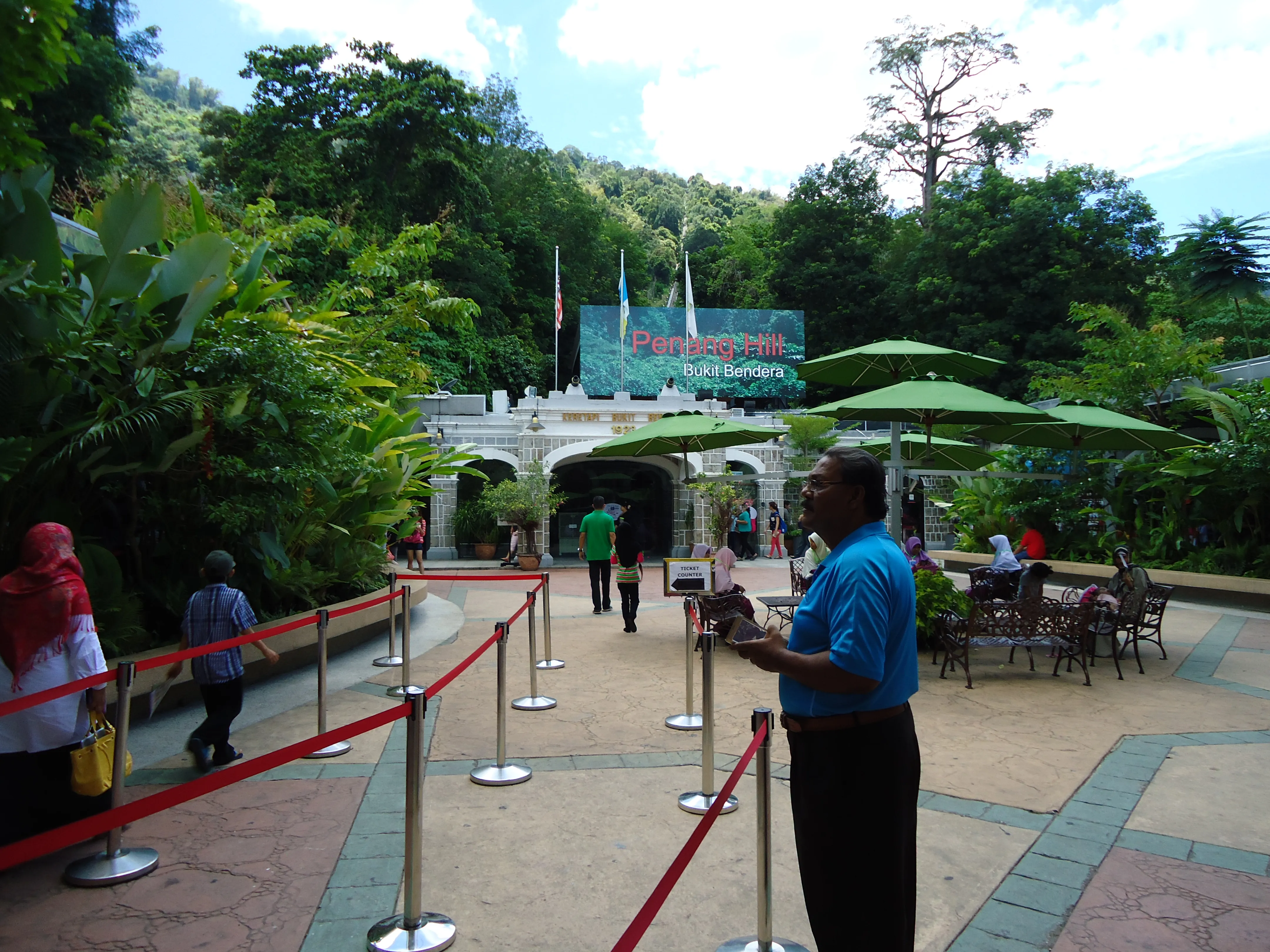
Formation
Penang Hill is formed from Permian-age granite (approximately 250–300 million years old) — the same rock that forms the spine of the Malay Peninsula. The island itself was once connected to the mainland; the Strait of Malacca formed as sea levels rose following the last ice age. The hill's granite resists erosion while the surrounding lowlands were carved away, leaving this elevated massif as the island's interior backbone.
The dense forest cover on the steeper slopes has preserved the hill's ecology while Penang's urban areas expanded at its base. The forest is classified as lowland dipterocarp forest transitioning to montane forest on the upper slopes — a compressed elevation gradient that creates unusual ecological diversity in a small area. The hill's mists, generated when warm humid air rises and cools against the granite, maintain the canopy moisture conditions that pitcher plants and orchids require.
Trails
Upper Station area (accessible without trail gear):
- Curtis Crest Treetop Walk (The Habitat): 1.68 km suspended walkway, 22m above ground at peak height; RM 48 adult, guided tours available
- Upper Station viewpoint terraces: Free with funicular ticket; 180° views across George Town and the Strait
- Bungalow gardens and colonial precinct: Self-guided walking among the Victorian-era buildings, mosque, and temple; free
- Bellevue Hotel terrace: Open to non-guests for food and drinks with panoramic views
Heritage walking trail (moderate, 4.5 km, 2–3 hours one way):
- Starts at Lower Station, follows the original mule track used before the funicular existed
- Passes through protected forest with bird-watching opportunities; best in early morning
- Requires reasonable fitness; a guide familiar with the trail is strongly recommended for navigation and wildlife spotting
Note: The overnight stay option in the colonial bungalows (Bellevue Hotel) provides dawn access to the forest before the funicular crowds arrive — guides can arrange this as part of a full Penang itinerary.
When to Visit
Penang Hill Railway hours: Daily 6:30 AM – 10:00 PM; trains every 10–20 minutes (more frequent on weekends)
The Habitat hours: Daily 8:00 AM – 8:00 PM (last entry 7:00 PM); Curtis Crest closes at 7:30 PM
Recommended timing:
- Sunrise visit: Funicular at opening (6:30 AM), hilltop by 6:45 AM; forest birds most active before 8 AM; George Town at your feet in morning mist
- Sunset visit: Arrive hilltop by 5:30 PM; watch sunset from the western terraces; return by 7–8 PM to avoid queue
- Weekday vs. weekend: Weekdays dramatically less crowded; Saturday and Sunday afternoons can mean 45–90 minute waits at the lower station
Visit duration:
- Hilltop views + colonial precinct only: 1.5–2 hours
- Adding The Habitat Treetop Walk: 3–4 hours total
- Full day with heritage trail descent: 6–8 hours
Admission and Costs
Penang Hill Railway (funicular):
- Adult: RM 30 ($6.80 USD) return
- Child (4–12): RM 15 ($3.40 USD) return
- Senior (60+): RM 15 ($3.40 USD) return
The Habitat:
- Adult: RM 48 ($11 USD) (includes Curtis Crest Treetop Walk)
- Child (4–12): RM 24 ($5.50 USD)
- Guided Habitat nature walk (add-on): RM 120–180 ($27–41 USD) per group of up to 6
Food and drink at the top:
- Café/restaurant options at Upper Station and Bellevue Hotel; mains RM 15–45 ($3.40–10 USD)
Guided tours from George Town (including transport + funicular + Habitat): RM 200–350 ($45–79 USD) per group
The Case for a Guide
Penang Hill's viewpoints are self-evident — the panorama is magnificent and requires no explanation. Where a guide transforms the experience is in the forest layer: the ecological and historical stories invisible to most visitors. A naturalist guide identifies the bird calls echoing through the canopy (Penang Hill has over 200 bird species including several rarely seen elsewhere in Malaysia), explains the pitcher plant ecology, and knows the specific forest patches where slow lorises and flying squirrels are most likely to be seen at dawn.
For history-focused visitors, a guide brings the colonial precinct to life: the stories of which British families occupied which bungalows, the social dynamics of a colonial hill station where the same elite families spent every hot season for decades, and the political changes that transformed the hill after independence in 1957. The combination of natural history and social history makes Penang Hill one of the richest guided experiences in Penang — far exceeding the sum of its views. For a comprehensive island itinerary, guides connect the hill experience with George Town's heritage streets below and the Kek Lok Si Temple at its base.
Tips for Visitors
- Buy funicular tickets online or arrive early on weekdays to avoid weekend queues — the wait is the only frustration in an otherwise excellent experience
- Dress in layers: The hilltop is noticeably cooler (22–25°C typical) — bring a light jacket or cardigan, particularly for dawn or evening visits
- Binoculars for birds: The forest around The Habitat trails rewards birdwatchers; a guide who knows the hornbill and other hill-specialist species makes early morning visits exceptional
- Don't miss the colonial precinct: Many visitors beeline to The Habitat and miss the Victorian-era bungalows, the tiny hilltop mosque (Masjid Terapung), and the Hindu temple — extraordinary buildings in an extraordinary setting
- Weather caution: Afternoon mist and cloud can obscure views during monsoon months; morning visits are generally clearer
- Return early if visiting at sunset to avoid the last-train crush — leave the hilltop by 8 PM on weekends
- Combine with Kek Lok Si: The Kek Lok Si Temple funicular base station is a 15-minute walk from the Penang Hill lower station at Air Itam — combine both in a single half-day with a guide
Frequently Asked Questions
How do I get to Penang Hill and how long is the funicular ride?
The Penang Hill Railway funicular station is at Air Itam, about 6 km from George Town. From the city, take Rapid Penang Bus 204 from Weld Quay or hop in a Grab (around RM 15–20 / $3–5 USD for the ride). The funicular journey takes approximately 5 minutes to cover 1.8 km at a 40° incline — one of the steepest funicular railways in the world. At the top, the Upper Station at 821 metres sits just below the summit (833 m). Tickets must be purchased at the Lower Station counter or online; buy them on arrival and check wait times, which can reach 45–90 minutes on weekends and public holidays. The funicular runs 6:30 AM to 10 PM daily, with trains departing every 10–20 minutes depending on demand.
What is The Habitat at Penang Hill?
The Habitat is a nature experience centre on the hilltop that opened in 2016, offering access to the hilltop's old-growth tropical forest through a series of guided and self-guided trails. Its signature feature is the Curtis Crest Treetop Walk — a suspended walkway 1.68 km long that weaves through the forest canopy at heights up to 22 metres, with panoramic platforms overlooking both the Strait of Malacca and the forested interior of the island. Entry to The Habitat costs RM 48 ($11 USD) for adults, with guided tours available at additional cost. The nighttime Habitat experience is particularly atmospheric, when the forest sounds intensify and fireflies appear in the valley below. A local guide who knows the forest ecology — the pitcher plants, hornbills, slow lorises, and flying squirrels that inhabit the hill — adds significant depth to what would otherwise be a pleasant walk.
Is Penang Hill worth visiting for the sunrise or sunset?
Both sunrise and sunset are genuinely spectacular from the hilltop, with the horizon views across the Strait of Malacca and the Kedah coast on the mainland providing rare depth of field. Sunrise visits require the earliest funicular (departing lower station at 6:30 AM) and clear skies — morning haze is minimal and the light is cool and blue before warming as the sun lifts. Sunset is the more popular choice: the western horizon view from the summit terraces frames the sun dropping towards the mainland peninsula, while George Town and the Penang Bridge glow below. The temperature at the top is typically 5–8°C cooler than the city, making sunset visits in the lowland evening heat particularly refreshing. Plan to return on the funicular before 8–9 PM if you prefer to avoid the last-train queues.