
Country guide
What makes Malaysia a must-visit destination?
Malaysia is Southeast Asia's most ethnically and ecologically diverse travel destination, packing ancient rainforest, world-class cities, UNESCO heritage towns, and a jaw-dropping food culture into a country roughly the size of Japan. The country straddles two landmasses — Peninsular Malaysia, which stretches south from Thailand, and the states of Sabah and Sarawak on the northern edge of Borneo — separated by the South China Sea but united by Bahasa Malaysia, Islam as the official religion, and a universal passion for eating.
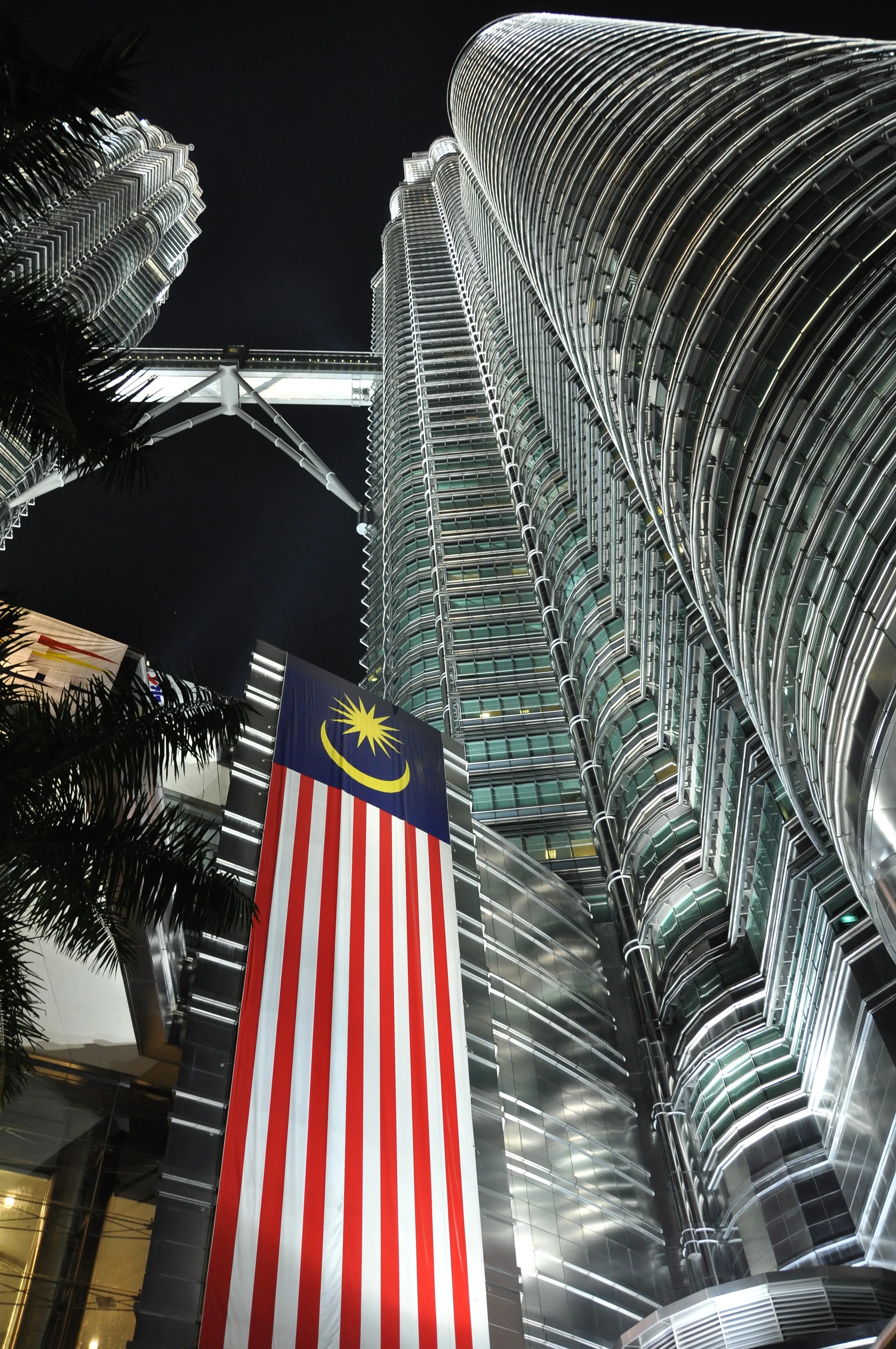
Kuala Lumpur announces itself with the Petronas Twin Towers, the skybridge joining them a gleaming metaphor for a country that engineered its own modernity in a single generation. Yet ten minutes from the towers, the Hindu devotees at Batu Caves climb 272 rainbow-painted steps to a limestone cavern temple that has been active for over a century, and the mamak stalls of Petaling Street serve roti canai around the clock to a clientele that is simultaneously Malay, Chinese, and Indian.
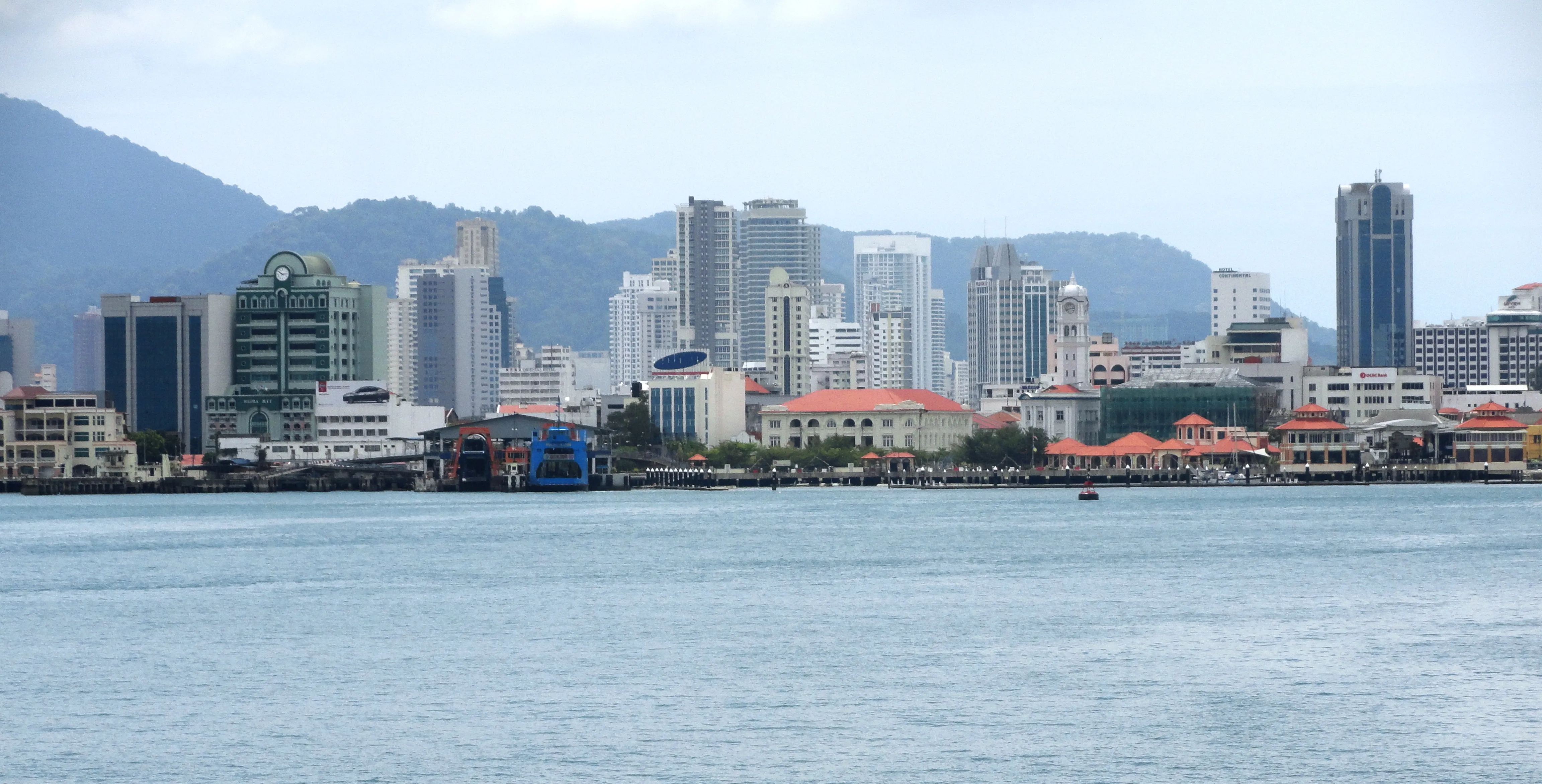
North across the Strait of Malacca, the island of Penang rewards deeper exploration. George Town's UNESCO-listed shophouse streets are covered in painted clan murals, Peranakan tilework, and the smoke of incense from a dozen active places of worship within a single block. Penang Hill rides the oldest funicular railway in Malaysia to a colonial hill station that gazes across the strait at dusk, and Kek Lok Si Temple — Malaysia's largest Buddhist complex — illuminates the entire hillside during Chinese New Year.
For all its city life, Malaysia is fundamentally a tropical-leisure country, and its geography is built for slowing down. The equatorial climate keeps beaches warm every month of the year; the calendar simply shifts which coast is dry. The west coast — Langkawi, Penang, and the Strait of Malacca — enjoys its clearest skies from December to February, while the east coast islands of the Perhentians, Redang, and Tioman peak between April and October, closing to monsoon swell in the northern winter. Between the two lie cool highland retreats such as the Cameron Highlands and Borneo's towering interior, so a visitor can pair a rainforest lodge, a hill-station tea estate, and a barefoot island stay inside a single trip.
A knowledgeable guide is the difference between seeing Malaysia and understanding it. The country's ethnic mosaic means the story behind a single street might weave together Cantonese traders, Tamil labourers, Malay fishermen, and British planters — layers invisible to the unaccompanied visitor but vivid and alive when narrated by someone who grew up inside them.
- Language
- Malay Widely spoken across Malaysia
- Currency
- Ringgit (RM) Legal tender across Malaysia
- Time zone
- UTC+8 Local time in Malaysia
- Power plugs
- Type G · 240V Sockets used across Malaysia
- Getting around
- Domestic flights & rail (KTM) Getting between Malaysia's cities
- Best months
- Jan, Feb, Mar, Apr, May, Jun, Jul, Nov, Dec Averaged across Malaysia's city ratings
Malaysia timeline
-
Malacca sultanate rises
The port kingdom made the Strait of Malacca a crossroads of trade, Islam, and culture.
-
Portuguese take Malacca
European rule began in the strait, adding colonial layers to Malaysia's port cities.
-
Penang colony begins
British settlement added a new port and colonial streetscape to the strait network.
-
Independence
Malaya became independent, shaping the civic story around Kuala Lumpur and Merdeka Square.
-
Malaysia formed
The federation expanded to include Sabah and Sarawak, changing the national travel map.
-
Petronas Towers open
The twin towers gave Kuala Lumpur a global skyline symbol of modern Malaysia.
Local context
Culture and travel signals
Four UNESCO World Heritage Sites spanning living culture and wilderness
George Town and Melaka were jointly inscribed in 2008 as the Historic Cities of the Straits of Malacca, while Borneo's Gunung Mulu National Park and Sabah's Kinabalu Park were listed for their natural value in 2000 — a range that runs from continuously inhabited heritage streets to the largest cave chamber on Earth.
Taman Negara is one of the oldest rainforests on Earth, roughly 130 million years old
The peninsular reserve predates the Amazon and Congo basins and still shelters tigers, tapirs, and the giant Rafflesia — the world's largest single flower — making it a global benchmark for tropical biodiversity rather than a UNESCO listing.
26.1 million international tourists in 2019, generating RM 86.14 billion in receipts
Before the pandemic, tourism was among Southeast Asia's largest inbound sectors and supported millions of Malaysian jobs, drawing visitors from Singapore, Indonesia, China, and across the region to its cities, beaches, and rainforests.
Mount Kinabalu rises to 4,095 m — the highest peak between the Himalayas and New Guinea
The granite massif anchors Sabah's Kinabalu Park, a UNESCO natural site whose altitudinal range stacks lowland dipterocarp forest, mossy cloud forest, and bare alpine rock into a single two-day climb.
Over 800 species of birds, including 50 endemic to Borneo
Malaysia's extraordinary biodiversity spans two biogeographic realms; Peninsular Malaysia shares flora and fauna with mainland Southeast Asia while Borneo hosts species found nowhere else on earth, including the proboscis monkey and the Bornean pygmy elephant.
Malay, Chinese, Indian and indigenous cultures share a single nation
Hari Raya, Chinese New Year, Deepavali, and Sarawak's Gawai all fall within the same calendar, and each community keeps distinct culinary traditions, religious festivals, and architectural styles — a richness that local guides are uniquely positioned to explain and navigate for visitors.
Source: tour-guide.com — Free to cite with attribution
Season planner
A year in Malaysia
Use this best time to visit snapshot as a country-wide average, then check the city guides for local timing.
Mar-May
Spring
Spring holds up well for guided travel in Malaysia, averaging Mar-May (4/5).
Jun-Aug
Summer
Summer stays workable in Malaysia at Jun-Aug (3.7/5), so lean on city-by-city timing.
Sep-Nov
Autumn
Autumn stays workable in Malaysia at Sep-Nov (3.3/5), so lean on city-by-city timing.
Dec-Feb
Winter
Winter is Malaysia's strongest guide window — Dec-Feb (5/5) across its cities.
Where should you go in Malaysia?
The Capital
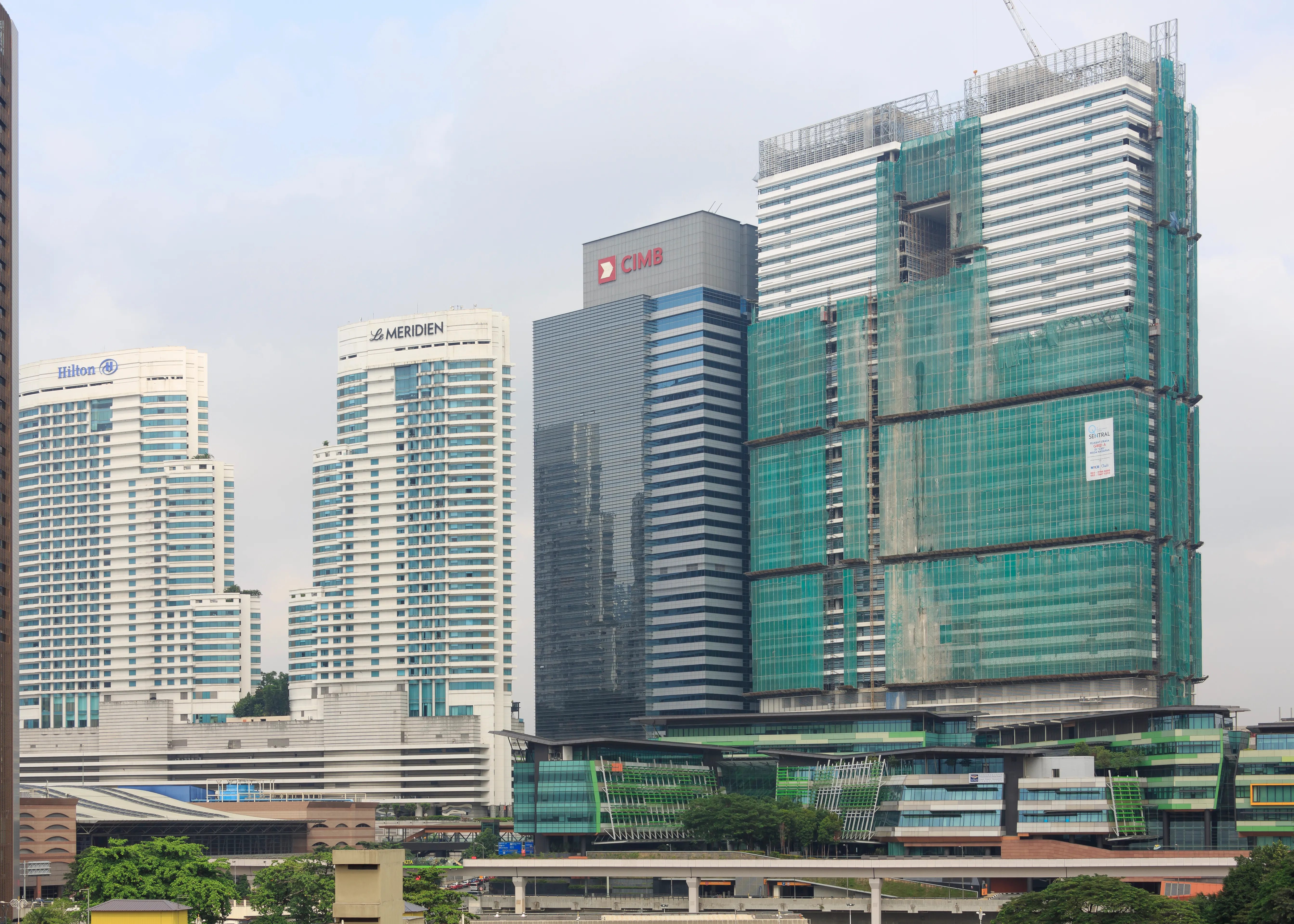
Kuala Lumpur is Malaysia's beating heart — a city of gleaming towers, colonial arcades, and fragrant hawker lanes existing in improbable harmony. The iconic Petronas Twin Towers dominate every skyline photograph, but the city's real texture lives in the mosques and temples of Chinatown, the teeming stalls of Jalan Alor, and the colonial grandeur of Merdeka Square. With a guide, KL's different ethnic quarters open up as distinct worlds within a single city.
The Pearl of the Orient
Penang is the island state that food writers and architects have been writing about for two centuries. George Town, its UNESCO-listed capital, is an open-air museum of colonial shophouses, street art, and clan jetties. The food — char kway teow smoked over fierce flame, assam laksa sour with tamarind, cendol dripping with palm sugar — is justifiably famous across the world. Penang Hill provides the cool, green counterpoint to the city's intensity, and the terraced pagodas of Kek Lok Si Temple crown the hillside above Air Itam village.
Beyond the Peninsula
Further south, Melaka offers another UNESCO heritage city, its harbour layered with Portuguese, Dutch, and British history. Off the northwest coast, the Langkawi archipelago trades heritage for beaches, cable-car rainforest views, and duty-free calm, while the Perhentian Islands and Tioman on the east coast are the peninsula's snorkelling and diving heartland. On Borneo, Kota Kinabalu is the gateway to Mount Kinabalu (4,095 m) and the Coral Triangle's dive sites around Sipadan, while Kuching in Sarawak provides access to the orangutans and proboscis monkeys of Bako National Park and the vast caverns of Gunung Mulu. Every corner of Malaysia rewards exploration with an expert local by your side.
Must-see attractions across Malaysia
These are the sights travelers cross Malaysia for, each anchored to its own city. Pair one with a guide and the context comes alive.
What do visitors need to know about Malaysia?
Weather and When to Go
Malaysia has no winter and no true dry season — only a two-coast monsoon rhythm worth planning around. The west coast (Kuala Lumpur, Penang, Langkawi, Melaka) is at its brightest from December to February and again around June–July. The east coast and its islands (Perhentians, Redang, Tioman) invert that pattern, peaking from April to October and largely shutting down during the November–March northeast monsoon. Borneo broadly follows the east-coast calendar, so plan Sabah diving and Sarawak trekking for the drier middle of the year. Wherever you are, expect daytime highs of 30–33°C, high humidity, and a short, dramatic afternoon downpour that usually clears within the hour — pack light, breathable clothing and a compact umbrella rather than waterproofs.
Where to Stay
- Heritage hotels — restored shophouses and mansions in George Town and Melaka put you inside the UNESCO streetscape; owners often double as the best-connected local guides
- City towers — Kuala Lumpur's Golden Triangle and KLCC deliver skyline-view rooms within walking distance of the Petronas Twin Towers
- Beach resorts — Langkawi's Datai Bay and Pantai Cenang, Penang's Batu Ferringhi strip, and the east-coast islands range from backpacker chalets to five-star hideaways
- Highland retreats — cool-climate hotels in the Cameron Highlands and Genting offer tea-estate walks and a genuine break from the lowland heat
- Rainforest eco-lodges — Taman Negara and Borneo's Danum Valley trade air-conditioning for canopy walkways, night safaris, and a chorus of gibbons at dawn
What to Eat
Malaysia's kitchens are the clearest expression of its plural society. Malay cooking centres on nasi lemak, rendang, and satay; Chinese hawkers perfect char kway teow, bak kut teh, and dim sum; Indian communities bring banana-leaf rice, roti canai, and fiery fish-head curry; and the Peranakan Nyonya tradition fuses all three into dishes like laksa and ayam pongteh. Eating is done best at hawker centres, where a single stall may cook one dish for three generations. A food-focused guide is worth every ringgit — they know which stall has the charcoal wok hei, when the good cendol cart sells out, and how to order for vegetarians and halal diners alike.
Finding a Guide
- Tourism Malaysia (Malaysia Tourism Promotion Board) — maintains a register of licensed guides across states; look for Ministry of Tourism certification
- GetYourGuide, Viator, and Klook — list verified operators for everything from city walks to rainforest treks and food tours
- Heritage hotels and boutique guesthouses — particularly strong in Penang and Melaka, where owners often have deep community connections and can arrange specialist guides
- Local specialists — seek out dedicated food-tour operators, heritage architecture guides, and Borneo jungle trackers for deeper experiences
Typical Costs
| Tour Type | Price Range |
|---|---|
| Group walking tour (3–4 hrs) | RM 80–150 ($18–34 USD) per person |
| Private half-day (up to 4) | RM 300–500 ($68–113 USD) |
| Private full-day with transport | RM 500–900 ($113–204 USD) |
| Food tour specialist (3 hrs) | RM 150–300 ($34–68 USD) per person |
| Rainforest/nature guide (full day) | RM 400–800 ($90–181 USD) per group |
Must-See Experiences
- Petronas Twin Towers — Skybridge and observatory, the defining image of modern Malaysia
- Batu Caves — Hindu temple complex carved into limestone cliffs, 13 km north of KL
- George Town Street Art & Heritage — UNESCO shophouses, clan jetties, and Ernest Zacharevic murals
- Kek Lok Si Temple — Malaysia's largest Buddhist temple, spectacular during Chinese New Year
- Penang Hill — Funicular railway to a colonial hill station with sweeping Strait views
- Petaling Street Chinatown — KL's original Chinese quarter with hawker stalls and night-market energy
Visitor Tips
- Currency: Malaysian Ringgit (MYR / RM); ATMs widespread, cards accepted at malls and hotels, cash essential at hawker centres
- Dress codes: Mosques require covered shoulders, arms, and legs; temples appreciate modest dress; guides always carry spare sarongs
- Tipping: Not mandatory but appreciated; RM 10–20 for a group walk, 10–15% for private guides
- Bargaining: Expected in markets like Petaling Street; guides negotiate in Malay, Cantonese, and Tamil depending on the vendor
- Food safety: Hawker centres are generally safe — guides know which stalls have the best turnover and hygiene
- Transport: Grab (ride-hailing) is reliable and cheap across Malaysian cities; the fast ETS electric train links peninsular cities, KL has good MRT/LRT rail coverage, and Borneo is reached by short domestic flights
- Book ahead: Popular Penang food tours and Batu Caves festival visits sell out weeks in advance; Thaipusam requires very early booking
Frequently Asked Questions
What is the best time to visit Malaysia?
December through February brings dry, sunny weather to the west coast — ideal for exploring Kuala Lumpur and Penang. The east coast monsoon runs November through March, so plan trips to the Perhentian Islands, Redang, and Tioman for April through October, and time Borneo dives for the same drier window. Malaysia sits near the equator, so expect warmth and humidity year-round; temperatures rarely drop below 23°C even at night. The interior highlands — the tea-planted Cameron Highlands and hilltop Genting — stay refreshingly cool at all times.
How much does a tour guide cost in Malaysia?
Malaysia offers excellent value for guided experiences. A group walking tour through Kuala Lumpur's city centre or George Town's heritage streets typically costs RM 80–150 ($18–34 USD) per person for three to four hours. Private half-day tours run RM 300–500 ($68–113 USD) for up to four people, while full-day private tours with transport cost RM 500–900 ($113–204 USD). Specialist food tours and rainforest guides command a premium, running RM 200–400 ($45–90 USD) per person depending on inclusions.
Is English widely spoken in Malaysia?
Malaysia's colonial history has left a strong English foundation — it is one of the few Southeast Asian countries where English is genuinely used in everyday life, not just hotels. Street signs are bilingual in Malay and English, menus in tourist areas list both languages, and most guides speak fluent English. That said, a local guide remains invaluable for navigating Malay, Mandarin, and Tamil communities simultaneously, reading handwritten market prices, ordering off-menu at hawker centres, and unlocking the cultural context that makes Malaysian society so fascinatingly layered.
Where should you stay in Malaysia for a beach holiday?
Malaysia's leisure coast is defined by its islands. Langkawi, a 99-island archipelago in the far northwest, pairs duty-free shopping with the resort beaches of Pantai Cenang and rainforest-backed luxury hideaways along the Datai Bay cliffs — and, crucially, it stays swimmable year-round. On the east coast, the Perhentian Islands, Redang, and Tioman deliver the country's clearest water and best snorkelling, but most resorts close during the November–March monsoon, so an east-coast trip belongs to the April–October dry season. For a city-and-sea combination, Penang sets the Batu Ferringhi resort strip a short drive from the heritage streets of George Town. Inland, the Cameron Highlands and Genting offer cool-climate hotels, while eco-lodges fringe the rainforest of Taman Negara and Borneo's Danum Valley.
What food should you not miss in Malaysia?
Malaysian cuisine is the edible record of the country's migrations. Start with nasi lemak — coconut rice with sambal, fried anchovies, peanuts, and egg, the unofficial national dish — then work through char kway teow, assam laksa, and Hainanese chicken rice. The round-the-clock mamak stalls (run by the Indian-Muslim community) serve roti canai and frothy teh tarik, while Peranakan Nyonya kitchens produce dishes like ayam pongteh that exist nowhere else on earth. Penang is widely regarded as the nation's street-food capital, but Kuala Lumpur's Jalan Alor and the hawker centres of every town reward the curious. Vegetarians are well served, thanks to Malaysia's large Hindu and Buddhist communities and the dedicated (chai) vegetarian restaurants they support.
How many days do you need to see Malaysia?
A focused first visit works well in seven to ten days: roughly three days in Kuala Lumpur for the Petronas Twin Towers, Batu Caves, and Chinatown, then three in Penang for George Town's heritage core, Penang Hill, and its legendary food. Add two or three days for a beach island or a Borneo leg — Sabah's Mount Kinabalu and diving, or Sarawak's rainforest parks. Distances are large: peninsular cities are linked by the fast ETS electric train and cheap domestic flights, but Borneo always requires a flight, so build a full extra leg into any east-Malaysia itinerary.