
Tips for Visitors
Book online well in advance — This is non-negotiable in summer; same-day tickets are rare. Allow time to see the exhibition before the tour — the contextual material on the 1798 rebellion and the Land Wars makes the 1916 chapters more comprehensible. The stone-breakers' yard is an outdoor space open to the sky; dress for Irish weather regardless of the season. Getting there: the No. 13, 40, 40A, and 123 bus routes stop near the gaol; a taxi from Trinity College is approximately €10–12. Combination visit with the Irish Museum of Modern Art next door (free) makes a half-day of the western end of the old city; pair the morning here with an afternoon at Dublin Castle — the administrative seat of the very rule these prisoners resisted — for a day that runs Irish colonial history from courtroom to cell.
When to Visit
Kilmainham Gaol operates by guided tour only, departing approximately every 30 minutes. Opening hours are 9:00 AM–5:30 PM daily (last tour at 5:00 PM); closed Christmas Day and Good Friday. Tours last 60–75 minutes. Book in advance at heritageireland.ie — summer slots (June–August) sell out weeks ahead. Winter (November–February) is more accessible but the gaol is no less affecting in grey light. The gaol is approximately 3 kilometres west of Dublin city centre — a 30-minute walk or a short taxi ride from Trinity College Library.
Admission and Costs
Adult admission: €8. Students and seniors: €4. Children under 12: free with a paying adult. The guided tour is included in the admission price. Heritage Ireland Card (covering 40+ OPW sites, €40/year) includes Kilmainham — worth purchasing for visitors planning to visit multiple heritage sites. No photography is permitted in the stone-breakers' yard out of respect for the memorial space; the east wing galleries and cells may be photographed.
The Case for a Guide
Kilmainham is one of the few major Irish heritage sites where the guide is not a supplement to the experience but its entire structure — without a guide there is no access. The quality of the tour guide makes a significant difference:
- The execution sequence — A skilled guide narrates the 14 executions in chronological order, identifying the individual cells where specific leaders spent their last nights and reading excerpts from the letters they wrote before dawn on their execution mornings
- James Connolly's chair — The guide explains why Connolly's execution became the most politically consequential of the fourteen: as a labour leader shot by firing squad while wounded, his death permanently fused the causes of Irish nationalism and organised labour in a way that shaped Irish politics for a century
- Civil War complexity — The gaol's post-1916 history, when the new Free State government imprisoned (and occasionally executed) its own former allies in the Civil War of 1922–23, is the most politically complex chapter — a guide navigates it without flattening the genuine moral ambiguities
- Women's history — Constance Markievicz and the other women held in Kilmainham have often received less attention than the male leaders; the best guides restore the balance with specificity about their roles and their treatment
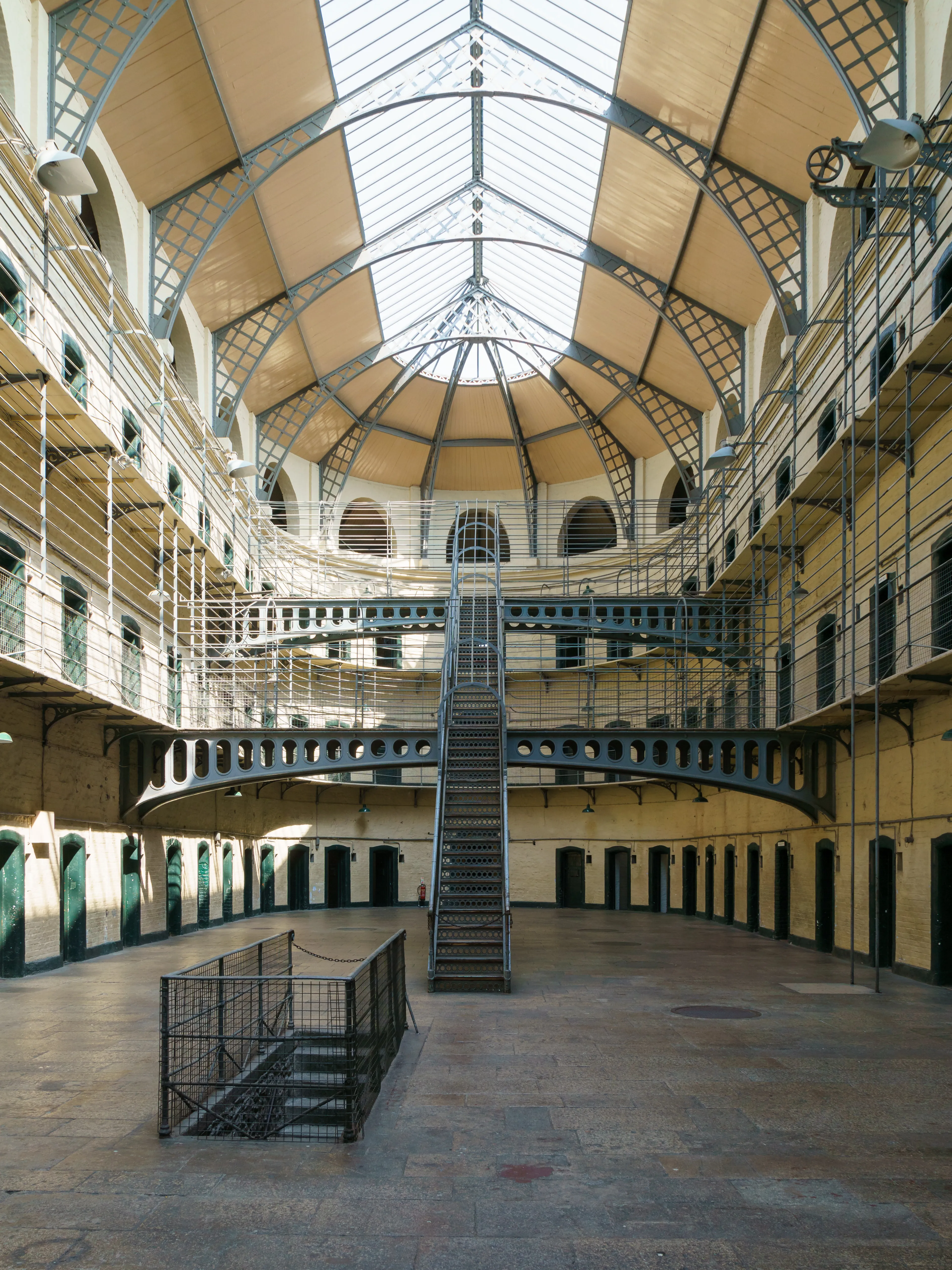
- Architectural reading — The east wing's panopticon geometry becomes comprehensible only when a guide explains its theoretical basis in Bentham's prison reform philosophy and demonstrates the sightlines from the warder's hub
Frequently Asked Questions
Who was executed at Kilmainham Gaol and when?
Fourteen leaders of the 1916 Easter Rising were executed in the gaol's stone-breakers' yard between 3 and 12 May 1916, following a week-long armed insurrection against British rule. The executed included Patrick Pearse (commander-in-chief of the rebel forces and author of the Proclamation of the Irish Republic), James Connolly (labour leader and military commander, who was so gravely wounded he had to be tied to a chair to be shot), Thomas MacDonagh, and eleven others. The executions were carried out in small batches over ten days — a decision that transformed public opinion in Ireland: initial hostility toward the Rising (which had disrupted civilian life in Dublin) rapidly converted to sympathy and eventually to political support for full independence. The site of the executions — a simple stone yard visible from the east wing's upper walkways — is the most affecting space in the entire gaol.
Are guided tours of Kilmainham Gaol mandatory?
Yes — Kilmainham Gaol can only be visited on a guided tour, and admission is exclusively by pre-booked timed ticket. The gaol is not accessible for self-guided visits; the guide leads a group of approximately 25 people through the pre-1916 west wing, the Victorian east wing (with its famous panopticon skylights), and the stone-breakers' yard where the executions took place. Tours last 60–75 minutes and include access to an exhibition on Irish revolutionary history. Book weeks in advance during the summer season — Kilmainham is one of the most popular heritage sites in Ireland and summer slots sell out rapidly. Winter tours (November–February) are generally available with shorter notice.
What is the significance of the gaol beyond 1916?
Kilmainham's history begins in 1796 — before the 1916 Rising by 120 years — and encompasses virtually the entire arc of Irish political resistance to British rule. The leaders of the 1798 United Irishmen rebellion were held here. Robert Emmet, executed in 1803 for his failed insurrection, was imprisoned here. Charles Stewart Parnell (the leader of Irish parliamentary nationalism) was held here in 1881 during the Land League agitation. Women activists of the Irish Suffrage movement and the 1916 Rising were imprisoned in the west wing. The last prisoner released from Kilmainham was Éamon de Valera in 1924 — who subsequently served as both Taoiseach and President of Ireland — having been imprisoned during the Civil War by the very Irish Free State whose founding he had helped negotiate.