

Overview
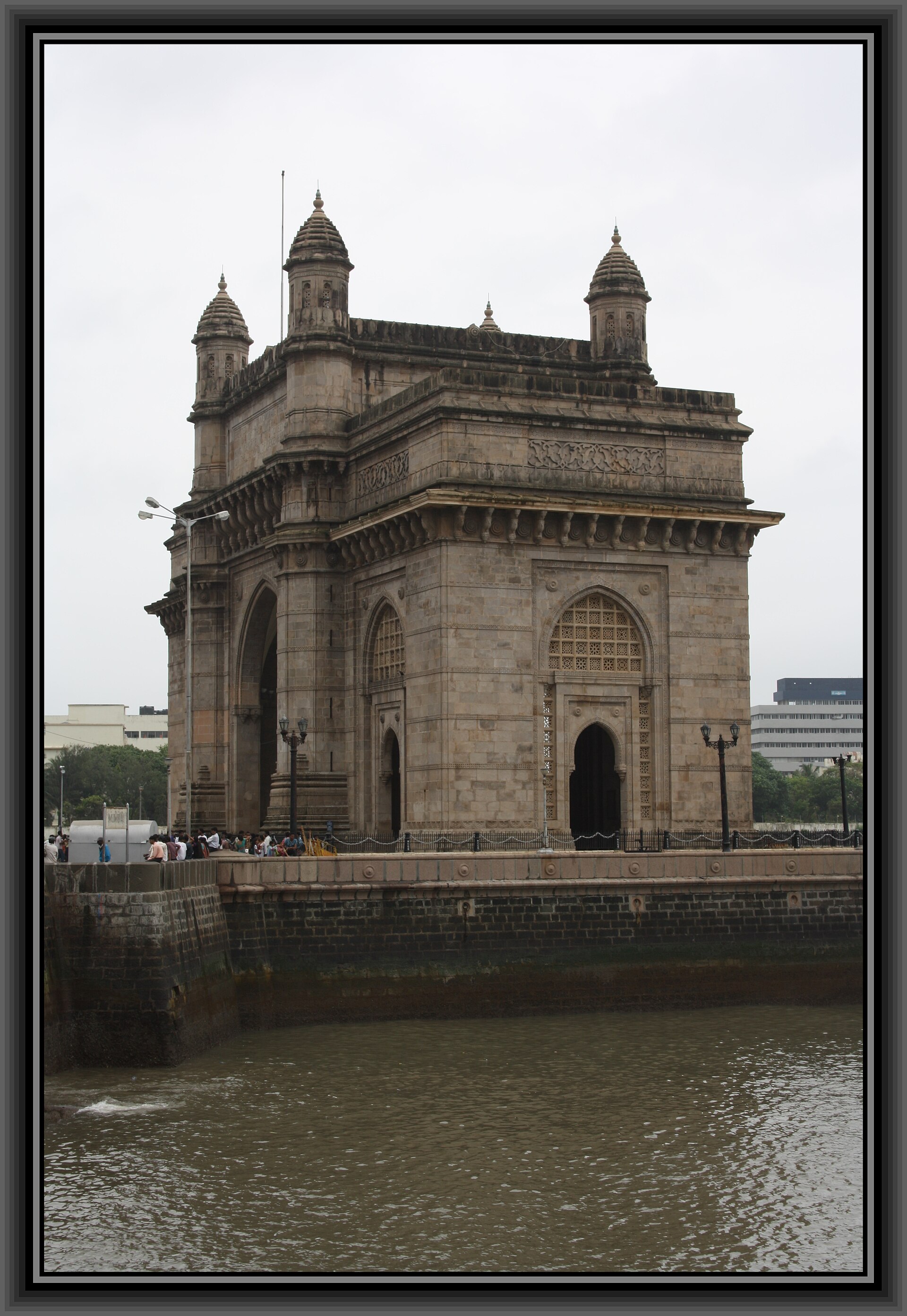
The Gateway of India is a 26-meter basalt arch on Mumbai's waterfront, built to commemorate King George V's visit in 1911 and completed in 1924. Designed by George Wittet in the Indo-Saracenic style, it combines Hindu and Muslim architectural elements beneath a grand triumphal form inspired by Roman arches. Ironically, this ceremonial entrance to British India became the site where the last British troops departed the country on February 28, 1948, as independent India watched from the harbour. Today the Gateway stands alongside the Taj Mahal Palace Hotel as Mumbai's most recognizable landmark and serves as the departure point for ferries to Elephanta Caves. Walk north through the Fort district to Chhatrapati Shivaji Terminus for a full colonial-heritage experience.
Architecture
The 26-meter arch is built from yellow basalt and concrete, blending a Roman triumphal arch form with Indo-Saracenic detailing. The central dome draws from Muslim architecture while the decorative jali lattice screens reflect Gujarati craftsmanship. Four turrets anchor the corners, and the interior ceiling features intricate carved patterns. The arch faces the Arabian Sea, framing the harbour in a way that made it the first sight for every ship arriving in British India. The adjacent Taj Mahal Palace Hotel (1903) complements the Gateway with its own Indo-Saracenic red dome and was famously built by Jamsetji Tata after he was reportedly refused entry to a Europeans-only hotel. Together, the Gateway and the Taj define Mumbai's iconic waterfront silhouette.
Historical Significance
Designed by George Wittet and completed in 1924, the Gateway was built to commemorate the 1911 visit of King George V and Queen Mary -- the first British monarchs to visit India. The foundation stone was laid in 1913, but construction took over a decade. The arch quickly became the ceremonial entrance to British India, welcoming dignitaries arriving by sea. The profound historical irony is that on February 28, 1948, the last British troops marched through this same archway to board ships back to England, watched by the citizens of a newly independent India. The Gateway also stands near the site of the devastating 2008 Mumbai terror attacks, when gunmen attacked the adjacent Taj Hotel. A guide connects the architectural details -- how the arch echoes Roman triumphal forms but in Gujarati jali latticework -- to the broader history of the waterfront, from the cotton trade that built Mumbai's wealth to India's struggle for independence.
When to Visit
Open: 24 hours (outdoor monument). Best for photos: early morning (6-8 AM) with soft light and few people. Best for atmosphere: evening, when the arch is illuminated and the waterfront fills with families and street vendors. Elephanta ferries: depart from the adjacent jetty, 9 AM - 2 PM (last return around 5:30 PM).
Admission and Costs
Gateway of India: free. Elephanta ferry: ₹200 return (economy), ₹250 (deluxe). Guided heritage walk (Colaba): ₹1,500-3,000 per person, 2-3 hours including Gateway, Taj Hotel exterior, and surrounding colonial district.
Tips for Visitors
Security checkpoints: bag screening required to enter the plaza area surrounding the Gateway. Combine with Colaba walk: the Gateway sits at the southern tip of Colaba -- walk north along Shahid Bhagat Singh Road for the full colonial architecture experience. Skip weekends: the plaza gets extremely crowded on weekends and holidays; weekday mornings are ideal. Book Elephanta early: the first ferry at 9 AM is the least crowded -- buy tickets at the booth beside the jetty. From here, walk north to Chhatrapati Shivaji Terminus through the Fort district, or take the ferry to Elephanta Caves for a half-day island excursion.