

Overview
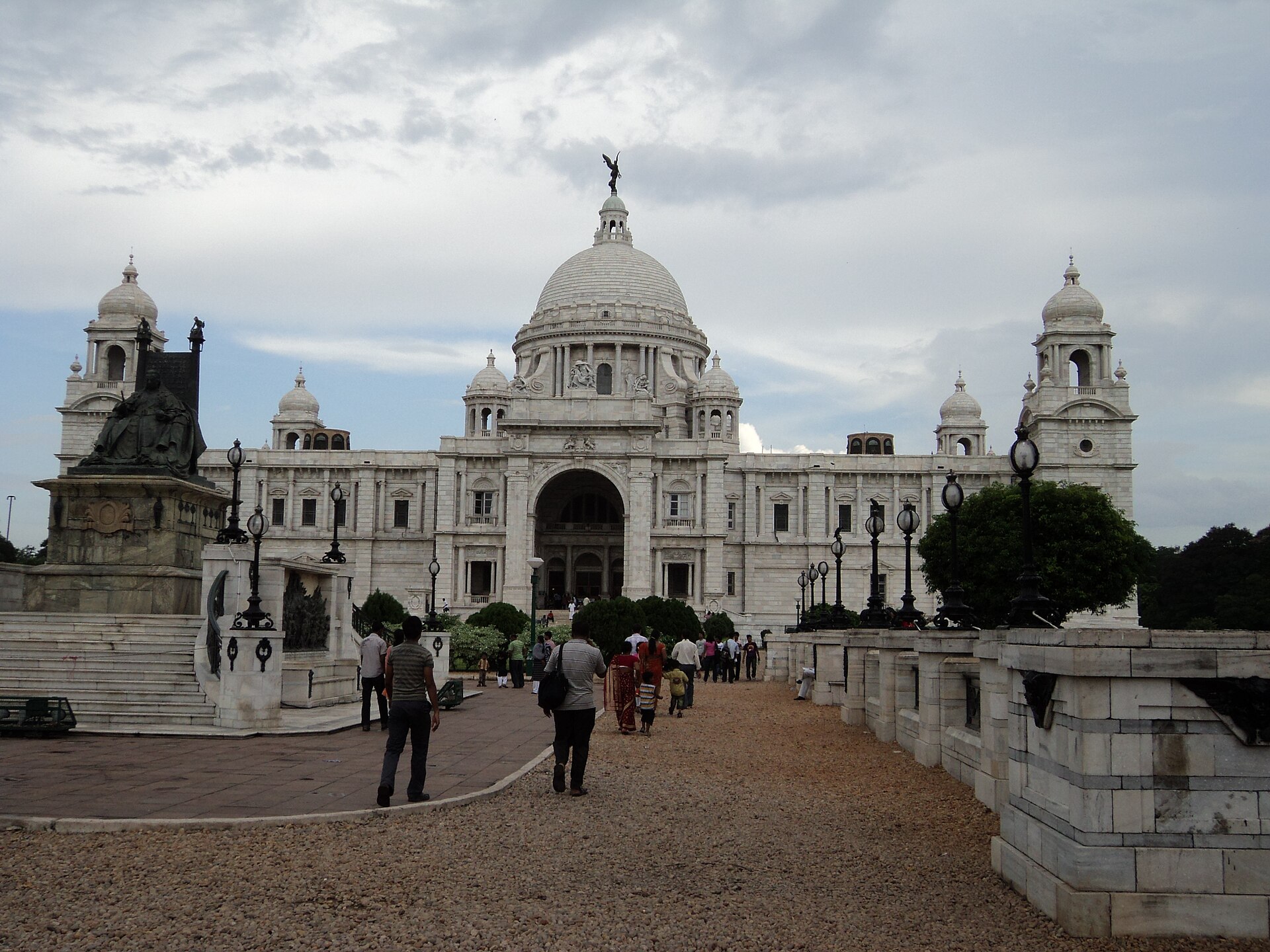
The Victoria Memorial is a stunning white marble museum built between 1906 and 1921 to commemorate Queen Victoria's reign over British India. Designed by William Emerson in the Indo-Saracenic style, the building blends Italian Renaissance proportions with Mughal domes and Rajput decorative flourishes, using the same Makrana marble that adorns the Taj Mahal. Its 25 galleries house over 28,000 artifacts -- oil paintings, Mughal miniatures, rare books, weapons, and textiles -- spanning centuries of Indian history from the Mughal era through the independence movement. The 64-acre garden setting and evening sound-and-light show make it Kolkata's most visited landmark. A guide provides essential context on the British Raj era, explains how this building funded by Indian contributions evolved into a museum telling India's own story, and navigates the extensive galleries efficiently so visitors see the most significant works. Walk north through the Maidan to explore Howrah Bridge and the flower market, or visit Dakshineswar Kali Temple for a spiritual contrast.
Guided Tours
The Victoria Memorial was conceived by Lord Curzon, the Viceroy of India, after Queen Victoria's death in 1901. Built entirely with voluntary contributions (no taxpayer money), it took 15 years to construct using the same Makrana marble that adorns the Taj Mahal. The design by William Emerson blends Italian Renaissance with Mughal elements -- think of it as the Taj Mahal reimagined by a British architect who admired both cultures. The result is a building that looks simultaneously European and Indian, set within 26 hectares of manicured gardens on Kolkata's Maidan. Today the memorial functions as a museum of Indian history, with 25 galleries housing 28,394 artifacts -- oil paintings, rare books, Mughal miniatures, weapons, and textiles. A guide adds critical perspective: they explain how a building funded by Indian contributions to honor a British monarch evolved into a space that now tells India's own story, from Mughal art to the independence movement. The galleries on the Bengal Renaissance -- which produced Tagore, Vivekananda, and Ram Mohan Roy -- are particularly rich, and a guide connects these intellectual movements to Kolkata's identity as India's cultural capital.
Collections Highlights
The central dome is crowned by the bronze Angel of Victory, a rotating figure visible across the Maidan that turns with the wind like a weathervane. The Royal Gallery displays portraits of the British monarchy alongside Mughal miniature paintings, creating a visual dialogue between two empires. The Calcutta Gallery traces Kolkata's history from fishing village to imperial capital through maps, photographs, and artifacts. The Arms and Armour collection includes Mughal swords, British rifles, and weapons of the 1857 uprising. The 26-hectare gardens with lawns, ponds, and walking paths are Kolkata's most popular open space for morning joggers and evening strollers.
When to Visit
Museum: Tuesday-Sunday, 10:00 AM - 5:00 PM. Closed Mondays and national holidays. Gardens: 5:30 AM - 6:00 PM daily. Sound-and-light show: evenings (check seasonal timings). Best time: morning for the museum, sunset for the gardens and exterior photography.
Admission and Costs
Museum (foreigners): ₹500 ($6). Museum (Indians): ₹30. Gardens only: ₹20. Guide: ₹500-1,000 for a 1.5-hour museum tour.
Tips for Visitors
Allow 2-3 hours: the museum is extensive, and a guide helps prioritize the most significant galleries. Photography is restricted inside the museum galleries; the gardens and exterior are freely photographable. Even without entering the museum, the gardens at sunset with the illuminated memorial are stunning. Walk north through the Maidan to St. Paul's Cathedral and the Indian Museum for a full colonial-heritage day. Weekday mornings (Tuesday-Thursday) offer the quietest experience. Combine with Howrah Bridge for dawn and Dakshineswar for a full Kolkata day.